
The gentle hum of a greenhouse in full swing often belies a hidden challenge: soaring temperatures, particularly at the root level. While you might be diligently ventilating and shading, the soil itself can become a silent oven, stressing your plants from the ground up. Overheated root zones are a common culprit behind wilting, stunted growth, and reduced yields, even when the air temperature seems manageable. But what if there was a simple, natural, and incredibly effective solution? Enter mulch. Often celebrated for its moisture-retaining and weed-suppressing capabilities, mulch is also a powerhouse for temperature regulation, offering a crucial barrier against the relentless heat trying to penetrate your plant’s vital root systems. In this comprehensive guide, we’ll explore how strategically applied mulch can transform your hot greenhouse into a cooler, more hospitable environment for thriving plants.
The Critical Role of Cool Root Zones for Greenhouse Plant Health
Understanding the “why” behind root zone cooling is paramount to appreciating the power of mulch. Just as you seek shade on a scorching day, your plant’s roots crave a stable, cooler environment to perform their essential functions. When soil temperatures climb too high, a cascade of negative effects can jeopardize your plants’ health and productivity.
The Dangers of Overheated Root Zones
- Reduced Water and Nutrient Uptake: Heat stresses the root cells, making it difficult for them to efficiently absorb water and dissolved nutrients from the soil. This can lead to symptoms mimicking drought, even when water is abundant.
- Impaired Respiration: Roots, like all living tissues, respire, taking in oxygen and releasing carbon dioxide. High temperatures increase the metabolic rate, demanding more oxygen, which can quickly become depleted in warm, often compacted, soil. This leads to anaerobic conditions that damage roots.
- Stunted Growth and Wilting: With compromised water and nutrient uptake, the plant struggles to grow, and its foliage may wilt, even under sufficient hydration, as the roots can’t keep up with transpiration demands.
- Increased Susceptibility to Disease: Stressed plants are weaker and more vulnerable to pathogens. High soil temperatures can also promote the growth of certain root rot fungi.
- Flower and Fruit Drop: Severe heat stress at the root level can lead to reproductive issues, causing flowers to drop prematurely or fruits to fail to set or develop properly.
How Mulch Steps In
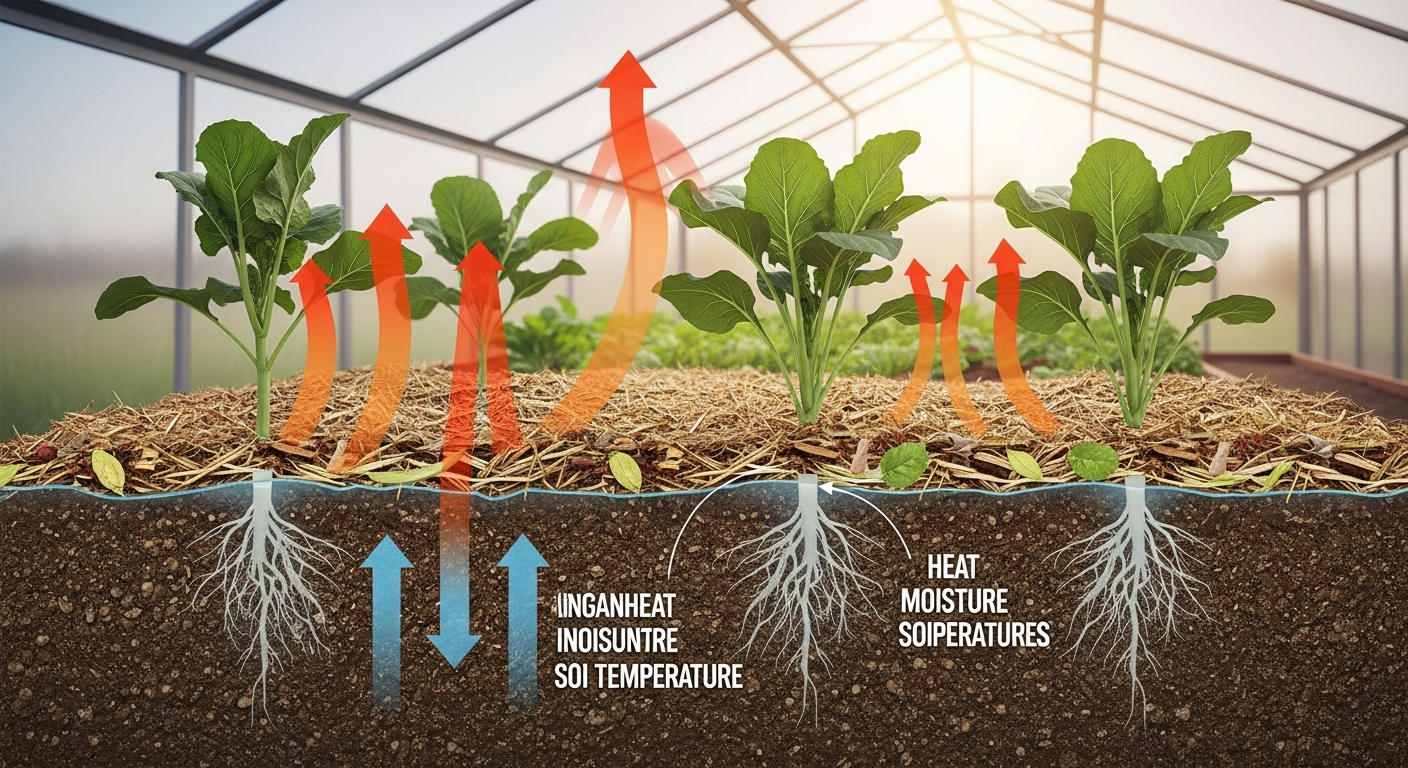
Mulch acts as an insulating blanket. During hot periods, it blocks direct sunlight from heating the soil surface, much like a hat protects your head. It slows the transfer of heat from the air into the soil and, perhaps more importantly, prevents the sun’s powerful infrared radiation from baking the topsoil layers. This creates a more stable, buffered environment for the roots, allowing them to function optimally even when the greenhouse air is sweltering.
Choosing the Right Mulch for Greenhouse Cooling
Not all mulches are created equal, especially when root zone cooling is your primary objective. The best choice will depend on factors like availability, cost, aesthetics, and the specific needs of your plants. We can broadly categorize mulches into organic and inorganic types.
Organic Mulches: Nature’s Insulator
Organic mulches are derived from plant materials. They decompose over time, enriching the soil, but their primary benefit for cooling lies in their ability to create an airy, insulative layer.
- Straw:
- Pros: Excellent insulator due to its hollow structure. Lightweight, inexpensive, readily available, and breaks down slowly. Creates a bright, reflective surface that can help deflect some heat.
- Cons: Can be prone to blowing around if not adequately watered in. May introduce weed seeds if not sourced carefully.
- Best for: Vegetable beds, raised beds, general plant cooling.
- Wood Chips/Shredded Bark:
- Pros: Long-lasting, good insulator, aesthetically pleasing, and suppresses weeds effectively.
- Cons: Can tie up nitrogen as they decompose if not adequately composted beforehand (though this is less of an issue when applied on top of the soil). May attract some pests like termites if in contact with wooden structures.
- Best for: Permanent plantings, larger pots, and aesthetic appeal.
- Compost:
- Pros: Not only insulates but also enriches the soil with nutrients and beneficial microbes. Improves soil structure.
- Cons: Can be heavier and less airy than straw or wood chips, potentially offering less dramatic temperature moderation. Breaks down relatively quickly, requiring frequent replenishment.
- Best for: Boosting soil fertility while providing moderate insulation, especially in containers.
- Leaf Mold:
- Pros: Excellent for improving soil structure, retains moisture well, and provides gentle insulation. Free if you collect and process your own leaves!
- Cons: Can be dense if not properly shredded, may decompose quickly.
- Best for: General use, particularly beneficial for moisture-loving plants.
Inorganic Mulches: Practical Alternatives
Inorganic mulches don’t decompose but offer specific benefits, including durability and sometimes reflectivity.
- Pebbles/Gravel:
- Pros: Permanent, excellent for drainage, and can look very clean and tidy. Less prone to blowing away.
- Cons: Can absorb and radiate heat if dark-colored. For cooling, choose lighter-colored stones to reflect sunlight. Does not add organic matter to the soil. Can be heavy and expensive for large areas.
- Best for: Succulents, cacti, or plants that prefer drier conditions and well-drained soil; also for pathways. Use light colors for cooling.
- Reflective Mulch Films (e.g., Silver Plastic):
- Pros: Highly effective at reflecting sunlight and thus significantly reducing soil temperature. Also aids in pest deterrence (some insects are disoriented by the reflection) and boosts light for plant undersides.
- Cons: Not aesthetically pleasing for many home growers. Can be a single-use plastic, posing environmental concerns. Requires careful installation.
- Best for: Commercial operations or specific crops where maximum temperature reduction and light reflection are critical.
Practical Application: How to Mulch Your Greenhouse Plants Effectively
Applying mulch isn’t just about dumping it around your plants; proper technique maximizes its cooling potential and avoids potential pitfalls.
Preparation is Key
- Weed First: Before applying mulch, ensure the area is free of weeds. Mulch will suppress new weeds but won’t kill existing ones, which can then grow through the mulch layer.
- Water Thoroughly: Water the soil deeply before mulching. The mulch will help seal in this moisture, keeping the roots hydrated longer.
- Clear Debris: Remove any old plant material, rocks, or other debris from the soil surface.
The Right Depth and Distance
For optimal cooling, a good mulch layer is crucial:
- Depth: Aim for a depth of 2-4 inches for most organic mulches. Too thin, and it won’t insulate effectively; too thick, and it can suffocate soil, promote anaerobic conditions, or become waterlogged. For inorganic mulches like gravel, 1-2 inches is often sufficient.
- Distance from Stems/Trunks: Always leave a small gap (1-2 inches) around the base of plant stems or tree trunks. Piling mulch directly against them can trap moisture, leading to rot, pest infestations, or fungal diseases. This is often referred to as creating a “mulch donut.”
- Coverage: Ensure the entire root zone of the plant is covered. For greenhouse beds, this means covering the entire bed surface between plants. For containers, cover the soil surface from the container edge, leaving a gap around the plant stem.
Watering Wisdom with Mulch
Mulch reduces evaporation, meaning you’ll likely need to water less frequently. However, when you do water:
- Check Soil Moisture: Don’t just water because you always do. Dig a finger beneath the mulch to check the soil moisture. Water only when the soil feels dry.
- Water Deeply: Ensure water penetrates through the mulch layer to the root zone. A slow, steady drip or targeted watering is often best to prevent runoff.
Monitoring and Maintenance
- Check for Pests: Regularly inspect under the mulch, especially organic types, for slugs, snails, or other pests that might take refuge in the cool, moist environment.
- Replenish as Needed: Organic mulches decompose over time. Top up the layer annually or as needed to maintain the desired depth.
- Aerate (if necessary): If your mulch becomes matted or compacted, gently rake it to allow air and water to penetrate.
Beyond Cooling: Additional Benefits of Mulching in Greenhouses
While root zone cooling is our primary focus, it’s worth highlighting the additional synergistic benefits that make mulch an indispensable tool for any greenhouse gardener:
- Moisture Retention: Mulch significantly reduces water evaporation from the soil surface, leading to less frequent watering, conserving precious resources, and maintaining consistent soil moisture levels, which plants adore.
- Weed Suppression: A thick layer of mulch blocks sunlight from reaching weed seeds, preventing germination and growth. This saves countless hours of weeding, allowing you to focus on other aspects of plant care.
- Soil Health Improvement: Organic mulches break down over time, adding valuable organic matter to the soil. This improves soil structure, aeration, drainage, and fertility, feeding the beneficial microbial life beneath.
- Disease Prevention: Mulch acts as a barrier, preventing soil-borne pathogens from splashing onto lower leaves during watering, which can significantly reduce the incidence of fungal diseases like early blight.
- Erosion Control: In raised beds or sloped areas, mulch can prevent soil erosion caused by watering or air movement.
Mulch is far more than just a decorative top dressing; it’s a multi-functional powerhouse for greenhouse management, particularly when battling high temperatures. By intelligently choosing and applying mulch, you can create a stable, cooler, and healthier environment for your plants’ critical root zones, leading to stronger growth, improved yields, and a more resilient greenhouse ecosystem. Don’t underestimate the humble mulch – it might just be the cooling solution your greenhouse has been craving.