
Imagine a greenhouse that practically regulates its own temperature, keeping your plants perfectly content year-round, all while drastically cutting down on energy costs. For many greenhouse enthusiasts, especially those venturing into the fascinating world of underground or subterranean growing, this sounds like a dream. But what if we told you it’s not only possible but increasingly becoming a cornerstone of sustainable horticulture? The secret lies deep beneath our feet: earth-tube cooling. This ingenious, passive climate control system harnesses the stable temperatures of the earth to create an optimal growing environment, offering a plethora of benefits particularly amplified in the unique context of an underground greenhouse. Let’s delve into how this ancient principle, combined with modern ingenuity, is revolutionizing how we grow.
Understanding Earth-Tube Cooling: How It Works
At its core, earth-tube cooling, sometimes referred to as geothermal cooling or an earth-air heat exchanger, is remarkably simple. It leverages the earth’s natural thermal mass to moderate air temperatures. Below a certain depth, typically around 6-10 feet (1.8-3 meters), the soil temperature remains relatively constant throughout the year, insulated from the extreme fluctuations of surface weather. This stable temperature is cooler than the summer air and warmer than the winter air in most climates.
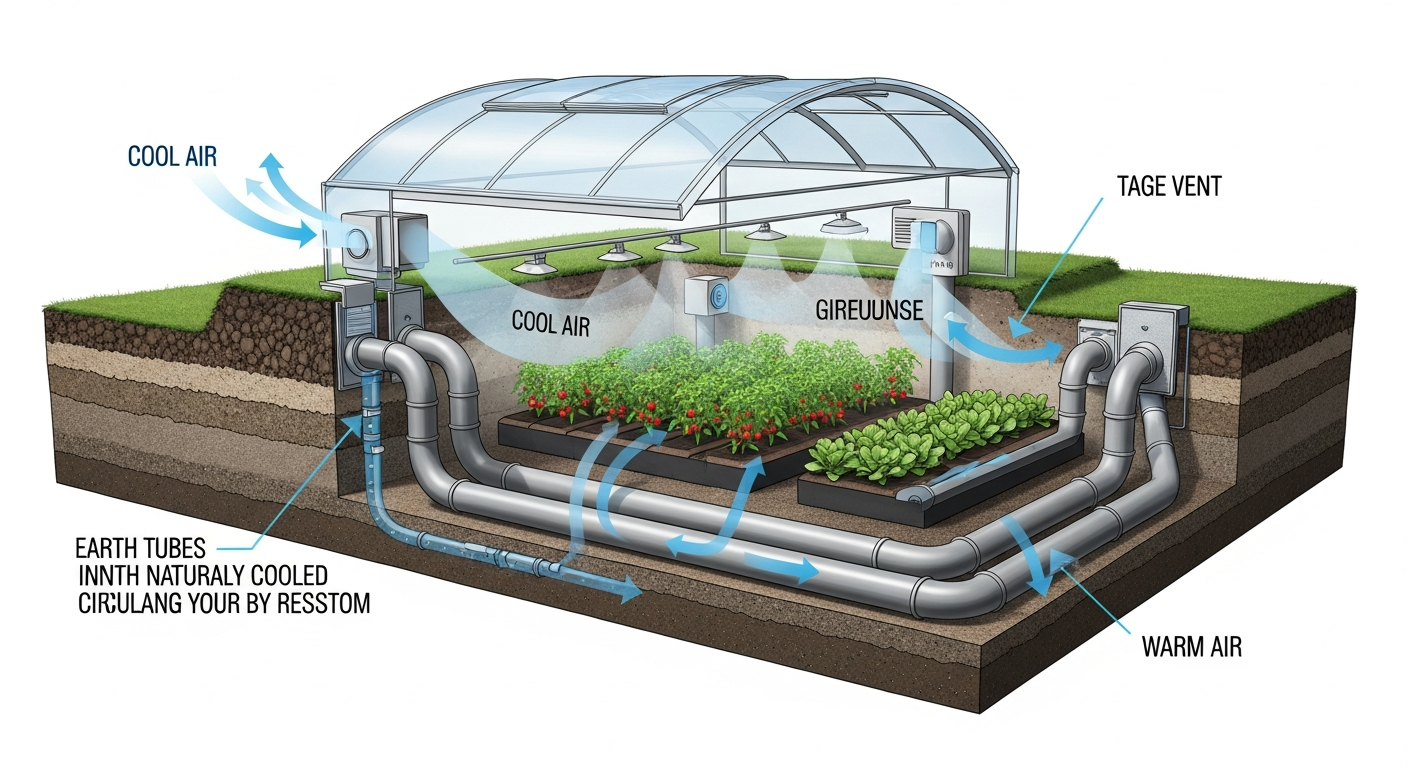
The system involves burying a network of pipes, usually made of durable materials like PVC or HDPE, at this consistent depth. A fan then draws air from the greenhouse (or outside) through these subterranean tubes. As the air travels through the pipes, it exchanges heat with the surrounding soil. In summer, the hot air transfers its heat to the cooler earth, emerging significantly cooled into the greenhouse. Conversely, in winter, the colder air picks up warmth from the relatively warmer earth, providing a pre-heated air supply. This passive heat exchange process significantly reduces the need for conventional, energy-intensive heating and cooling systems, creating a more stable and less energy-dependent environment for your plants.
Why Underground Greenhouses Benefit Most
While earth-tube cooling offers advantages to any greenhouse, its synergy with an underground or subterranean greenhouse design is truly exceptional. Underground greenhouses inherently tap into the same principle of geothermal stability. By being partially or fully buried, they benefit from the earth’s insulating properties, which buffer them from external temperature swings. This means:
- Enhanced Thermal Stability: An underground greenhouse already enjoys a more stable baseline temperature than its above-ground counterparts. Introducing earth tubes amplifies this effect, creating an incredibly consistent internal climate. The earth tubes don’t have to work as hard to mitigate extreme temperature differentials, leading to even greater efficiency.
- Reduced Energy Demand: With the earth providing significant insulation and the earth tubes handling much of the active temperature moderation, the overall energy demand for heating and cooling becomes dramatically low. This can translate to substantial savings on utility bills over the lifetime of the greenhouse.
- Maximized Passive Systems: The combination of subterranean design and earth-tube cooling represents a near-perfect marriage of passive climate control strategies. It minimizes reliance on mechanical systems, making the greenhouse more resilient, sustainable, and less prone to costly failures.
- Optimized Growing Conditions: Plants thrive in stable environments. The consistent temperatures achieved through this dual approach reduce plant stress, minimize pest and disease susceptibility related to environmental fluctuations, and promote healthier, more vigorous growth.
The earth effectively acts as a giant, free thermal battery, and underground greenhouses with earth tubes are expertly wired to harness its power.
Key Advantages: A Deep Dive into the Benefits
Beyond the fundamental synergy, implementing earth-tube cooling in your underground greenhouse unlocks a wealth of specific advantages:
Energy Efficiency & Cost Savings
This is perhaps the most compelling benefit. Traditional greenhouse climate control relies heavily on heaters, air conditioners, and powerful fans, all consuming significant amounts of electricity or fuel. Earth-tube systems dramatically reduce or even eliminate the need for these energy-intensive solutions. By pre-cooling or pre-heating incoming air, the workload on any supplementary systems is minimal, if they’re needed at all. This translates directly into lower operating costs, making your greenhouse operation more economical and sustainable in the long run. The initial investment in pipes and installation pays for itself over time through avoided energy expenses.
Stable & Optimal Growing Environment
Consistency is key for successful plant cultivation. Earth tubes help maintain a narrower and more consistent temperature range within the greenhouse, insulating plants from scorching summer days and freezing winter nights. This stable environment reduces plant stress, encourages consistent growth cycles, and supports optimal photosynthesis. For sensitive crops, or those requiring specific temperature parameters, this level of control can be a game-changer, allowing for a wider variety of plants to be grown successfully year-round.
Reduced Noise & Maintenance
Compared to conventional HVAC units, earth-tube systems are incredibly quiet. The primary mechanical component is usually just a relatively low-power fan, which operates with minimal noise. Furthermore, with fewer complex moving parts exposed to the elements, there’s significantly less to break down or require regular maintenance. This means less downtime, lower repair costs, and a more peaceful growing environment for both your plants and yourself.
Environmental Sustainability
For environmentally conscious growers, earth-tube cooling is a highly attractive option. By drastically cutting energy consumption, it reduces your greenhouse’s carbon footprint and reliance on fossil fuels. It’s a passive, renewable energy solution that utilizes the natural thermal properties of the earth, aligning perfectly with sustainable agriculture practices and contributing to a greener future.
Increased Crop Yield & Quality
When plants are grown in their ideal environmental conditions – consistent temperatures, proper humidity, and minimal stress – they naturally thrive. This often leads to increased vigor, faster growth, and ultimately, higher yields of better-quality produce. Vegetables might be larger and more flavorful, and flowers might be more abundant and vibrant. The gentle, consistent climate provided by earth-tube cooling creates an environment where plants can reach their full potential.
Practical Considerations & Implementation Tips
While the benefits are clear, successful implementation of an earth-tube cooling system requires careful planning:
- Site Assessment: Understand your local soil conditions, depth of the water table, and average ground temperatures at various depths. This information is crucial for determining optimal pipe depth and length.
- Proper Sizing and Design: The effectiveness of an earth-tube system depends heavily on correct sizing. Factors like greenhouse volume, desired air exchange rate, soil type, and average temperature differentials will dictate the required pipe diameter, total length, and number of runs. Consulting with an experienced engineer or a specialized greenhouse designer is highly recommended to ensure efficiency.
- Material Selection: Opt for durable, non-toxic pipes that are resistant to corrosion and potential root intrusion. High-density polyethylene (HDPE) or thick-walled PVC are common and reliable choices. Ensure all materials are rated for underground use and safe for air quality.
- Installation Depth and Slope: Pipes should be buried deep enough to access stable earth temperatures, typically 6-10 feet (1.8-3 meters). Install pipes with a slight slope (around 1-2%) to allow for condensation drainage. This prevents water from pooling inside the tubes, which could lead to mold or reduced efficiency. A gravel bed beneath the pipes can also aid drainage.
- Air Filtration and Pest Control: Implement a good air filter at the intake point to prevent dust, debris, and insects from entering the system and greenhouse. Screens at the pipe ends are also crucial to keep out rodents and other pests.
- Integration with Ventilation: Earth tubes are often most effective when integrated with a broader ventilation strategy. Fans are needed to draw air through the system, and strategically placed vents (e.g., ridge vents or automated side vents) can help exhaust stale air and optimize airflow within the greenhouse.
- Moisture Management: As warm, humid air cools in the tubes, condensation will form. Beyond sloping, consider a condensate collection system at the lowest point of each run, or ensure pipes drain naturally away from the greenhouse foundation.
Considering these practical tips during the planning and installation phases will maximize the efficiency and longevity of your earth-tube cooling system.
Conclusion: A Sustainable Future for Growing
Earth-tube cooling represents a powerful, elegant, and sustainable solution for climate control, particularly within the inherently stable environment of an underground greenhouse. By harnessing the consistent thermal energy of the earth, growers can achieve unparalleled energy efficiency, drastically reduce operating costs, and cultivate healthier, more productive plants.
This intelligent combination of passive design principles creates an optimal growing sanctuary that is resilient, environmentally friendly, and economically sound. For those looking to push the boundaries of sustainable horticulture and unlock the full potential of their subterranean growing space, investing in an earth-tube cooling system isn’t just an upgrade; it’s a step towards a truly regenerative and self-sufficient greenhouse climate. Embrace the power of the earth, and watch your underground oasis flourish like never before.