
As greenhouse professionals, maintaining an optimal internal climate is paramount for crop health and yield. The relentless summer sun can quickly turn a productive environment into an inferno, stressing plants and hindering growth. While various cooling methods exist, one stands out for its effectiveness, energy efficiency, and reliability: the wet wall system. Often referred to as evaporative cooling pads or a fan-and-pad system, this technology leverages a fundamental natural process to provide consistent and professional greenhouse cooling. If you’re looking to achieve precise temperature control and elevate your greenhouse operations, understanding and implementing wet wall cooling is a game-changer. Let’s delve into how this powerful system works and how you can harness its potential for your facility.
Understanding the Science Behind Wet Wall Cooling
At its core, wet wall cooling relies on the principle of evaporative cooling, the same natural phenomenon that cools us down when we sweat. When water evaporates, it changes from a liquid to a gas, absorbing heat energy from its surroundings in the process. This heat absorption is what creates the cooling effect.
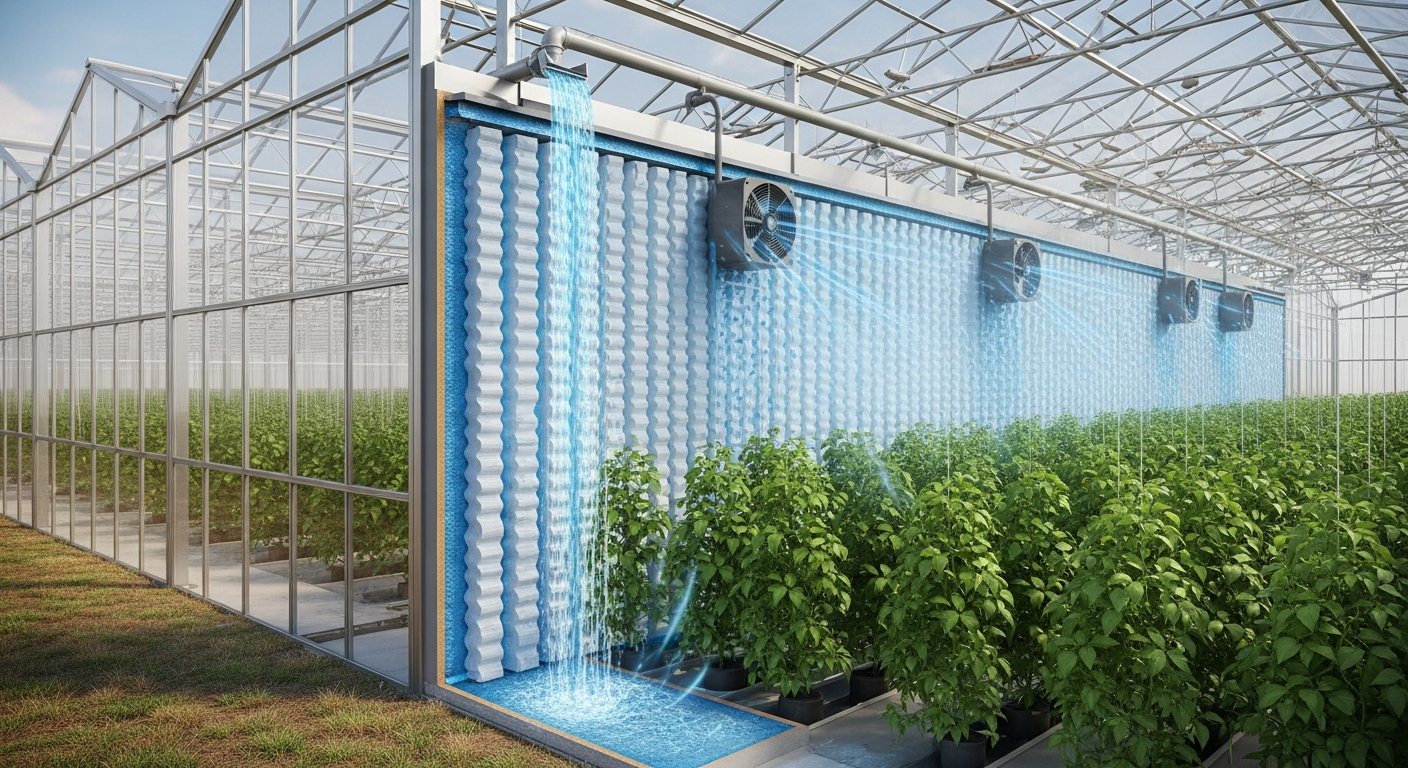
In a greenhouse wet wall system, this principle is put into action with remarkable efficiency. Here’s a breakdown:
- The Pads: One end of the greenhouse is fitted with a wall of specialized evaporative cooling pads. These pads are typically made from cellulose material, designed with a fluted structure that provides a large surface area for water evaporation.
- Water Distribution: A pump continuously circulates water from a sump or reservoir over the top of these pads, ensuring they are thoroughly saturated. The fluted design allows water to trickle down evenly.
- Air Intake: Powerful exhaust fans are installed on the opposite end of the greenhouse. These fans create a negative pressure, drawing hot, dry air from outside the greenhouse through the wet pads.
- Evaporation and Cooling: As the hot air passes through the saturated pads, water evaporates from the pad surface. This evaporation pulls heat from the air, significantly lowering its temperature before it enters the growing area.
- Cooled Air Distribution: The now cooler, humidified air is drawn through the greenhouse, effectively replacing the warmer air and creating a comfortable, stable climate for your crops.
The beauty of this system lies in its simplicity and effectiveness, especially in regions with lower relative humidity. The drier the air, the more readily water evaporates, leading to a greater temperature drop. This makes wet wall cooling an incredibly energy-efficient method for professional greenhouse cooling, often outperforming traditional air conditioning in suitable climates.
Designing Your Wet Wall System: Key Components and Placement
A well-designed wet wall system is crucial for achieving optimal cooling performance and maintaining consistent greenhouse climates. It’s not just about slapping some pads on a wall; careful planning of components and their placement is key.
Evaporative Cooling Pads: Material and Sizing
The pads themselves are the heart of the system. Most commonly, these are rigid cellulose pads, known for their high absorption capacity and structural integrity. They come in various thicknesses, typically 4 or 6 inches (10 or 15 cm). Thicker pads offer more surface area for evaporation and can achieve a greater temperature drop, but also restrict airflow more, requiring more powerful fans. The total area of your pads needs to be accurately calculated based on the required airflow (CFM) for your greenhouse, which is determined by the greenhouse volume and desired air exchange rate (usually 1-2 air changes per minute).
Exhaust Fans: Selection and Placement
The exhaust fans are the lungs of your system. They must be powerful enough to draw air uniformly across the entire pad area and through the length of the greenhouse. The total CFM (Cubic Feet per Minute) rating of your fans should ideally match or slightly exceed the CFM capacity of your wet walls. Fans are strategically placed on the wall opposite the wet pads. For long greenhouses, multiple fans may be needed, spaced evenly to ensure consistent airflow and prevent “dead spots” where air stagnates. Variable speed fans are an excellent investment, allowing you to fine-tune airflow and cooling capacity based on external temperatures and internal needs.
Water Supply and Distribution System
A reliable water supply is essential. This includes a pump (submersible or external) sized to deliver adequate flow and pressure to uniformly saturate all pads. A distribution manifold with orifices or nozzles ensures even water flow across the top of each pad section. Below the pads, a collection gutter and sump or reservoir are needed to catch the water that drains through, allowing it to be recirculated. Proper filtration of the water is critical to prevent clogging of the pads and reduce algae growth, maintaining system efficiency.
Considerations for Optimal Placement:
- Wind Direction: Position wet walls on the prevailing wind side if possible, to encourage natural air movement towards the fans.
- Sun Exposure: Avoid placing wet walls where they receive direct, intense afternoon sun, as this can prematurely heat the water and reduce cooling efficiency.
- Accessibility: Ensure easy access to both pads and fans for routine maintenance and cleaning.
- Greenhouse Shape and Size: For very wide greenhouses, consider multiple pad/fan systems or a central pad system with fans on both sides to ensure uniform cooling.
Careful consideration of these design elements is fundamental to creating an effective and efficient professional greenhouse cooling system that supports optimal growing conditions year-round.
Installation and Operation Best Practices for Wet Wall Cooling
Once your wet wall system is designed, proper installation and diligent operation are the next steps to unlock its full potential. Skipping corners here can lead to inefficiencies, higher energy consumption, and inconsistent cooling.
Precise Installation Techniques
The success of your evaporative cooling pads hinges on a meticulous installation. Ensure the pad frames are level and securely mounted, forming a continuous, airtight seal with the greenhouse structure. Any gaps around the pads or frame will allow uncooled air to bypass the system, significantly reducing efficiency. The water distribution pipe at the top of the pads must be perfectly level to ensure uniform water flow across the entire pad surface. Similarly, the collection gutter at the bottom must be sloped correctly to drain water efficiently back to the sump, preventing stagnant water and potential algae buildup. Fan installations also require airtight seals to maximize their pulling power and ensure all air passes through the wet walls.
Optimizing Water Management
Water quality is critical for the longevity and performance of your wet wall system. Install a good filtration system to remove sediment and debris that can clog pads and nozzles. Regularly test water pH; maintaining a slightly acidic to neutral pH (6.0-7.0) can help prevent scale buildup and inhibit algae growth. Consider a periodic “bleed-off” or “dump and refill” schedule for your sump water, especially in areas with hard water, to reduce the concentration of dissolved solids. Algaecides or UV sterilizers can also be incorporated to further manage biological growth within the water system, ensuring the pads remain clean and effective.
Strategic Ventilation and Airflow
Beyond the wet walls and fans, your overall greenhouse ventilation strategy plays a vital role. Ensure there are no major obstructions within the greenhouse that could impede the uniform flow of cool air from the pads to the exhaust fans. If your greenhouse is partitioned, consider how airflow will be maintained in each section. Supplemental circulation fans (HAF fans) can be beneficial in larger greenhouses to help distribute the cooled air more evenly, eliminating hot or cold spots and ensuring all plants benefit from the temperature regulation provided by the evaporative cooling pads. Properly sizing your exhaust fans to achieve 1-2 air exchanges per minute will prevent overcooling or undercooling, maintaining a balanced internal environment.
Automation and Smart Controls
Modern professional greenhouse cooling systems leverage automation for peak efficiency. Integrate your wet wall system with a climate control computer or a smart thermostat. This allows for precise temperature setpoints, automatically engaging fans and water pumps when temperatures rise above the desired level. Humidistats can be added to monitor and control humidity, preventing conditions that might be too damp for certain crops. Variable frequency drives (VFDs) for your exhaust fans can further optimize energy use by allowing fan speed to be modulated incrementally, rather than simply turning on and off at full power. This level of control not only saves energy but also creates a more stable and responsive growing environment.
Maximizing Efficiency and Troubleshooting Common Issues
Even with a well-designed and installed wet wall system, ongoing maintenance and knowing how to troubleshoot common problems are essential for sustained high performance and optimal greenhouse climates.
Regular Maintenance Schedule
Proactive maintenance is key to maximizing the efficiency and lifespan of your evaporative cooling pads and the entire system. Implement a routine schedule for:
- Pad Inspection: Regularly check pads for signs of clogging (mineral buildup, algae), damage, or dry spots. Clean pads with a soft brush and water, or use specialized cleaning solutions for mineral deposits.
- Water System Check: Inspect the pump, distribution manifold, and nozzles for clogs or blockages. Ensure uniform water flow across all pads. Clean out the sump/reservoir to remove sediment and debris.
- Fan Maintenance: Clean fan blades and motor housings. Check belts (if applicable) for wear and tension. Lubricate motor bearings if required. Ensure louvers open and close freely.
- System Calibration: Periodically calibrate your temperature and humidity sensors to ensure accurate readings, which are crucial for automated control.
At the end of the growing season or before winter, it’s vital to properly drain and clean the entire system, especially in regions prone to freezing. This includes emptying the sump, cleaning pads, and ensuring pipes are free of water to prevent damage.
Troubleshooting Common Wet Wall Problems
Even with the best maintenance, issues can arise. Knowing how to diagnose them quickly minimizes downtime and protects your crops:
1. Inadequate Cooling:
- Symptom: Greenhouse temperature remains too high despite the system running.
- Possible Causes & Solutions:
- Clogged Pads: Inspect and clean pads. Ensure water flow is uniform.
- Insufficient Airflow: Check fan operation; ensure all fans are running at full capacity (if needed) and blades are clean. Check for air leaks around pads or fans.
- High Ambient Humidity: Wet walls are less effective in very humid conditions. Consider supplementary cooling or dehumidification if this is a recurring issue.
- Water Distribution Issues: Clogged nozzles or a weak pump can lead to dry spots on pads, reducing evaporation. Clean nozzles, check pump pressure.
2. Algae or Scale Buildup:
- Symptom: Green growth on pads, white mineral deposits, reduced water flow.
- Possible Causes & Solutions:
- Untreated Water: Implement a regular bleed-off schedule, consider water treatment like algaecides or UV.
- Hard Water: Use descaling solutions periodically.
- Stagnant Water: Ensure good drainage in the sump and gutter.
3. Excessive Humidity:
- Symptom: Condensation, high relative humidity (RH) readings.
- Possible Causes & Solutions:
- Over-cooling for Conditions: Adjust fan speed or reduce system run time.
- Poor Ventilation: Ensure exhaust fans are properly sized and operating. Consider adding a humidistat to control fan operation based on RH.
- Leaking Pipes/Pads: Repair any leaks in the water distribution system.
By staying vigilant with maintenance and understanding how to address these common challenges, you can ensure your wet wall system consistently delivers efficient and effective professional greenhouse cooling.
Implementing a wet wall system for professional greenhouse cooling is more than just installing equipment; it’s adopting a strategic approach to environmental control. By understanding the principles of evaporative cooling, meticulously designing your system, adhering to best practices for installation and operation, and maintaining vigilance through regular maintenance and troubleshooting, you empower your greenhouse to thrive. This energy-efficient and highly effective method ensures consistent temperatures, minimizes plant stress, and ultimately contributes to healthier crops and higher yields. Invest in a well-managed wet wall system, and you’ll cultivate not just plants, but a resilient and productive greenhouse climate for years to come.