
As temperatures rise, maintaining an optimal environment within your greenhouse becomes a paramount concern for every dedicated grower. Overheating can quickly stress plants, stunt growth, and even lead to irreversible damage. While traditional electric fans offer a solution, they come with the environmental footprint and ongoing cost of electricity. Enter the sustainable, cost-effective, and increasingly popular alternative: solar-powered fans. Harnessing the sun’s energy, these ingenious devices offer an eco-friendly way to keep your greenhouse cool and your plants thriving. Let’s delve into how you can effectively integrate solar-powered fans into your greenhouse cooling strategy.
Why Solar-Powered Fans Are a Smart Choice for Greenhouse Cooling
The decision to switch to or incorporate solar power in your greenhouse isn’t just about being environmentally conscious; it’s a smart economic and practical move. Solar-powered fans offer a multitude of benefits that make them an ideal cooling solution:
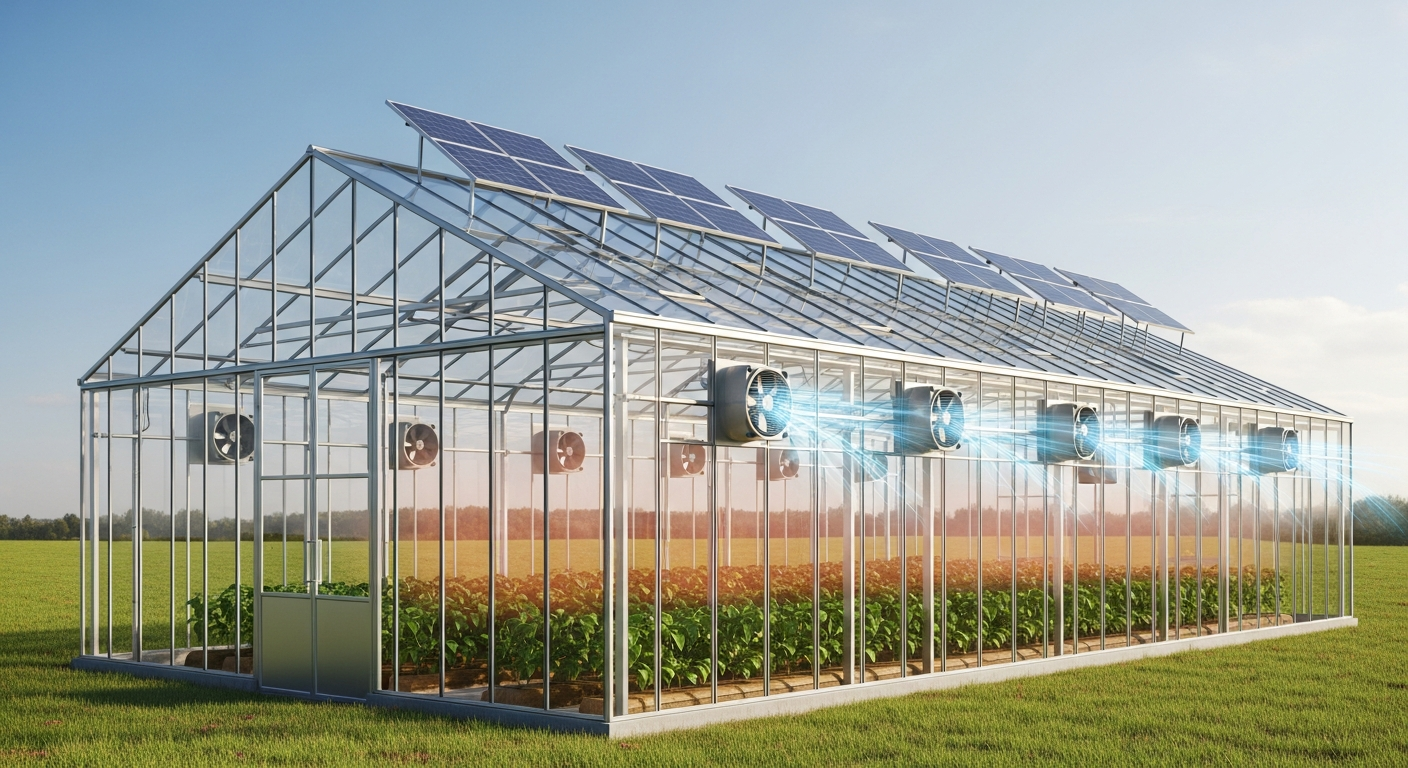
- Energy Independence & Cost Savings: The most significant advantage is operating entirely off the grid. Solar fans eliminate electricity bills associated with cooling, offering significant long-term savings. The initial investment pays for itself over time, freeing you from fluctuating energy costs.
- Eco-Friendly & Sustainable: By utilizing renewable energy from the sun, you drastically reduce your greenhouse’s carbon footprint. This aligns perfectly with sustainable gardening practices and helps protect the planet.
- Reliability When You Need It Most: Greenhouses typically get hottest when the sun is shining brightest. Solar fans inherently operate when cooling is most necessary, providing ventilation precisely when solar radiation is at its peak.
- Reduced Heat Buildup: Efficient air circulation prevents hot air pockets from forming, creating a more uniform temperature distribution throughout your greenhouse. This reduces plant stress and encourages healthier growth.
- Humidity Control: Beyond just temperature, good ventilation also helps manage humidity levels. High humidity can lead to fungal diseases and pests. Solar-powered fans help expel moist air, maintaining a healthier environment for your plants.
- Simple Installation: Many solar fan kits are designed for DIY installation, requiring no complex wiring to your main power supply.
Types of Solar-Powered Fan Systems for Greenhouses
Not all solar fans are created equal, and understanding the different types will help you choose the best system for your specific greenhouse needs.
1. Solar Exhaust Fans
These are perhaps the most common type used for greenhouse cooling. Mounted high on a wall or roof, exhaust fans actively pull hot, stagnant air out of the greenhouse, replacing it with cooler air drawn in through lower vents. This creates a powerful and essential cross-ventilation effect.
- How they work: A solar panel (often separate from the fan unit) powers the fan motor, which then draws air out of the structure.
- Best for: Reducing overall greenhouse temperature, removing excess humidity, and ensuring a complete air exchange.
2. Solar Circulation Fans (Horizontal Airflow Fans – HAF)
Unlike exhaust fans that move air in and out, circulation fans focus on moving air *within* the greenhouse. They create a gentle, continuous airflow that helps equalize temperature, prevent stratification (hot air rising and staying at the top), and reduce stagnant air pockets. This also strengthens plant stems as they gently sway.
- How they work: Typically smaller, these fans are strategically placed to keep air moving consistently across plants and throughout the growing space.
- Best for: Enhancing internal air movement, preventing disease by reducing humidity around plant foliage, and creating a more uniform climate.
3. Thermostatically Controlled Solar Fan Kits
For greater automation and efficiency, some solar fan systems come with a thermostat. This allows the fan to turn on only when the greenhouse temperature reaches a certain threshold, conserving power and ensuring cooling only happens when needed. This is particularly useful if your solar fan setup includes a battery backup for continuous operation, even after the sun sets or during cloudy periods.
Sizing and Placement: Getting Your Solar Fan Setup Right
Effective greenhouse cooling with solar fans hinges on proper sizing and strategic placement. Under-sizing your fan or poor placement can negate its benefits.
Calculating Your Greenhouse’s Cooling Needs (CFM)
The most important factor in sizing an exhaust fan is its Cubic Feet per Minute (CFM) rating. This indicates how much air the fan can move in one minute. A good rule of thumb for greenhouses is to achieve an air exchange rate of once every 1 to 2 minutes. This means your fan(s) should be able to completely replace the air in your greenhouse every minute or two.
Here’s how to calculate the CFM you need:
- Measure your greenhouse volume: Multiply its length (L) by width (W) by height (H) in feet.
Example: A greenhouse that is 10 ft long, 8 ft wide, and 7 ft high has a volume of 10 x 8 x 7 = 560 cubic feet.
- Determine required CFM: Divide your greenhouse volume by your desired air exchange rate (typically 1 or 2 minutes).
Example: For a 560 cubic foot greenhouse, you’d need a fan with at least 560 CFM (for 1-minute exchange) or 280 CFM (for 2-minute exchange). Aim for the higher end for warmer climates or if your greenhouse gets intense sun.
Consider factors like your climate (hotter climates need more aggressive exchange), glazing material (polycarbonate or twin-wall traps less heat than single-pane glass), and sun exposure. It’s often better to slightly oversize than undersize.
Optimal Placement Strategies
For Exhaust Fans:
- High and Opposite: Install exhaust fans high up on a wall or in the roof peak, ideally on the leeward side (away from prevailing winds). Place passive intake vents (louvers, automatic roof vents) low on the opposite wall or end. This creates a natural cross-ventilation path, drawing cooler air in from below and expelling hot air from above.
- Sun Exposure for Solar Panels: Mount the solar panel in a location that receives maximum unobstructed sunlight throughout the day. South-facing (in the Northern Hemisphere) at an optimal tilt angle for your latitude is usually best. Keep it free from shade from trees or other structures.
For Circulation Fans:
- Strategic Positioning: Place circulation fans to create a gentle, continuous airflow pattern. Avoid pointing them directly at plants, as this can cause windburn. Angling them slightly downwards or towards a central aisle often works well.
- Distribute Multiple Fans: In larger greenhouses, multiple smaller circulation fans might be more effective than one large one to ensure even air distribution.
Installation and Maintenance Tips for Your Solar-Powered Fans
Once you’ve selected the right system and determined placement, proper installation and ongoing maintenance will ensure longevity and optimal performance.
Installation Advice:
- Secure Mounting: Ensure both the fan unit and the solar panel are securely mounted to prevent them from shifting or falling, especially in windy conditions. Use appropriate hardware for your greenhouse frame (wood, aluminum, steel).
- Seal Gaps: When installing an exhaust fan, meticulously seal any gaps around the fan opening in your greenhouse wall or roof. Air leaks will reduce the fan’s efficiency.
- Wiring Management: For systems with separate solar panels, run the wiring neatly and securely. Use UV-resistant outdoor-grade wiring and connectors. Avoid leaving wires dangling where they can be tripped over or damaged.
- Follow Manufacturer Instructions: Always refer to the specific installation guide provided by the manufacturer of your solar fan system.
Maintenance for Longevity:
- Keep Solar Panels Clean: Dust, dirt, pollen, and debris can significantly reduce the efficiency of your solar panel. Regularly wipe it clean with a soft cloth and water.
- Inspect Fan Blades: Check fan blades periodically for accumulation of dust, dirt, or spiderwebs, which can impede performance and cause imbalance. Clean as needed.
- Check Wiring and Connections: Annually inspect all wiring and connections for any signs of wear, corrosion, or loosening. Ensure connections remain tight and secure.
- Lubrication (if applicable): Some older or larger fan motors might require occasional lubrication. Consult your fan’s manual. Most modern fans are sealed and maintenance-free in this regard.
- Clear Obstructions: Ensure there’s nothing blocking the airflow to or from the fan, both inside and outside the greenhouse.
Maximizing Efficiency and Integrating with Other Cooling Methods
Solar-powered fans are excellent, but they work best as part of a comprehensive greenhouse cooling strategy. You can enhance their effectiveness by combining them with other passive and active methods:
- Passive Ventilation: Solar fans complement passive ventilation systems beautifully. Ensure you have adequate low intake vents and high exhaust vents (even if not motorized) to facilitate airflow.
- Shade Cloths: During the hottest months, a shade cloth draped over your greenhouse can dramatically reduce the solar load, making your fans’ job much easier and preventing excessive heat buildup in the first place.
- Evaporative Cooling (Swamp Coolers): In very hot and dry climates, combining solar fans with an evaporative cooler (which can also be solar-powered) can provide superior cooling by adding moisture to the air and reducing its temperature through evaporation.
- Automated Vents: Integrate your solar fan system with automatic vent openers that respond to temperature changes, further optimizing airflow without constant manual intervention.
Embracing solar-powered fans for your greenhouse cooling is a step towards a more sustainable, efficient, and cost-effective growing operation. By understanding the types of fans available, correctly sizing your system, and implementing smart placement and maintenance, you can ensure your greenhouse remains a comfortable, thriving haven for your plants, even on the hottest days. Invest in the power of the sun, and watch your greenhouse climates flourish.