
As the sun climbs higher and days grow longer, greenhouse enthusiasts face a common challenge: balancing abundant light with the risk of overheating and sun scorch. While sunlight is the lifeblood of plants, too much of a good thing can quickly turn your thriving oasis into a sweltering inferno. This is where greenhouse shade cloth becomes an indispensable tool for climate control and plant protection. But once you’ve decided to incorporate shade cloth into your setup, a crucial question arises: is it better to place it on the outside of your greenhouse, or on the inside? This debate has long been a topic among growers, each option presenting its own set of advantages and considerations. Let’s delve into the specifics to help you make the most informed decision for your unique greenhouse environment.
The Essential Role of Greenhouse Shade Cloth
Before we explore placement, it’s vital to understand the primary functions of greenhouse shade cloth. Its main purpose is to reduce the intensity of sunlight entering your greenhouse, thereby achieving several key benefits:
- Temperature Regulation: By blocking a percentage of solar radiation, shade cloth significantly lowers the internal temperature of the greenhouse, preventing heat stress and creating a more comfortable growing environment.
- Preventing Sun Scorch: Delicate plant foliage, especially on young plants or those accustomed to lower light levels, can easily burn under direct, intense sunlight. Shade cloth acts as a protective shield.
- Controlling Light Intensity: Different plants have varying light requirements. Shade cloth allows growers to tailor the light intensity to suit specific crops, promoting healthier growth and better yields.
- Reducing Water Stress: Cooler temperatures mean less evaporation from both plants and soil, reducing the frequency of watering and helping plants retain moisture.
- UV Protection: While not its primary function, some shade cloths offer a degree of UV protection, which can benefit certain plants and even extend the life of your greenhouse’s glazing material.
The effectiveness of shade cloth heavily depends on its “shade percentage,” typically ranging from 30% to 80%. Choosing the right percentage is another critical decision, but for now, let’s focus on where it should hang.
Option 1: Placing Shade Cloth Outside the Greenhouse
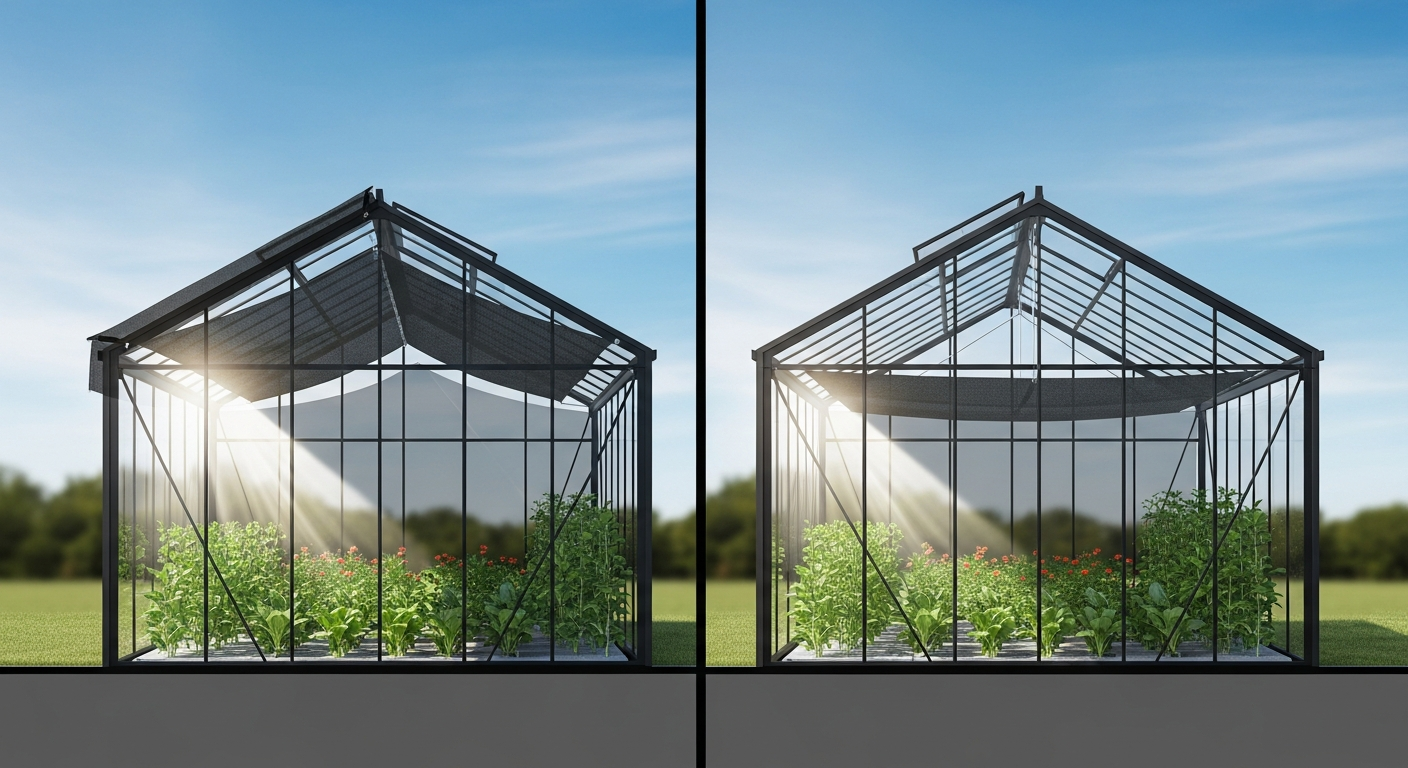
For many seasoned growers and commercial operations, placing shade cloth on the exterior of the greenhouse is often considered the superior method for optimal climate control. This approach leverages a fundamental principle of thermodynamics: it’s always more efficient to block heat before it enters a space.
Advantages of Outside Placement:
- Maximum Heat Rejection: This is the most significant benefit. By intercepting sunlight before it strikes the greenhouse glazing, the shade cloth prevents solar radiation from ever entering the structure and converting into heat. This keeps the interior significantly cooler compared to inside placement.
- Protects Glazing Materials: The shade cloth acts as a buffer, shielding polycarbonate panels, polyethylene film, or glass from direct UV radiation and harsh weather elements. This can extend the lifespan of your greenhouse’s covering.
- Improved Air Circulation: When installed correctly, there’s a gap between the shade cloth and the greenhouse surface. This allows air to circulate, carrying away some of the heat absorbed by the cloth itself, further enhancing cooling efficiency.
- More Even Cooling: Because heat is blocked uniformly across the exterior, it helps to create a more consistent temperature throughout the greenhouse, reducing hot spots.
Disadvantages of Outside Placement:
- Exposure to Elements: The shade cloth itself is exposed to wind, rain, hail, and snow. This can lead to faster wear and tear, requiring a more durable material and robust installation. High winds are a particular concern, as they can damage both the cloth and its fasteners.
- Installation and Removal Challenges: Depending on the size and height of your greenhouse, installing and removing exterior shade cloth can be more difficult, often requiring ladders, lifts, or specialized attachment systems.
- Aesthetics: Some growers find the appearance of external shade cloth less visually appealing than a clean greenhouse exterior.
- Debris Accumulation: Leaves, twigs, and other outdoor debris can collect on the shade cloth, potentially blocking light unevenly or requiring periodic cleaning.
Practical Tips for Outside Placement:
- Secure Fastening: Use bungee cords, specialized clips, or tension wires to securely attach the shade cloth, ensuring it can withstand strong winds. Overlapping edges can prevent gaps.
- Allow for Air Gap: Ideally, position the cloth a few inches above the glazing to maximize the cooling effect from air circulation.
- Consider Retractable Systems: For larger or commercial greenhouses, automated or manual retractable systems offer flexibility, allowing you to open or close the shade as needed throughout the day or season.
- Choose Durable Material: Invest in high-quality, UV-stabilized shade cloth designed for outdoor use to maximize its lifespan.
Option 2: Placing Shade Cloth Inside the Greenhouse
Placing shade cloth inside the greenhouse is often perceived as a simpler and more protected option, especially for smaller hobby greenhouses or those with less extreme climate challenges.
Advantages of Inside Placement:
- Protection from Elements: The shade cloth is shielded from wind, rain, and hail, significantly extending its lifespan and reducing the risk of damage.
- Easier Installation and Removal: Generally, it’s much simpler to hang, adjust, and remove shade cloth from inside the greenhouse, often achievable without special equipment. This is convenient for seasonal changes.
- Increased Flexibility: Interior shade cloth allows for more localized shading. You can easily shade specific sections or even individual plant benches without affecting the entire greenhouse.
- Aesthetics: From the outside, the greenhouse maintains its clear appearance.
Disadvantages of Inside Placement:
- Less Effective Heat Rejection: This is the primary drawback. Sunlight still passes through the greenhouse glazing and strikes the shade cloth inside. By this point, a significant amount of solar energy has already entered the structure and converted to heat. The heat then gets trapped between the glazing and the shade cloth, leading to higher internal temperatures compared to outside placement.
- Reduced Internal Airflow: The shade cloth can impede natural convection and air circulation within the greenhouse, potentially creating pockets of warmer, stagnant air above the plants.
- Potential for Condensation: In humid environments, the trapped air between the glazing and the shade cloth can lead to condensation issues, potentially fostering fungal growth.
- Obstructed Interior Space: Depending on the hanging method, interior shade cloth systems can sometimes interfere with taller plants, hanging baskets, or the movement of equipment.
Practical Tips for Inside Placement:
- Ensure Good Ventilation: Supplement with fans and adequate vents to help move hot air trapped between the glazing and the shade cloth.
- Use Retractable Systems: Even inside, retractable systems (e.g., simple rope and pulley) allow you to easily adjust the shade as light conditions change throughout the day or season.
- Consider Zoned Shading: If you have diverse plants, use different shade percentages or strategically place smaller pieces of cloth to create microclimates.
- Keep it Clean: Although protected from outdoor debris, dust can still accumulate on indoor shade cloth, reducing its effectiveness over time.
Making the Optimal Choice: Factors to Consider
The “best” placement for greenhouse shade cloth isn’t a one-size-fits-all answer. It depends heavily on several factors unique to your situation:
- Your Climate Zone: In regions with extremely intense sun and consistently high temperatures (e.g., desert climates, southern states), outside placement for maximum heat rejection is almost always preferred. In cooler, more temperate climates where sun intensity is moderate, inside placement might suffice.
- Greenhouse Structure & Material:
- Glass Greenhouses: Often designed with exterior shade systems in mind, especially for larger commercial structures.
- Polycarbonate/Twin-wall Greenhouses: Durable, but still benefit greatly from external shading to minimize heat gain.
- Film Greenhouses: Exterior placement can help protect the film from UV degradation and reduce flapping from wind.
- Plant Needs: If you’re growing plants that are extremely sensitive to heat (e.g., cool-season crops in summer), prioritize outside placement. If your plants simply need light reduction without extreme temperature control, inside might be acceptable.
- Wind Exposure: If your greenhouse is in a very windy location, robust external installation is critical. If not possible, inside placement might be the safer bet for cloth longevity.
- Budget & Maintenance: External systems can sometimes be more expensive to install initially due to specialized hardware and labor, but may offer superior long-term performance. Internal systems are usually cheaper and easier for DIY installation.
- Desired Control & Flexibility: Do you need to frequently adjust shade levels? Retractable systems, whether inside or out, offer this flexibility. Manual internal systems are generally the easiest to adjust daily.
Conclusion: Finding Your Greenhouse’s Sweet Spot
Ultimately, the decision to place your greenhouse shade cloth inside or outside boils down to a trade-off between maximal cooling efficiency and ease of installation/durability. For growers in very hot climates or those prioritizing superior temperature control and plant health above all else, outside placement is generally the more effective option. It stops the heat at its source, protecting both your plants and your greenhouse structure more comprehensively.
However, for smaller hobby greenhouses, those in more temperate climates, or growers who value convenience, budget-friendliness, and protection for the shade cloth itself, inside placement can be a perfectly viable and practical solution, especially when paired with good ventilation. Many successful growers utilize interior shade cloth with excellent results, understanding its limitations and compensating with additional cooling measures like fans and evaporative coolers.
The best advice is to evaluate your specific needs, local climate, and greenhouse setup. Don’t be afraid to experiment if your situation allows, observing your plant’s response and internal temperatures closely. By understanding the pros and cons of each method, you can confidently choose the optimal shade cloth placement to create a thriving and comfortable environment for your greenhouse plants year-round.