
As the mercury rises and summer’s intense sun beats down, many greenhouse enthusiasts face a common dilemma: how to keep their precious plants cool without racking up hefty electricity bills. Overheating can quickly turn your sanctuary into a plant sauna, stressing your crops and potentially leading to significant losses. The good news is that Mother Nature provides an array of ingenious solutions. With a little planning and smart application, you can maintain optimal temperatures in your greenhouse using entirely natural, electricity-free methods. Let’s explore how to harness the power of passive cooling to create a thriving environment for your plants, even on the hottest days.
Mastering Ventilation: The Breath of Your Greenhouse
Effective air circulation is arguably the most critical component of natural greenhouse cooling. Hot air rises, and without an escape route, it quickly builds up, creating stagnant, sweltering conditions. Passive ventilation relies on the fundamental principles of physics – convection and the stack effect – to naturally draw hot air out and pull cooler air in.
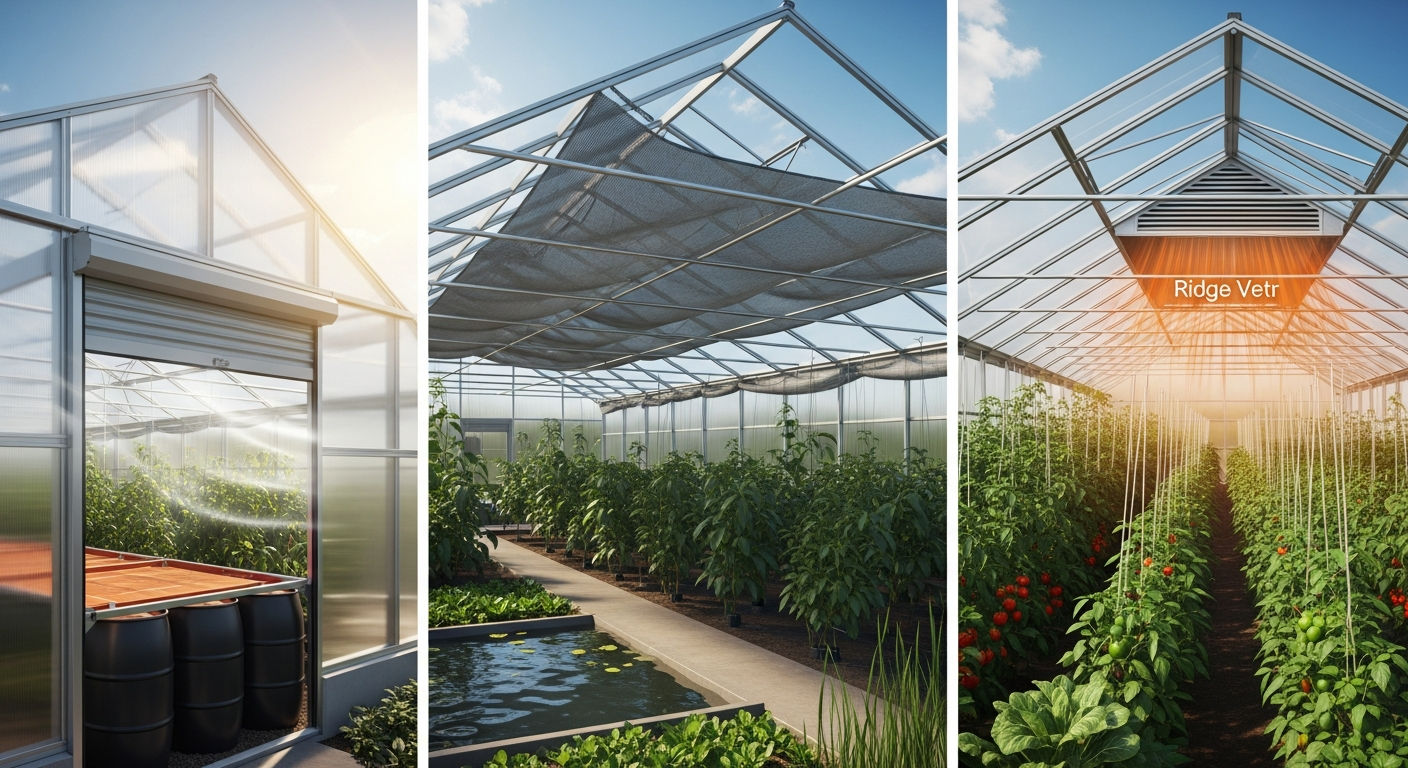
Designing for Passive Airflow
- Ridge Vents: Located at the highest point of your greenhouse, these are essential for allowing superheated air to escape. As hot air rises, it naturally flows out through these vents. For maximum efficiency, ridge vents should be large and ideally run the length of the greenhouse.
- Sidewall Vents: Positioned low on the greenhouse walls, these vents allow cooler, denser air to enter. The ideal setup involves having sidewall vents opposite your ridge vents, promoting a robust “stack effect.” This creates a continuous flow where cool air enters, displaces hot air, and pushes it out through the top.
- Cross-Ventilation: If your greenhouse has sidewall vents on opposite sides, opening them simultaneously can create excellent cross-ventilation, especially on breezy days. This helps to flush out warm air quickly and uniformly.
- Optimal Vent Size: A general rule of thumb for effective passive ventilation is that your combined vent opening area (ridge and sidewall) should be at least 15-20% of your greenhouse floor area. Larger is often better, particularly in warmer climates.
Strategic Manual Venting
Even with perfectly placed vents, manual intervention is key. Begin opening your vents early in the morning before temperatures start to soar, and keep them open throughout the day, closing them only as evening temperatures cool down. Pay attention to wind direction; sometimes adjusting vent openings can help channel breezes through your structure more effectively. Monitoring your internal temperature regularly with a thermometer will help you learn the optimal times and vent configurations for your specific greenhouse and climate.
The Power of Shade: Blocking the Sun’s Intensity
Direct solar radiation is the primary driver of heat buildup inside a greenhouse. While sunlight is crucial for plant growth, too much can lead to scorching and rapid temperature increases. Strategic shading is a highly effective, electricity-free cooling method.
Shade Cloths: Your Flexible Ally
- Choosing the Right Density: Shade cloths come in various densities, typically ranging from 30% to 70% light blockage. For most plants and summer cooling, a 30-50% shade cloth is sufficient. Too dense, and you risk limiting essential light for plant growth.
- External Application is Best: Applying shade cloth to the exterior of your greenhouse is far more effective than internal placement. When placed outside, it reflects sunlight before it even hits the glazing, preventing heat from entering. Internal shade cloths will still allow solar radiation to pass through the glazing, trapping some heat inside before it’s blocked.
- Ease of Installation and Removal: Choose a system that allows you to easily install and remove the shade cloth as seasons change. You’ll want full sun exposure during cooler months or for specific plant needs.
Whitewashing and Shading Paints
For a more permanent, yet still temporary, shading solution, consider whitewashing your greenhouse roof or applying specialized shading paints. These products are typically diluted with water and sprayed or rolled onto the exterior glazing. They create a translucent white coating that reflects sunlight while still allowing diffused light to pass through.
- Cost-Effective: Whitewash is a very economical way to reduce solar gain.
- Gradual Removal: Many shading paints are designed to gradually wear off with rain, or they can be scrubbed off at the end of the season when more light is desired.
- Diffused Light: The white coating helps diffuse harsh direct sunlight, reducing hot spots and providing more even illumination for your plants.
Natural and Living Shade
Don’t overlook the potential of natural landscaping. Strategically planted deciduous trees on the south or west side of your greenhouse can provide excellent shade during the hot summer months. Their leaves will block intense solar radiation, and in winter, once the leaves fall, they’ll allow full sunlight to penetrate. Similarly, training vining plants like gourds or certain ornamental vines to grow over a trellis adjacent to or even directly on a south-facing wall can provide seasonal, living shade.
Harnessing Water: Evaporative Cooling and Thermal Mass
Water, in its various forms, offers powerful, electricity-free cooling capabilities through evaporation and thermal mass principles.
Evaporative Cooling: The Misting Effect
Evaporative cooling works on the principle that as water changes from liquid to gas (evaporates), it absorbs heat from its surroundings, thus cooling the air. You can manually achieve this effect in your greenhouse:
- Misting Plants and Surfaces: On particularly hot, dry days, manually misting your plants (avoiding direct midday sun to prevent leaf burn) or spraying down your greenhouse paths and floors with a hose can significantly lower ambient temperatures. The evaporating water will draw heat from the air.
- Wet Porous Materials: Placing trays of moist sand or gravel under benches, or simply wetting down concrete floors, can provide a sustained source of evaporation. As the water slowly evaporates, it contributes to cooling and raises humidity, which many tropical plants appreciate.
- Caution with Humidity: While evaporative cooling is effective, be mindful of excessive humidity, especially in conjunction with poor ventilation. High humidity and warmth can create ideal conditions for fungal diseases. Ensure good airflow to complement any misting efforts.
Thermal Mass: Water Barrels as Heat Sinks
Water has a high specific heat capacity, meaning it can absorb and store a significant amount of heat energy without a drastic increase in its own temperature. This property makes it an excellent thermal mass material for your greenhouse.
- Strategically Placed Barrels: Place several large, dark-colored water barrels (e.g., recycled rain barrels) filled with water inside your greenhouse. During the day, the water will absorb excess heat, preventing extreme temperature spikes.
- Nighttime Release: As temperatures drop at night, the stored heat will slowly radiate back into the greenhouse, helping to moderate nighttime lows and providing a more stable environment for your plants.
- Humidity Contribution: The exposed surface of the water in these barrels will also contribute a small amount of humidity to the greenhouse air through evaporation, complementing your cooling efforts.
Smart Design and Landscaping: Building for Coolness
While some design elements might be considered during initial construction, many can be adapted or improved upon for an existing greenhouse to enhance natural cooling.
Greenhouse Orientation
The direction your greenhouse faces has a significant impact on solar gain. In northern hemisphere regions, an east-west orientation is often recommended for maximum winter sun exposure. However, for summer cooling, placing the longest side of your greenhouse along an east-west axis can maximize morning and late afternoon sun while minimizing exposure to the intense midday sun on the shorter sides. If your greenhouse is already built, consider adding extra shading to the most exposed walls.
Reflective Surfaces and Ground Cover
- Light-Colored Exterior: Painting the exterior frame of your greenhouse a light color (white or reflective silver) can help reflect solar radiation rather than absorbing it.
- Exterior Ground Cover: The area immediately surrounding your greenhouse can influence its temperature. Bare soil or dark pavement will absorb and radiate heat, increasing the ambient temperature around your structure. Planting grass, light-colored gravel, or low-growing ground cover immediately around the greenhouse can help keep the surrounding air cooler, which in turn benefits your passive ventilation efforts.
Creating a Microclimate
Your surrounding landscape can significantly influence the microclimate around your greenhouse. Planting shade trees (as mentioned), strategically placing large shrubs to channel breezes, or even incorporating a small pond or water feature nearby can create cooler, more humid air that is then drawn into your greenhouse through passive ventilation. A pond, for instance, provides a large evaporating surface that cools the surrounding air.
Conclusion
Keeping your greenhouse naturally cool without relying on electricity is not only an environmentally conscious choice but also a rewarding challenge for any gardener. By understanding and implementing the principles of passive ventilation, strategic shading, and harnessing the power of water, you can create a stable, comfortable environment for your plants. Remember that a multi-faceted approach often yields the best results; combine several of these methods for comprehensive cooling. Experiment with different techniques, observe how your plants respond, and adapt your strategies to suit your specific climate and greenhouse design. With thoughtful planning and consistent effort, you’ll ensure your greenhouse remains a haven for healthy growth, even when summer temperatures climb.