
Summer’s scorching embrace can turn your thriving greenhouse into a sweltering oven, threatening to wilt delicate plants and stunt growth. Managing light intensity and heat is a constant balancing act for every greenhouse enthusiast. For decades, traditional black shade cloth has been the go-to solution, offering a simple way to block out excessive sunlight. However, as horticulture evolves, so do the tools we use. Enter aluminet shade cloth, a modern marvel promising superior performance. But what exactly are the differences, and why might you choose one over the other? In this comprehensive guide, we’ll delve deep into the world of greenhouse shade solutions, pitting aluminet against black shade cloth to help you cultivate the perfect climate for your crops.
Understanding Greenhouse Shade: More Than Just Blocking Light
Before we compare the contenders, it’s essential to understand the multifaceted role of shade in a greenhouse environment. Shade cloth isn’t just about making things darker; it’s about creating optimal growing conditions. Too much direct sunlight can lead to:
- Plant Sunburn: Leaves can develop bleached spots or necrosis.
- Heat Stress: High temperatures inhibit photosynthesis, reduce water uptake, and can even kill plants.
- Excessive Transpiration: Plants lose water too quickly, leading to wilting and increased irrigation needs.
- Reduced Fruit Set and Yield: Stress conditions can negatively impact productivity.
The goal of any good shade solution is to mitigate these issues while still allowing sufficient light for healthy growth. This involves managing not just the quantity of light, but also its quality and the associated heat.
Black Shade Cloth: The Traditional Workhorse
Black shade cloth has long been the standard for greenhouse shading, and for good reason. Made from woven or knitted polyethylene, it’s designed to block a specific percentage of sunlight, ranging from 30% to 90%. Its widespread adoption comes with several inherent benefits and some notable drawbacks.
The Pros of Black Shade Cloth:
- Cost-Effective: Generally more affordable upfront than aluminet, making it an accessible option for many growers.
- Simple Functionality: Effectively blocks a determined percentage of direct solar radiation.
- Durability: Most black shade cloths are UV stabilized and quite resilient, lasting for many seasons if properly maintained.
- Versatility: Available in a wide range of shade percentages to suit different crop needs and climates.
The Cons of Black Shade Cloth:
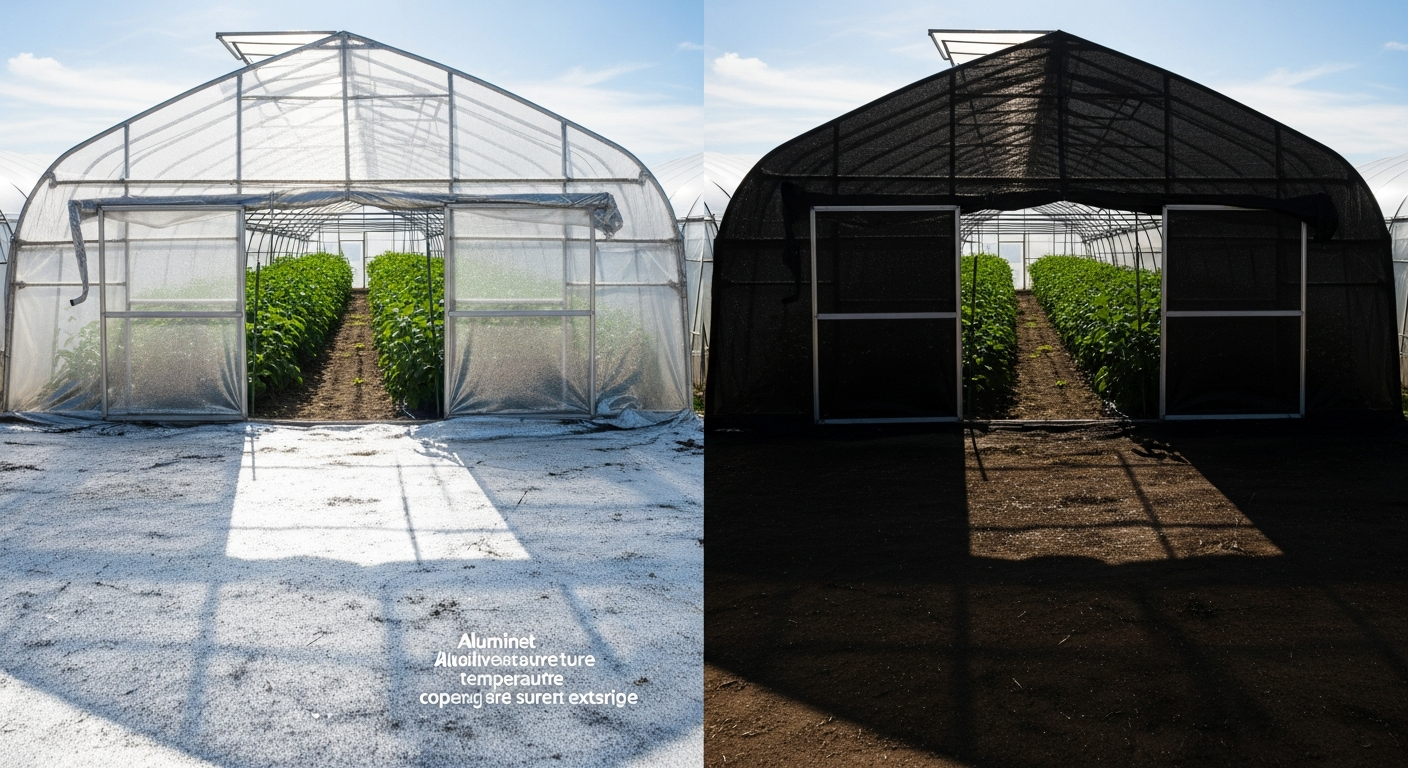
- Heat Absorption: This is its most significant drawback. Black materials absorb solar radiation, which then radiates as heat into the greenhouse. This can lead to a significant increase in internal temperatures, especially in hot climates, counteracting some of the shading benefits.
- “Dead” Shade: Black shade cloth primarily works by blocking light, leading to a more direct, less diffused shadow. This can create stark contrasts between shaded and unshaded areas, potentially causing uneven plant growth and hot spots.
- Lack of Diffusion: Light quality can suffer. Without proper diffusion, plants may still experience concentrated beams of light, or some areas may be too dark, hindering optimal photosynthesis.
- Limited Thermal Regulation: While it reduces direct sunlight, its heat absorption limits its effectiveness in truly cooling the greenhouse. It offers little to no benefit for nighttime heat retention.
For growers in cooler climates or those seeking only minimal light reduction, black shade cloth can still be a viable and economical choice. However, for those battling intense heat, its limitations become apparent.
Aluminet Shade Cloth: The Reflective Revolution
Aluminet shade cloth represents a significant leap forward in greenhouse climate control technology. Developed by Israeli company Polysack, it’s a highly reflective screen made from metallized high-density polyethylene (HDPE) strips, woven or knitted into a mesh. This unique construction provides a distinct set of advantages over traditional black shade cloth.
The Advanced Benefits of Aluminet Shade Cloth:
- Superior Heat Reflection: This is aluminet’s flagship feature. Instead of absorbing solar radiation like black cloth, aluminet reflects up to 80% of it away from the greenhouse. This dramatically reduces the amount of heat entering the structure, leading to significantly lower internal temperatures.
- Excellent Light Diffusion: The reflective strips and knitted structure of aluminet scatter sunlight evenly across the greenhouse canopy. This diffused light penetrates deeper into the plant foliage, reducing hot spots and ensuring more uniform growth. Plants receive high-quality, usable light without the harsh intensity that causes stress.
- Reduced Plant Stress: By providing more stable temperatures and diffused light, aluminet greatly reduces heat stress, water stress, and sunburn on plants. This leads to healthier, more vigorous growth and often higher yields.
- Thermal Screening at Night: Aluminet isn’t just for daytime cooling. Its reflective properties also work in reverse, helping to retain heat within the greenhouse during cooler nights. This can reduce the need for supplemental heating, particularly in transitional seasons, contributing to energy savings.
- Energy Efficiency: The combination of superior daytime cooling and nighttime heat retention can lead to substantial reductions in energy consumption for both cooling (fans, evaporative pads) and heating systems.
- Durability and Longevity: Aluminet is highly UV stabilized, resistant to chemicals, and designed to withstand harsh weather conditions, offering a long service life.
- Air Circulation: The knitted structure allows for better airflow compared to some solid black shade cloth types, further aiding in temperature regulation and humidity control.
Aluminet comes in various shade percentages, typically ranging from 30% to 70%, offering flexibility to meet diverse crop requirements and climatic conditions. Its ability to create a cooler, more stable environment makes it a game-changer for professional growers and serious hobbyists alike.
Aluminet vs. Black Shade Cloth: A Direct Comparison
Let’s put them head-to-head on the most critical factors for greenhouse performance:
1. Heat Management:
- Aluminet: Reflects solar radiation, significantly lowering internal temperatures (often 5-10°F cooler or more than ambient). Also helps retain heat at night.
- Black: Absorbs solar radiation, radiating heat into the greenhouse, potentially increasing internal temperatures. Offers no nighttime thermal benefit.
2. Light Quality:
- Aluminet: Provides highly diffused light, distributing it evenly and reducing hot spots, promoting better penetration into the plant canopy.
- Black: Offers more direct, “dead” shade by simply blocking light, which can lead to uneven light distribution and potential darker areas.
3. Plant Health & Growth:
- Aluminet: Leads to reduced plant stress (less sunburn, wilting), more stable growing conditions, and often results in healthier, more vigorous plants with higher yields due to optimal light exposure.
- Black: Reduces direct sun damage but can still contribute to heat stress due to absorption. Light quality might not be optimal for all plants.
4. Energy Efficiency:
- Aluminet: Offers significant potential for energy savings by reducing the need for active cooling during the day and heating at night.
- Black: Has limited impact on energy savings; may even increase cooling costs due to heat absorption.
5. Cost:
- Aluminet: Higher upfront investment.
- Black: Lower upfront investment.
While black shade cloth offers a cheaper initial outlay, the long-term operational savings, improved plant health, and superior growing environment provided by aluminet often make it the more economical and beneficial choice in the long run, especially in warmer climates.
Choosing the Right Shade Cloth for Your Greenhouse
The best shade cloth for your greenhouse depends on several factors:
- Your Climate: If you live in a region with intensely hot summers and high solar radiation, aluminet is almost always the superior choice for effective cooling and plant protection. In milder climates, black shade cloth might suffice for simple light reduction.
- Your Crop’s Needs:
- For sun-loving plants that still need heat protection (e.g., tomatoes, peppers, some ornamentals), aluminet’s diffused light and cooling are ideal.
- For very shade-loving plants (e.g., orchids, some ferns) where deep shade is paramount, a high-percentage black shade cloth might be considered, but aluminet at a higher percentage can still offer better heat management.
- Your Budget: Consider both the initial purchase price and potential long-term operational costs. While black shade cloth is cheaper, the energy savings and improved crop quality with aluminet can quickly recoup the higher investment.
- Greenhouse Structure: Some growers use a combination, perhaps black shade cloth on side walls for privacy or specific shading, and aluminet on the roof for maximum heat reflection.
- Desired Light Percentage: Both types are available in various percentages. Choose one that provides enough light for photosynthesis without stressing your plants. A good starting point for many general crops is 30-50% shade.
Practical Tip: If you’re unsure, consider testing a small section of aluminet in your greenhouse. Monitor plant response and internal temperatures to see the difference firsthand before committing to a full installation.
Conclusion: Investing in Optimal Greenhouse Climates
While black shade cloth has served greenhouse growers admirably for years, aluminet shade cloth offers a compelling case for a modern, more effective approach to climate control. Its ability to actively reflect solar radiation, diffuse light evenly, and even help retain heat at night translates to a significantly more stable and favorable growing environment for your plants. This often results in reduced plant stress, healthier growth, higher yields, and tangible energy savings.
For those serious about optimizing their greenhouse conditions and battling the challenges of intense heat, investing in aluminet shade cloth isn’t just an upgrade; it’s a strategic decision that pays dividends in plant health, operational efficiency, and ultimately, your success as a grower. Embrace the reflective revolution and give your plants the ideal climate they deserve.