
Cultivating vibrant, productive tomato plants in a greenhouse offers incredible control over their environment, leading to bountiful harvests. However, this control also brings its own set of challenges, particularly when it comes to managing light and heat. While tomatoes are sun-loving plants, there can be too much of a good thing, especially during the scorching summer months or in intensely sunny climates. This is where shade cloth becomes an indispensable tool for many greenhouse growers. But with various densities available, choosing the right one for your greenhouse tomatoes can feel like a daunting task. Don’t worry, we’re here to shed some light on selecting the perfect shade cloth density to keep your tomato plants happy, healthy, and producing delicious fruit.
Understanding Your Tomato Plants’ Light Needs
Tomatoes are generally considered high-light plants, thriving on ample sunlight to fuel photosynthesis, growth, and fruit development. In a greenhouse setting, they typically perform best with a Daily Light Integral (DLI) between 20-30 mol/m²/day, and sometimes even higher for optimal fruit production. However, light intensity also directly translates to heat, and excessive heat combined with intense sunlight can quickly stress your plants, leading to a host of problems:
- Sunscald: Direct, intense sunlight can burn the fruit, leaving bleached, papery spots that render them unmarketable and susceptible to rot.
- Blossom Drop: High temperatures (consistently above 85-90°F or 29-32°C) can cause tomato flowers to abort before pollination, significantly reducing your yield.
- Reduced Fruit Set: Even if blossoms don’t drop, pollen viability can decrease in extreme heat, leading to poor fertilization and fewer fruits.
- Flavor Compromise: While sunlight is essential for sugar development, extreme heat can sometimes lead to less flavorful tomatoes due to altered metabolic processes.
- General Plant Stress: Leaves may wilt, curl, or turn yellow, indicating overall stress and diverting energy away from fruit production.
Conversely, too little light can lead to spindly growth, poor flowering, and a lack of fruit development. The goal with shade cloth is to strike a delicate balance: reduce heat and excessive light intensity without unduly limiting the crucial light needed for photosynthesis.
Factors Influencing Shade Cloth Density Choice
There’s no single “magic number” for shade cloth density that fits all greenhouse tomato growers. The ideal percentage will depend on several critical factors unique to your specific situation:
Your Geographic Location and Climate
- Sun Intensity: Growers in Arizona or Texas, for example, will likely need a higher shade density than those in Washington or Maine due to significantly stronger solar radiation.
- Average Summer Temperatures: If your summers consistently soar into the high 90s or even 100s (°F), more shade will be necessary to mitigate heat buildup.
- Humidity: High humidity combined with high temperatures can exacerbate heat stress, making shade cloth even more important.
Greenhouse Structure and Materials
- Glazing Material: Different materials transmit light and heat differently. Polycarbonate, for instance, often diffuses light better than single-pane glass, but might still allow excessive heat.
- Ventilation: A greenhouse with excellent passive or active ventilation might handle higher light intensities without as much shade, as hot air is effectively removed.
- Orientation: The way your greenhouse is oriented can affect which sides receive the most intense, prolonged sunlight.
Tomato Variety
Some tomato varieties are more heat-tolerant than others. Heirloom varieties, for instance, are often more susceptible to blossom drop and sunscald than modern hybrids bred for warmer climates. Researching the specific needs of the varieties you’re growing can provide valuable clues.
Season of Growth
Shade cloth is primarily a tool for summer. In spring or fall, when light levels are naturally lower and temperatures milder, shade cloth is usually unnecessary and can even be detrimental by reducing essential light. Deploy it when peak summer conditions arrive and remove it as temperatures cool and light intensity wanes.
Existing Cooling Systems
If your greenhouse is equipped with robust cooling systems like evaporative coolers (swamp coolers), misters, or powerful exhaust fans, you might be able to get away with a lower shade cloth density, or even none at all, compared to a greenhouse that relies solely on passive ventilation.
Recommended Shade Cloth Densities for Greenhouse Tomatoes
Based on the factors above, here’s a general guideline for choosing shade cloth density for greenhouse tomatoes:
20-30% Shade Cloth: The Sweet Spot for Most
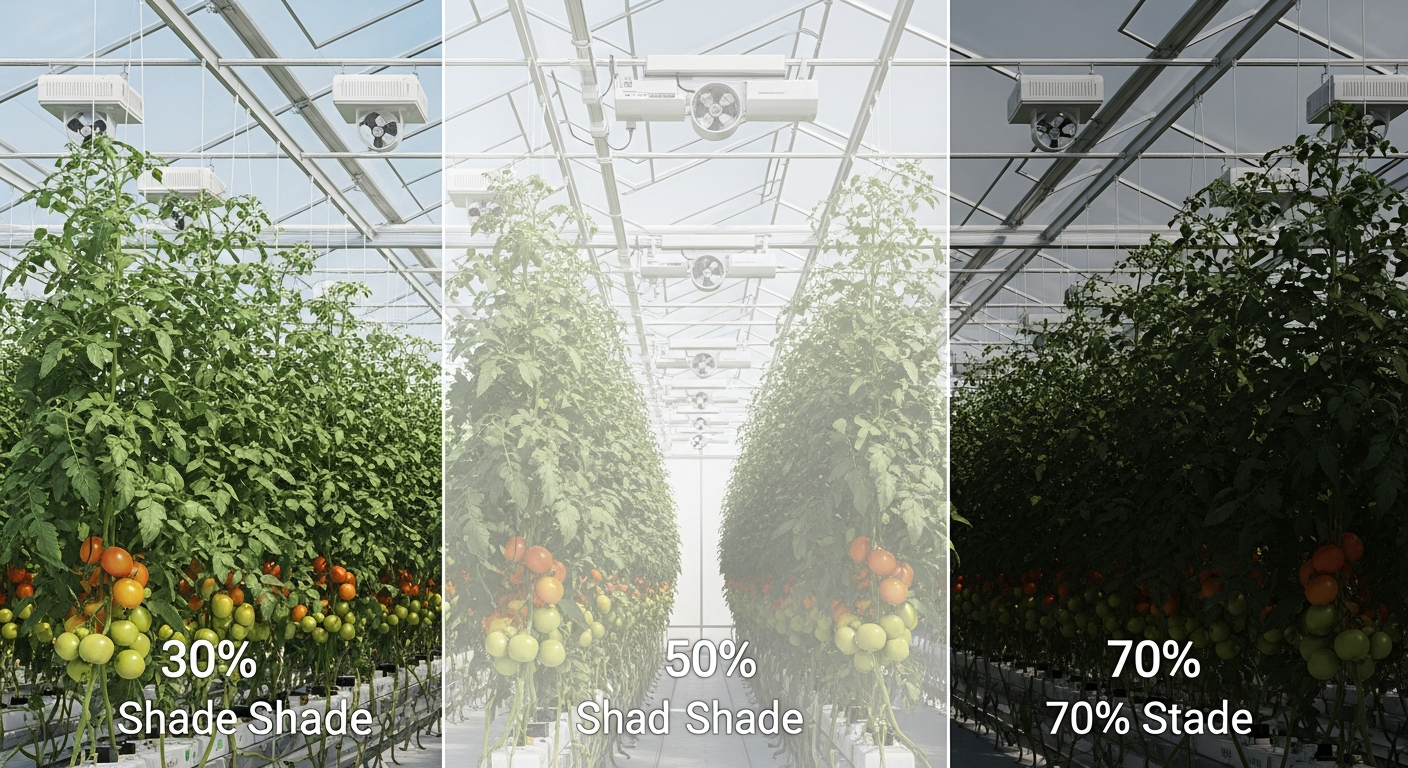
For the majority of greenhouse tomato growers in temperate to warm climates, a 20% to 30% shade cloth is often the ideal choice. This range provides significant benefits without excessively reducing the crucial light needed for photosynthesis and fruit development.
- Benefits:
- Significantly reduces heat buildup inside the greenhouse, often by 10-15°F (5-8°C), making conditions more favorable for plants and workers.
- Effectively prevents sunscald on developing fruit, especially for exposed trusses.
- Helps mitigate blossom drop by keeping temperatures within an acceptable range for pollination and fruit set.
- Maintains high enough light levels for robust plant growth and excellent fruit flavor.
- When to Use:
- During peak summer months (June, July, August in the Northern Hemisphere) when daily highs consistently exceed 85°F (29°C).
- In regions with strong, direct sunlight but not extreme desert heat.
- For most standard tomato varieties.
30-40% Shade Cloth: For Intense Climates or Sensitive Varieties
If you’re gardening in an exceptionally hot, sunny climate (like the desert Southwest) or are growing particularly heat-sensitive heirloom varieties, a 30% to 40% shade cloth might be more appropriate. This higher density offers a greater degree of heat reduction.
- Benefits:
- Provides a more substantial temperature reduction, crucial in regions where ambient temperatures frequently hit triple digits.
- Offers enhanced protection against sunscald and extreme heat stress for delicate varieties.
- Considerations:
- While beneficial for heat reduction, be mindful that 40% shade can reduce photosynthetic activity more significantly. Monitor your plants closely for any signs of light deficiency (e.g., elongated growth, pale leaves, reduced fruit set).
- Only opt for this density if you are confident that 20-30% shade isn’t sufficient to manage your greenhouse temperatures and protect your plants.
Over 40% Shade: Generally Not Recommended for Tomatoes
Shade cloth densities above 40% (e.g., 50% or 60%) are typically too dense for fruiting tomato plants. While they offer excellent heat reduction, they also block too much light, leading to:
- Leggy, weak growth.
- Poor flowering and fruit set.
- Reduced yield and potentially bland-tasting fruit due to insufficient sugar development.
These higher densities are usually reserved for propagation areas, delicate seedlings, or shade-loving crops like lettuce or some herbs.
Practical Tips for Implementing Shade Cloth
- Monitor Your Plants: The best indicator of whether your shade cloth density is correct is your plants themselves. Observe their foliage, flowering, and fruit development. Are leaves wilting despite adequate watering? Is there blossom drop? Are fruits developing sunscald? Conversely, are plants looking weak and leggy?
- Monitor Temperatures: Invest in a good thermometer for your greenhouse. Track daily high and low temperatures inside. This data will tell you how effectively your shade cloth (and ventilation) is managing heat.
- Deploy and Remove Strategically: Don’t leave shade cloth on year-round. Install it when hot weather consistently arrives and remove it as temperatures cool in late summer or early fall to maximize available light for ripening fruit.
- White vs. Black Shade Cloth: While both block light, white shade cloth reflects more solar radiation, potentially leading to slightly cooler greenhouse temperatures than black shade cloth of the same density. Black shade cloth tends to be more durable in some applications.
- External Application is Best: Whenever possible, install shade cloth on the outside of your greenhouse. This blocks the sun’s energy before it even enters the structure, providing more effective cooling than internal shading.
- Consider Roll-Up Options: For flexibility, consider shade cloth systems that can be easily rolled up or deployed as needed, allowing you to adapt to changing weather conditions.
Conclusion
Selecting the optimal shade cloth density for your greenhouse tomatoes is a nuanced decision that hinges on your unique growing environment and specific plant needs. While a 20% to 30% shade cloth will serve most growers exceptionally well, those in intensely hot climates might benefit from a slightly higher 30% to 40% density. Remember to continuously monitor your plants and internal greenhouse temperatures. By carefully observing their cues and adjusting your shade strategy accordingly, you’ll ensure your tomatoes receive just the right amount of light and heat, leading to a healthier crop and a more abundant, flavorful harvest. Happy growing!