
In the intricate world of plumbing and water distribution, many factors contribute to the overall performance and efficiency of a system. While the pump often takes center stage, its effectiveness is profoundly influenced by an often-underestimated variable: plumbing diameter. From a trickling shower to an industrial water supply, the size of your pipes plays a critical role in how hard your pump has to work, how much energy it consumes, and ultimately, the water pressure you experience. Understanding this fundamental relationship is key to designing, maintaining, and optimizing any pumping system for longevity and peak hydraulic performance.
The Fundamentals: Understanding Water Flow, Pressure, and Friction
Before diving into the specifics of pipe diameter, it’s essential to grasp the core principles governing water movement within a closed system. These elements—flow rate, water velocity, and friction loss—are intrinsically linked and form the foundation of our discussion.
Decoding Flow Rate and Water Velocity
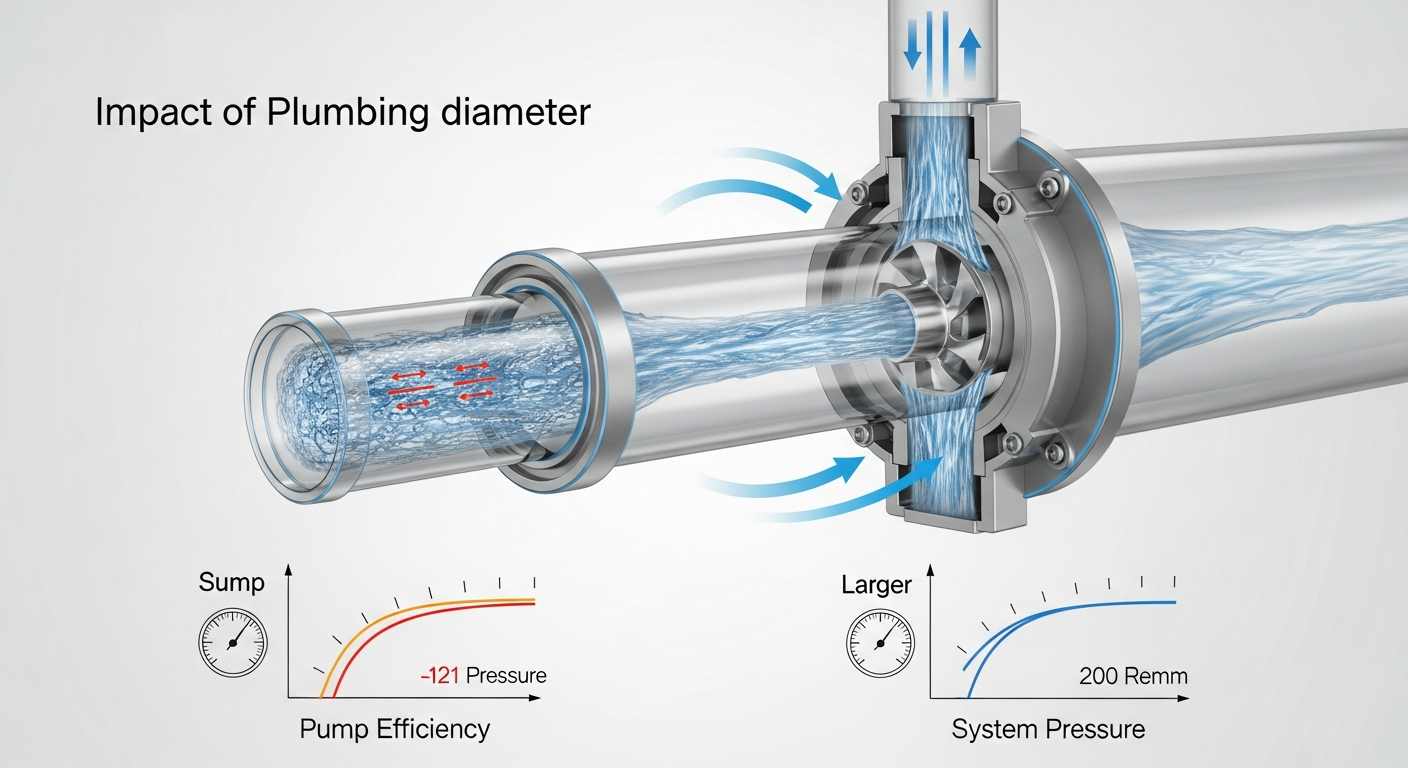
Flow rate refers to the volume of water moving through a pipe over a given period, typically measured in gallons per minute (GPM) or liters per second (L/s). It’s the amount of water you need to deliver to satisfy demand. Water velocity, on the other hand, is the speed at which the water travels through the pipe, usually measured in feet per second (ft/s) or meters per second (m/s). These two are related: for a given flow rate, a smaller pipe will result in higher water velocity, and a larger pipe will result in lower velocity.
- High velocity: Can lead to increased noise, erosion of pipe materials, and a greater potential for water hammer.
- Low velocity: Can lead to sediment buildup and inadequate delivery for demand, but generally reduces friction.
Finding the right balance is crucial for efficient and durable plumbing systems.
The Enemy of Efficiency: Friction Loss (Head Loss)
As water flows through pipes, it encounters resistance from the inner walls of the pipe and from fittings (elbows, tees, valves). This resistance is known as friction loss, or more technically, head loss. It’s the energy that the pump expends just to overcome this resistance, rather than moving water to its intended destination or building useful pressure. Think of it like a car driving uphill: the engine has to work harder to maintain speed. Similarly, a pump has to work harder to overcome friction.
- Friction loss increases significantly with:
- Higher water velocity
- Longer pipe runs
- Rougher inner pipe surfaces (e.g., older, corroded pipes)
- More fittings and bends
- Smaller pipe diameters
The relationship between pipe diameter and friction loss is not linear; it’s exponential. A slight reduction in pipe diameter can lead to a disproportionately large increase in friction loss. This is a critical factor when considering pump efficiency and system pressure.
How Plumbing Diameter Affects Pump Efficiency
The size of your plumbing directly dictates the amount of work your pump must perform. This is where the concept of pump efficiency truly comes into play. An inefficient system wastes energy, costs more to operate, and reduces the lifespan of your equipment.
Smaller Pipes: Increased Resistance, Decreased Efficiency
When water is forced through a pipe with a small diameter, its velocity increases significantly for a given flow rate. This higher velocity dramatically increases friction loss. Consequently, the pump has to generate a much higher “head” (pressure) just to push the water through the restrictive piping. This means:
- Higher Energy Consumption: The pump motor draws more power to overcome the increased resistance. Over time, this translates to significantly higher electricity bills.
- Reduced Flow Rate: Even if the pump is rated for a certain GPM, the actual flow rate delivered to the endpoint will be lower due to the intense pressure drop caused by friction.
- Premature Pump Wear: Running a pump consistently at its maximum capacity or against high head can lead to overheating, increased vibration, and accelerated wear and tear on components like seals and bearings, shortening its operational life.
- Risk of Cavitation: In extreme cases, especially on the suction side, undersized pipes can cause pressure to drop below the vapor pressure of the water, leading to the formation of vapor bubbles. When these bubbles collapse, they can cause significant damage to the pump’s impeller and casing, a phenomenon known as cavitation.
It’s a common misconception that smaller pipes mean stronger pressure; in reality, they often mean higher velocity but significantly reduced useful pressure at the tap due to friction.
Larger Pipes: The Sweet Spot for Energy Savings and Performance
Conversely, selecting pipes with an appropriate or slightly larger diameter for the required flow rate can dramatically improve pump efficiency. When water flows through a wider pipe, its velocity decreases, leading to a substantial reduction in friction loss. This allows the pump to operate closer to its Best Efficiency Point (BEP) on its performance curve, meaning:
- Lower Energy Consumption: The pump requires less energy to move the same volume of water, resulting in substantial savings on operating costs over the system’s lifetime.
- Increased Actual Flow Rate: More of the pump’s power is converted into useful water delivery, ensuring adequate supply to all fixtures and appliances.
- Extended Pump Lifespan: A pump operating efficiently and without excessive strain will last longer and require less frequent maintenance.
- Reduced Noise and Vibration: Lower water velocities contribute to quieter operation and less stress on the plumbing infrastructure.
While installing larger pipes may involve a slightly higher initial material cost, the long-term energy savings and reduced maintenance often make it a wise investment. Proper plumbing design prioritizes balancing initial costs with ongoing operational efficiency.
The Direct Link to System Pressure
Beyond pump efficiency, plumbing diameter directly influences the system pressure experienced throughout your water distribution network. This is the pressure that determines how strong your shower is, how quickly your toilet refills, or how effectively your irrigation system functions.
Pressure Drop and Its Consequences
As water travels from the pump through pipes, fittings, and valves, it loses pressure due to friction. This phenomenon is called pressure drop. Smaller diameter pipes contribute disproportionately to pressure drop. The consequences of excessive pressure drop are immediately noticeable:
- Weak Water Flow at Fixtures: If your shower feels like a trickle or your faucets have low output, it’s often a sign of significant pressure drop, likely due to undersized pipes or excessive friction.
- Simultaneous Use Issues: When multiple fixtures are used at once (e.g., someone flushes a toilet while another is showering), the pressure drop can become so severe that it impacts all points of use, leading to unsatisfactory performance.
- Inefficient Appliance Operation: Appliances like washing machines, dishwashers, and water heaters are designed to operate within certain pressure ranges. Insufficient pressure can lead to longer fill times, reduced performance, and even potential damage to the appliances themselves.
- Extended Filling Times: Bathtubs, sinks, and pools take considerably longer to fill, wasting time and potentially increasing water consumption if users compensate by running water for longer periods.
Effective system pressure management relies heavily on minimizing friction losses through appropriate pipe sizing.
Maintaining Optimal Water Pressure
To maintain optimal water pressure throughout a system, engineers and plumbers utilize various tools and calculations, including flow rate demands, friction loss charts, and an understanding of the relationship between pipe diameter and velocity. The goal is to ensure that even at the furthest or highest point of use, sufficient pressure and flow are available to meet user needs.
Practical steps to maintain or improve system pressure:
- Consult Flow Rate Charts: Determine the aggregate peak demand (GPM) for your property or system, then select pipe diameters that can handle this flow with acceptable velocity and pressure drop.
- Consider Main Service Line Size: Ensure your main water supply line from the utility or well is adequately sized for your property’s needs. An undersized main line will restrict everything downstream.
- Minimize Sharp Bends and Fittings: Every elbow, tee, and valve adds to friction loss. While unavoidable, aim for efficient layouts.
- Periodically Check for Clogs/Corrosion: Over time, mineral buildup or corrosion can effectively reduce the internal diameter of pipes, increasing friction and reducing pressure. Older galvanized steel pipes are particularly prone to this.
- Use Pressure Regulators (Where Appropriate): While not directly related to pipe diameter’s impact on friction, pressure reducing valves can help manage excessively high incoming pressure, protecting fixtures and reducing noise, but they won’t compensate for pressure lost due to undersized pipes.
Practical Considerations for Optimal Plumbing Design
Designing an efficient and reliable plumbing system requires a holistic approach, where pipe diameter is a cornerstone consideration. It’s not just about what physically fits, but what hydraulically performs best.
Balancing Initial Cost and Long-Term Performance
One of the primary debates in plumbing design is the balance between the initial material and installation costs of larger pipes versus the long-term operational savings. While larger diameter pipes are more expensive upfront, they lead to:
- Significant Energy Savings: Reduced pump workload directly translates to lower electricity bills, offering a compelling return on investment over the system’s lifespan.
- Reduced Maintenance and Extended Equipment Life: Less strain on the pump and associated components means fewer repairs and replacements.
- Superior User Experience: Consistent and adequate water pressure ensures customer satisfaction and prevents complaints related to low flow.
For any significant installation, whether residential or commercial, a thorough cost-benefit analysis considering lifecycle costs is highly recommended.
Common Mistakes to Avoid
Understanding the impact of plumbing diameter helps in avoiding costly errors:
- Blindly Replacing with Same Size: If an old system had pressure problems, simply replacing pipes with the same diameter without re-evaluating flow requirements and friction loss is a missed opportunity for improvement.
- Ignoring Future Demand: Designing a system for current needs only, without accounting for potential future expansions (e.g., adding a bathroom, a sprinkler system, or a larger family), can lead to an undersized system down the line.
- Over-Reliance on Pump Horsepower: Trying to compensate for undersized pipes by installing a more powerful pump is inefficient. It will just force water harder, increasing velocity and friction further, leading to more energy waste and noise, without necessarily solving the pressure problem effectively at the point of use.
- Neglecting Suction Line Sizing: The pipe on the suction (inlet) side of the pump is just as, if not more, critical than the discharge side. An undersized suction line can starve the pump, leading to cavitation and severe damage. Always ensure the suction line is at least as large, or often one size larger, than the pump’s inlet port.
For critical applications or larger properties, it is always advisable to consult with a qualified plumbing engineer or experienced professional. They can perform detailed hydraulic calculations to ensure the optimal pipe size is selected for your specific flow rate requirements, total dynamic head, and desired system pressure, guaranteeing both efficiency and reliability.
Conclusion
The impact of plumbing diameter on pump efficiency and system pressure is a fundamental concept in water distribution that homeowners, builders, and professionals must appreciate. An appropriately sized plumbing system is not merely about getting water from point A to point B; it’s about achieving that delivery with minimal energy expenditure, maximum pump longevity, and consistent, reliable water pressure at every tap. By understanding the critical role of friction loss and its exponential relationship with pipe diameter, we can make informed decisions that lead to more sustainable, cost-effective, and satisfying plumbing solutions for any application. Investing in proper pipe sizing is an investment in long-term efficiency and peace of mind.