
In an increasingly data-driven world, the ability to react instantly to environmental changes can be a significant differentiator for efficiency, safety, and productivity. Integrating weather station data directly into real-time system adjustments is transforming how industries operate, from smart agriculture to sophisticated building management and renewable energy optimization. No longer content with merely observing the weather, organizations are leveraging precise, localized meteorological data to automate responses, predict outcomes, and fine-tune operations with unprecedented accuracy. This article delves into the fascinating world of integrating hyper-local weather intelligence into dynamic systems, exploring the technologies, applications, and best practices that enable truly responsive automation.
The Power of Real-Time Weather Data Integration
At its core, real-time weather data integration involves collecting meteorological information from local weather stations and feeding it immediately into automated systems designed to react to specific conditions. Unlike historical weather data, which provides context, or general forecasts, which offer predictions over broader areas, real-time data delivers a precise, up-to-the-minute snapshot of environmental variables at a specific location. This capability unlocks a new level of dynamic control and optimization.
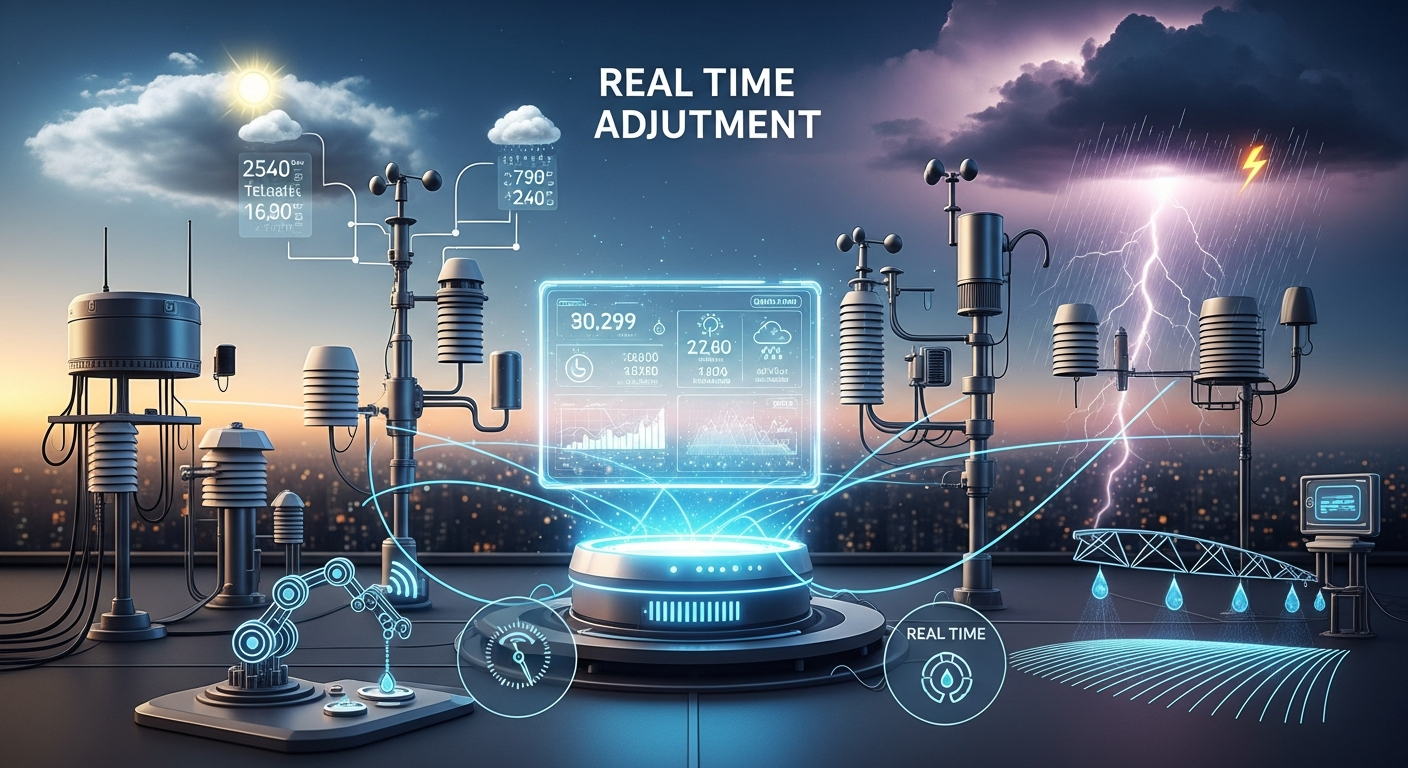
The immediate benefits of this integration are manifold:
- Enhanced Efficiency: Systems can adjust resource allocation (e.g., water, energy) based on actual demand, reducing waste and operational costs.
- Improved Safety: Automated responses to sudden severe weather (e.g., high winds, heavy rain) can protect infrastructure, personnel, and critical processes.
- Increased Productivity: Operations can be optimized based on ideal environmental conditions, leading to better yields in agriculture or more comfortable indoor environments.
- Predictive Maintenance: By monitoring weather-related stress on equipment, systems can schedule maintenance proactively, preventing costly breakdowns.
- Sustainability Goals: Better management of energy and water resources contributes significantly to environmental sustainability efforts.
Integrating this data means moving beyond manual adjustments or time-based schedules. It means creating intelligent systems that operate dynamically, adapting to the nuances of their immediate environment, making them more resilient, responsive, and resource-efficient.
Key Technologies and Components for Seamless Integration
Achieving successful weather station data integration into real-time systems requires a robust stack of interconnected technologies. Understanding these components is crucial for designing an effective and reliable solution.
Weather Station Hardware
- Sensors: Modern weather stations come equipped with a variety of sensors to measure parameters such as temperature, humidity, atmospheric pressure, wind speed and direction, rainfall, solar radiation, and UV index. The choice of sensors depends on the specific application’s needs.
- Data Loggers: These devices store the sensor readings locally before transmission, ensuring data integrity even during network outages.
- Communication Modules: Wireless technologies like Wi-Fi, LoRaWAN, cellular (4G/5G), or satellite are used to transmit data from remote weather stations to central processing units or cloud platforms.
Data Acquisition and Transmission
Once collected, weather data needs to be securely and efficiently transmitted. This often involves:
- APIs (Application Programming Interfaces): Many commercial weather stations and data providers offer APIs for programmatic access to their data feeds. This is a common method for cloud-to-cloud integration.
- MQTT (Message Queuing Telemetry Transport): A lightweight messaging protocol ideal for IoT devices, enabling efficient data transfer from weather station gateways to brokers and then to subscriber applications.
- Modbus/OPC UA: Industrial protocols used for integrating weather data directly into PLCs (Programmable Logic Controllers) or SCADA (Supervisory Control and Data Acquisition) systems, especially in manufacturing or process control environments.
- Edge Computing: For latency-critical applications, processing data at the “edge” (close to the weather station) reduces transmission delays and can provide immediate local responses without relying on a constant cloud connection.
Data Processing and Control Systems
The received weather data is then processed to extract actionable insights and trigger system adjustments.
- Cloud Platforms (e.g., AWS IoT, Azure IoT Hub, Google Cloud IoT Core): These platforms provide services for data ingestion, storage, analytics, and device management, offering scalability and robust infrastructure for processing large volumes of weather data.
- Rule Engines and Logic: Software components that define the conditions under which a system adjustment should occur (e.g., “IF temperature > 25°C AND humidity > 70%, THEN activate cooling system”).
- Actuators and Controllers: These are the physical components that perform the adjustments. Examples include smart thermostats, irrigation valves, ventilation fans, industrial machinery controls, or traffic light systems. PLCs, microcontrollers (like Arduino or Raspberry Pi), and Building Management Systems (BMS) are common controllers.
The synergy between these components forms the backbone of any effective real-time environmental adjustment system, enabling seamless data flow from the sensor to the actuator.
Practical Applications Across Industries
The applications of integrating weather station data into real-time system adjustments are vast and continue to expand. Here are some prominent examples across different sectors:
Precision Agriculture and Farming
Farmers can achieve unprecedented levels of efficiency and yield optimization.
- Smart Irrigation: Weather stations measure soil moisture, rainfall, and evaporation rates. Systems automatically adjust irrigation schedules and water volumes, preventing over-watering or under-watering, conserving water, and reducing disease risk.
- Pest and Disease Management: Specific temperature and humidity conditions foster pest outbreaks or plant diseases. Real-time data can trigger alerts or automated pesticide application systems, allowing for targeted intervention.
- Frost Protection: When temperatures drop to critical levels, automated systems can activate sprinklers or fans in orchards to protect crops from frost damage.
- Fertilizer Application: Wind speed and direction data can be used to optimize the timing of fertilizer or herbicide spraying, ensuring maximum effectiveness and minimizing drift.
Smart Buildings and HVAC Management
Building managers can significantly improve energy efficiency and occupant comfort.
- HVAC Optimization: External temperature, humidity, and solar radiation data can dynamically adjust heating, ventilation, and air conditioning systems. For instance, if outside air is cool and dry, the system might activate economizers to draw in fresh air instead of running energy-intensive compressors.
- Automated Shading: Solar radiation sensors can trigger automated blinds or louvers to reduce solar gain on hot, sunny days, reducing cooling loads and preventing glare.
- Natural Ventilation: Wind speed and direction, combined with indoor air quality sensors, can optimize opening and closing windows or vents for natural ventilation, reducing reliance on mechanical systems.
Renewable Energy Management
Optimizing the performance and integration of renewable energy sources.
- Solar Panel Optimization: Real-time solar radiation and panel temperature data can be used to adjust the tilt of solar trackers for maximum energy capture or to signal when panels need cleaning due to reduced efficiency.
- Wind Turbine Control: Wind speed and direction data are critical for adjusting turbine blade angles (pitch control) for optimal power generation and safety during high winds.
- Grid Management: Forecasting based on real-time weather data helps grid operators balance supply and demand, especially for intermittent renewable sources, integrating them more smoothly into the energy mix.
Transportation and Infrastructure
Enhancing safety and operational efficiency.
- Road Condition Monitoring: Temperature, precipitation, and humidity sensors on roads can trigger alerts for ice formation, automatically deploy de-icing agents, or adjust traffic signal timings during heavy rain.
- Bridge Management: Wind speed and temperature data can monitor structural integrity and trigger warnings or closures for bridges susceptible to extreme weather conditions.
- Airport Operations: Real-time wind and visibility data are critical for runway allocation, flight scheduling, and ground operations, enhancing safety and efficiency.
Implementing a Successful Integration: Best Practices and Challenges
While the benefits are clear, successfully integrating weather station data for automated system adjustments requires careful planning and consideration of several key factors.
Best Practices for Implementation
- Define Clear Objectives: Before diving into technology, clearly articulate what you aim to achieve (e.g., reduce energy consumption by X%, improve crop yield by Y%).
- Select Appropriate Weather Stations: Choose stations with sensors relevant to your application and a communication method compatible with your existing infrastructure or planned IoT platform. Consider accuracy, durability, and maintenance requirements.
- Ensure Data Quality and Reliability: Implement mechanisms for data validation, outlier detection, and redundancy. Calibration of sensors is crucial.
- Design Robust Communication: Choose reliable communication protocols and ensure network stability, especially for mission-critical applications. Consider fail-safes for communication loss.
- Develop Intelligent Control Logic: The rules governing system adjustments should be well-defined, tested, and flexible enough to adapt to varying conditions. Consider using machine learning for more sophisticated predictive control.
- Prioritize Cybersecurity: Protect data transmission and system access from unauthorized intrusions. IoT devices are often targets; ensure strong authentication and encryption.
- Plan for Scalability: Design your architecture to accommodate future expansion, whether adding more weather stations, sensors, or controlled systems.
- Regular Monitoring and Maintenance: Continuously monitor system performance, data accuracy, and the effectiveness of adjustments. Weather stations, like all equipment, require periodic maintenance and recalibration.
Common Challenges
- Data Latency: For truly real-time adjustments, minimizing the delay between data collection and system response is critical. Edge computing can help mitigate this.
- System Interoperability: Integrating diverse hardware and software from different vendors can be complex. Adherence to open standards and robust API management is essential.
- Data Volume and Processing: High-frequency weather data from multiple stations can generate significant data volumes, requiring efficient storage and processing capabilities.
- Environmental Factors: Weather stations are exposed to harsh conditions. Ensuring their resilience and accurate operation over time can be challenging.
- Cost of Implementation: While the ROI is often substantial, the initial investment in hardware, software, and integration expertise can be a barrier for some organizations.
Conclusion
Integrating weather station data into real-time system adjustments represents a significant leap forward in intelligent automation and data-driven decision-making. By harnessing precise, localized environmental information, businesses and organizations can unlock unparalleled efficiencies, bolster safety protocols, and achieve ambitious sustainability goals. From optimizing agricultural yields and enhancing building comfort to refining renewable energy output and safeguarding critical infrastructure, the potential impact is transformative. As technology continues to evolve, making sensors more affordable, communication more reliable, and AI more intelligent, we can expect even more sophisticated and pervasive applications of this powerful integration. Embracing this technology is not just about adapting to the weather; it’s about proactively shaping operational outcomes in an ever-changing world.