
In the intricate ecosystem of modern buildings, where comfort, energy efficiency, and indoor air quality converge, the design of the heating, ventilation, and air conditioning (HVAC) system plays a pivotal role. Often, the spotlight shines on major components like air handling units (AHUs) or chillers, but a truly uniform and efficient climate delivery hinges on a less conspicuous yet critically important element: the air distribution plenum. These unassuming chambers are the unsung heroes of HVAC, responsible for transforming bulk airflow into a consistently conditioned environment. A poorly designed plenum can lead to uneven temperatures, uncomfortable drafts, increased energy consumption, and even compromised indoor air quality, undermining the entire HVAC investment. This article delves into the science and art of designing air distribution plenums, guiding you through the principles and practices necessary to achieve optimal, uniform climate delivery.
Understanding Air Distribution Plenums: The Heart of Uniform Airflow
At its core, an air distribution plenum is an enclosed chamber that serves as a vital intermediary in an HVAC system. Rather than having intricate ductwork extending directly to every diffuser, plenums act as large, low-velocity distribution or collection points for conditioned air. They are designed to equalize static pressure and velocity before air is introduced into or removed from a space, ensuring a more balanced and controlled environment.
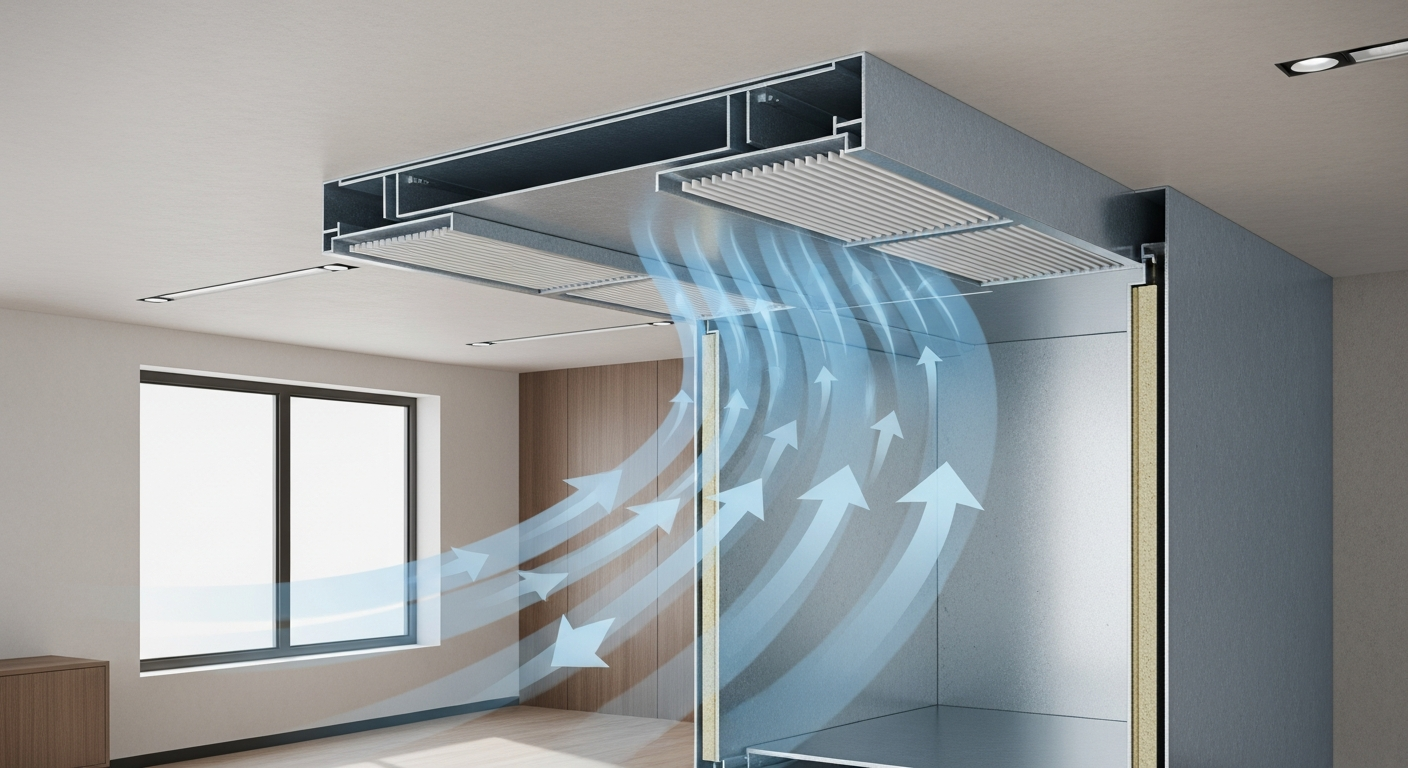
Types of Air Distribution Plenums
- Supply Air Plenums: These chambers receive conditioned air from the main supply ductwork and distribute it to multiple diffusers or grilles within a zone. Their primary function is to transform a high-velocity, turbulent airstream into a low-velocity, uniform pressure environment that can be evenly discharged into the occupied space.
- Return Air Plenums: Conversely, return air plenums collect spent air from a space via return grilles before it is routed back to the air handling unit for reconditioning or exhaust. Ceiling plenums, utilizing the space above a suspended ceiling, are common examples of return air plenums, reducing the need for extensive return ductwork.
- Building Cavity Plenums: Beyond dedicated sheet metal boxes, building cavities themselves can be utilized as plenums. Common examples include the space above a suspended ceiling (ceiling plenum), the space below a raised access floor (raised floor plenum), or even wall cavities. When using building cavities, stringent attention to sealing, fire safety, and cleanliness is paramount to prevent air leakage, contamination, and ensure code compliance.
The strategic use of plenums can significantly reduce the amount of ductwork required, lowering material and installation costs, and often simplifying the overall system layout. However, their design demands meticulous attention to fluid dynamics and architectural integration.
Key Design Principles for Optimal Plenum Performance
Achieving uniform climate delivery from an air distribution plenum is an exercise in managing airflow dynamics. Several critical principles must be adhered to during the design phase.
1. Airflow Dynamics and Velocity Reduction
The primary challenge for a supply air plenum is to effectively convert the high-velocity air entering from the main duct into a low-velocity, stable air mass that can be uniformly discharged through multiple diffusers. If the velocity is too high or unevenly distributed within the plenum, it can lead to:
- Short-circuiting: Air flows directly from the inlet to the nearest diffusers, leaving others starved.
- Drafts: High-velocity air exiting diffusers creates uncomfortable drafts for occupants.
- Noise: Excessive air velocity generates unwanted sound.
Designers often employ strategies such as increasing the plenum’s cross-sectional area significantly relative to the supply duct, installing baffles, turning vanes, or internal flow-straightening devices to slow down and homogenize the airflow.
2. Proper Sizing and Shaping
The dimensions of a plenum are crucial. A plenum that is too small will maintain high velocities and static pressure imbalances, leading to poor distribution. General guidelines suggest a plenum’s cross-sectional area should be significantly larger than the supply duct’s area to allow for proper velocity reduction. For ceiling plenums, the height of the ceiling void, coupled with its overall area, determines its volumetric capacity. The shape can also influence performance; a well-proportioned plenum, potentially with a gradual taper, can promote more even airflow than an abrupt, oddly shaped chamber.
3. Static Pressure Equalization
Uniform static pressure across the plenum is perhaps the most critical factor for ensuring consistent airflow through each diffuser. If the static pressure varies significantly, diffusers closer to the main inlet will receive more air than those further away. Techniques to achieve static pressure equalization include:
- Sufficient Volume: A large enough plenum volume allows air to decelerate and pressure to stabilize.
- Baffles and Perforated Plates: These internal components add controlled resistance, forcing air to distribute more evenly and reducing velocity hot spots.
- Strategically Placed Inlets: Positioning the main air inlet to minimize direct impingement on diffusers and promote turbulent mixing within the plenum.
4. Diffuser Selection and Placement
The performance of the diffusers is inextricably linked to plenum design. Diffusers should be selected based on their throw, spread pattern, noise criteria (NC), and pressure drop characteristics. Crucially, their placement within the plenum area must be optimized:
- Adequate Spacing: Ensure sufficient space between diffusers and the plenum inlet to allow for pressure equalization.
- Avoid Direct Impingement: The incoming air stream should not directly blast into a diffuser, as this can create drafts and noise.
- Even Distribution: Diffusers should be spaced to provide overlapping air patterns for comprehensive coverage, preventing hot or cold spots in the conditioned space.
5. Minimizing Pressure Drop and Enhancing Energy Efficiency
Every component in an air distribution system contributes to pressure drop, which the fan must overcome. A well-designed plenum minimizes unnecessary pressure drop through smooth transitions, adequate sizing, and optimized internal components. Reducing static pressure losses directly translates to lower fan energy consumption, significantly improving the overall energy efficiency of the HVAC system.
Material Selection and Construction Considerations
Beyond the theoretical design, the physical construction of a plenum has profound implications for its performance, durability, safety, and acoustic properties.
1. Materials and Sealing
Sheet Metal (Galvanized Steel, Aluminum): These are common for dedicated plenums due to their durability, ease of fabrication, and excellent sealing capabilities when properly joined.
Plenum-Rated Duct Board: Pre-insulated fiberglass boards can also form plenums, offering inherent thermal and acoustic benefits. However, meticulous sealing of joints and edges is crucial to prevent air leakage and fiber erosion.
Building Cavities: When utilizing ceiling or raised floor cavities, the surrounding construction materials become critical. Gypsum board, concrete slabs, and other building materials must be inspected for porosity and integrity.
Sealing: Air leakage is a major culprit in energy waste and can compromise uniform climate delivery. All joints, seams, and penetrations in plenums, especially those formed by building cavities, must be meticulously sealed with appropriate tapes, mastics, or gaskets. SMACNA (Sheet Metal and Air Conditioning Contractors’ National Association) standards provide guidelines for leakage prevention.
2. Thermal and Acoustic Insulation
Thermal Insulation: Plenums carrying conditioned air often require thermal insulation to prevent heat gain or loss, which impacts energy efficiency and can lead to condensation in humid climates. The insulation material should have an appropriate R-value and be installed without gaps.
Acoustic Insulation: Plenums can be significant sources or transmitters of noise (fan noise, airflow noise). Acoustic liners or insulation can attenuate sound propagation, improving indoor acoustic comfort. Materials must be plenum-rated, non-combustible, and resistant to microbial growth.
3. Fire Safety and Code Compliance
Fire safety is paramount for plenums, especially when building cavities are used. Materials within plenums must meet strict fire resistance ratings (e.g., low flame spread and smoke development ratings, as defined by codes like NFPA 90A). Fire dampers and smoke detectors may be required where ducts penetrate fire-rated barriers or within certain plenum configurations to prevent the spread of fire and smoke throughout the building.
4. Accessibility and Maintainability
Good plenum design considers future access for inspection, cleaning, and maintenance. Access panels should be strategically placed to reach internal components, clean accumulated dust or debris, and verify system performance during commissioning and subsequent operation. Neglecting accessibility can lead to costly and time-consuming maintenance issues down the line.
Advanced Strategies for Enhanced Uniformity and Efficiency
Modern HVAC design leverages sophisticated tools and techniques to push the boundaries of plenum performance.
1. Computational Fluid Dynamics (CFD) Modeling
For complex plenum geometries or critical applications, CFD software can simulate airflow patterns, velocities, and static pressures within the plenum and the conditioned space. This powerful tool allows designers to visualize potential issues (e.g., dead zones, high-velocity streaks, uneven distribution) and optimize plenum geometry, baffle placement, and diffuser selection before construction, saving costly rework.
2. Building Information Modeling (BIM)
BIM integrates plenum design into the overall building model, enabling better coordination with other building systems (structural, electrical, plumbing). This holistic approach helps identify potential clashes, optimizes space utilization, and ensures that plenums are seamlessly integrated into the building’s architecture and performance goals.
3. Smart Control Systems and Variable Air Volume (VAV) Integration
While plenum design focuses on passive distribution, integrating plenums with smart control systems and VAV boxes can significantly enhance dynamic climate delivery. VAV systems allow for variable airflow to individual zones, responding to real-time occupancy and temperature demands. Plenums must be designed to accommodate the varying pressure conditions that VAV systems introduce while still maintaining acceptable distribution uniformity at different airflow rates.
4. Commissioning and System Balancing
Even the best design can underperform without proper commissioning. A crucial final step is the thorough testing, adjusting, and balancing (TAB) of the air distribution system. This involves verifying actual airflow rates through diffusers, measuring static pressures, and making necessary adjustments to ensure the system operates according to design specifications and delivers uniform climate. Regular re-commissioning can help maintain optimal performance over the building’s lifespan.
Conclusion
The air distribution plenum, while often unseen, is a cornerstone of effective HVAC system performance, directly influencing occupant comfort, indoor air quality, and energy consumption. Designing plenums for uniform climate delivery requires a deep understanding of airflow dynamics, careful sizing, strategic integration of internal components, and meticulous attention to material selection and construction details. By embracing sound engineering principles, leveraging advanced simulation tools like CFD, and committing to thorough commissioning, designers can create HVAC systems that provide truly consistent, comfortable, and energy-efficient environments. Investing in expert plenum design is not merely a technical requirement; it is an investment in the long-term comfort, health, and operational efficiency of any building.