
The dream of a lush, productive garden year-round often finds its home within the protective walls of a greenhouse. However, maintaining stable and optimal temperatures inside a greenhouse presents a significant challenge, especially in climates prone to extreme daily temperature fluctuations. The sun’s intense warmth can quickly turn a greenhouse into an oven during the day, while plummeting nighttime temperatures can expose delicate plants to frost and stress. For centuries, gardeners and builders have sought passive, sustainable solutions to this dilemma. Enter thermal mass – a powerful, often overlooked, ally in achieving this delicate balance. Understanding and strategically utilizing thermal mass is not just about keeping plants happy; it’s about drastically reducing energy consumption, extending your growing season, and creating a truly resilient and efficient horticultural environment.
Understanding Thermal Mass: The Science of Heat Storage
At its core, thermal mass refers to a material’s capacity to absorb, store, and then slowly release heat energy. Think of it as a natural battery for heat. In the context of a passive greenhouse, this property is invaluable for moderating internal temperatures without relying on active heating or cooling systems, or at least significantly reducing their demand.
How Thermal Mass Works in a Greenhouse Environment
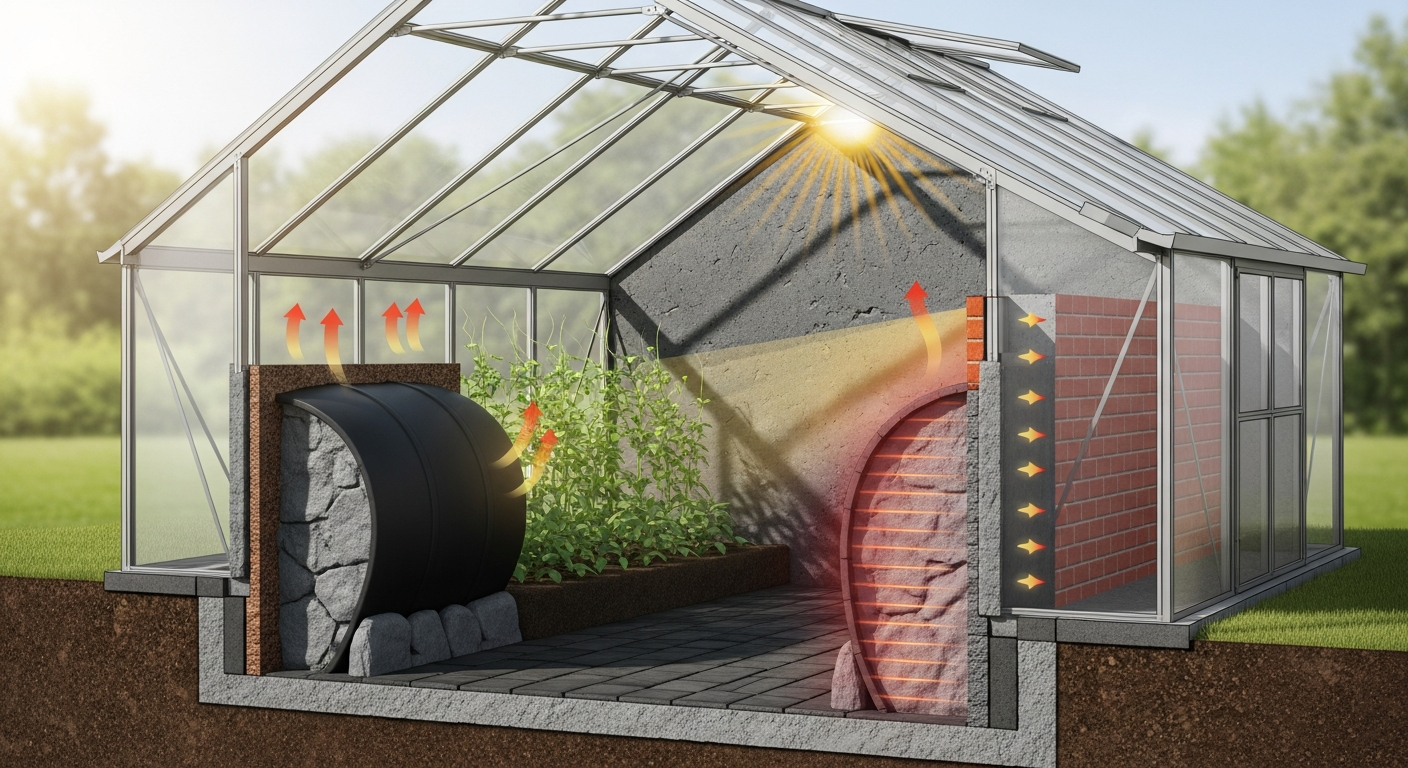
During daylight hours, a greenhouse acts as a solar collector, capturing solar radiation and converting it into heat. Without adequate thermal mass, much of this heat is quickly lost through the glazing or vents, or it causes rapid overheating. Thermal mass materials strategically placed within the greenhouse absorb this excess solar energy. As the sun sets and ambient temperatures drop, these materials then slowly radiate the stored heat back into the greenhouse space, preventing drastic temperature falls and protecting plants from cold shock.
Conversely, in warmer climates, thermal mass can also contribute to passive cooling. During very hot days, if the thermal mass is cooler than the peak ambient temperature, it can absorb some of the heat, delaying the onset of overheating. Then, at night, when temperatures drop, the greenhouse can be vented to release the heat stored in the thermal mass and cool it down for the next day’s cycle.
Key Properties of Effective Thermal Mass Materials
- High Specific Heat Capacity: This is the amount of heat energy required to raise the temperature of a specific mass of a material by one degree. Materials with high specific heat capacity can store a lot of heat for a relatively small temperature increase. Water, for instance, has an exceptionally high specific heat capacity, making it an excellent thermal mass material.
- High Density: Dense materials pack more mass into a smaller volume. Since heat storage capacity is directly related to mass, denser materials can store more heat in a given space, making them efficient thermal storage solutions.
- Good Thermal Conductivity (but not too high): A material needs to be able to absorb and release heat efficiently. While high conductivity allows for quick absorption and release, it’s the *slow and steady* release that is most beneficial for stable temperature regulation. Materials like concrete or stone have a good balance.
By harnessing these properties, thermal mass acts as a natural buffer, smoothing out the peaks and valleys of a greenhouse’s internal temperature, creating a more stable and forgiving microclimate for your plants.
Common Materials for Thermal Mass in Greenhouses
The choice of thermal mass material often depends on availability, budget, and the specific design of your greenhouse. Fortunately, many effective options are readily accessible and can be integrated into both new constructions and existing structures.
Water: The Champion of Heat Storage
Water is arguably the most effective and accessible thermal mass material. Its exceptionally high specific heat capacity means it can store more heat per unit of volume than almost any other common material. A single gallon of water can store a substantial amount of thermal energy.
- Implementation:
- Dark-Colored Water Barrels or Drums: Placing large, dark-colored barrels or drums of water along the north wall or within the greenhouse structure allows them to absorb solar radiation directly. The dark color enhances heat absorption.
- Water Walls: Clear plastic jugs or bottles filled with water, arranged in rows or stacked, can create translucent heat-storing walls.
- Greenhouse Ponds or Aquaponics Systems: A central pond or integrated aquaponics system not only provides thermal mass but also supports aquatic life or fish, adding another dimension to your greenhouse ecosystem.
- Practical Tips:
- Paint water containers a dark color (black or dark blue) to maximize solar absorption.
- Position water mass where it receives direct sunlight during the day.
- Ensure containers are sealed to prevent evaporation, which can increase humidity.
- Consider using food-grade barrels if growing edible plants, especially if there’s a risk of condensation dripping onto plants.
Masonry and Concrete: Structural and Functional
Materials like concrete, brick, stone, and even rammed earth are excellent choices for thermal mass, particularly when integrated into the structural elements of the greenhouse. They offer durability and can contribute to the aesthetic appeal of the space.
- Implementation:
- Concrete Slab Floors: A thick concrete slab floor acts as a significant heat sink, absorbing heat during the day and releasing it slowly at night.
- Masonry Walls: Building a north wall, or portions of other walls, with brick, stone, or concrete blocks provides substantial thermal mass. These can be left exposed or covered with a dark finish.
- Rammed Earth Walls: For sustainable builders, rammed earth offers an environmentally friendly and visually striking thermal mass solution.
- Practical Tips:
- For concrete floors, consider adding dark pigments or stains to enhance heat absorption.
- Insulate the *exterior* of any thermal mass wall that is also an exterior wall to prevent stored heat from escaping outside the greenhouse.
- Ensure adequate foundation support for heavy masonry components.
Rocks and Earth: Natural and Cost-Effective
Utilizing natural materials like rocks and the earth itself offers cost-effective and often aesthetically pleasing thermal mass solutions.
- Implementation:
- Rock Beds/Gabion Walls: A bed of rocks underneath the growing benches or in a dedicated section can store significant heat. Gabion walls (wire cages filled with rocks) can serve as both structural elements and thermal mass.
- Earth Berming: Partially burying the greenhouse into a south-facing slope, or building up earth against the north wall, takes advantage of the earth’s stable temperature as thermal mass. This also provides excellent insulation.
- Sub-Soil Heat Exchangers (SHX) / Earth-to-Air Heat Exchangers: These systems involve burying pipes underground, allowing greenhouse air to circulate through them. The earth’s stable temperature either warms cool air in winter or cools warm air in summer before it re-enters the greenhouse. This combines earth thermal mass with active air circulation.
- Practical Tips:
- For rock beds, ensure good drainage to prevent moisture issues and consider integrating an air circulation system to draw heat into and out of the rock bed more efficiently.
- When earth-berming, pay close attention to waterproofing and drainage to prevent moisture from penetrating the greenhouse structure.
- Utilize locally sourced rocks or recycled concrete to minimize environmental impact and cost.
Phase Change Materials (PCMs): The Cutting Edge
PCMs are advanced materials that store and release heat by changing their physical state (e.g., from solid to liquid) at specific temperatures. They can store significantly more heat per unit volume than traditional thermal mass materials without a large temperature change.
- Implementation:
- PCMs are typically enclosed in panels or pouches and integrated into walls, ceilings, or floors. They are designed to “melt” (absorb heat) at a desired greenhouse temperature (e.g., 75°F) and “freeze” (release heat) at a lower temperature (e.g., 55°F).
- Practical Tips:
- While highly efficient, PCMs are generally more expensive than traditional materials. Conduct a cost-benefit analysis for your specific climate and needs.
- Ensure the chosen PCM has a phase change temperature range suitable for your desired greenhouse conditions.
- These are often best used in conjunction with other thermal mass solutions for comprehensive temperature regulation.
Strategic Integration: Designing for Optimal Thermal Performance
Simply adding thermal mass materials to a greenhouse isn’t enough; their strategic placement and integration are paramount to maximizing their effectiveness. A well-designed system considers the entire greenhouse structure and its interaction with the environment.
Placement is Key: Maximizing Absorption and Release
The location of your thermal mass profoundly influences its performance. The goal is to maximize direct solar gain during the day and efficient heat radiation at night.
- North Wall Placement: In most temperate climates (Northern Hemisphere), placing significant thermal mass along the north wall is highly effective. This wall receives minimal direct sun but is where heat loss can be greatest. Dark-colored water barrels or a masonry wall here can absorb reflected light and indirect heat, and then radiate it back into the greenhouse throughout the night.
- Under Benches and Pathways: Filling the space beneath growing benches with water barrels or rock beds allows them to absorb heat without occupying prime growing space. Pathways made of dark concrete or stone can also contribute.
- Direct Solar Path: Position some thermal mass elements where they receive direct sunlight for a significant portion of the day. This could be a dark floor in front of a south-facing window, or vertical water tanks positioned to catch morning and afternoon sun.
- Central Location: A central pond or a large thermal mass element in the middle of the greenhouse can distribute heat more evenly throughout the space.
Surface Area and Exposure: The Efficiency Equation
The more surface area a thermal mass material has exposed to the greenhouse air and solar radiation, the more efficiently it can absorb and release heat. While dense, voluminous materials are important, their ability to interact with the environment is crucial.
- Maximize Exposure: Design your thermal mass elements so that they are exposed to direct sunlight and circulating air. For example, a series of smaller water containers will have more exposed surface area than one very large container of the same total volume.
- Dark, Absorbent Surfaces: As mentioned, painting thermal mass surfaces a dark, matte color (like black or dark green) significantly increases their ability to absorb solar radiation. This applies to concrete floors, masonry walls, and water containers.
Insulation: Protecting Your Stored Heat
While thermal mass stores heat, insulation helps keep that heat where it belongs – inside the greenhouse. It’s a critical partnership.
- Exterior Insulation: If you use a masonry wall for thermal mass, insulate the *exterior* side of that wall to prevent the stored heat from escaping to the outside environment. This ensures the heat is radiated back into the greenhouse.
- Foundation Insulation: Insulating the perimeter of a concrete slab floor (at least 1-2 feet down) will prevent heat loss into the surrounding cold earth.
- Glazing and Structure Insulation: High-quality glazing (double-pane polycarbonate or glass) and well-sealed structural elements are essential to minimize overall heat loss, allowing your thermal mass to be more effective.
Ventilation and Shading: A Holistic Approach
Thermal mass is a powerful tool, but it works best as part of a comprehensive passive climate control strategy that includes ventilation and shading.
- Summer Cooling: On hot days, thermal mass will absorb heat. If it becomes saturated, the greenhouse can still overheat. Strategic ventilation (ridge vents, side vents, automatic vent openers) is crucial to release excess heat and cool the thermal mass at night.
- Shading: In very hot climates, shading during peak summer hours can prevent the thermal mass from becoming oversaturated, allowing it to maintain a lower temperature and provide more effective cooling. External shade cloth is often preferable as it prevents heat from entering the greenhouse in the first place.
Practical Applications and Advanced Strategies
Integrating thermal mass doesn’t have to be complex or expensive. Many effective solutions can be implemented with readily available materials and DIY ingenuity, while more advanced strategies offer even greater control and efficiency.
DIY Thermal Mass Solutions for Every Budget
- Water Bottle Walls: Collect two-liter soda bottles or gallon milk jugs, clean them, fill with water (add a few drops of dark food coloring for better absorption if desired), and cap them. Stack them against the north wall, under benches, or anywhere they can receive sun exposure. This is an extremely low-cost way to add significant thermal mass.
- Black Water Barrels: As previously mentioned, repurposed 55-gallon food-grade barrels, painted black, are a classic and highly effective solution. Position them vertically against the north wall or strategically throughout the greenhouse.
- Recycled Concrete/Brick Rubble Beds: If you have access to demolition waste, creating a raised bed filled with concrete chunks, bricks, or rocks can provide substantial thermal mass. Ensure proper drainage to avoid moisture problems.
- Trombe Wall (Simplified): A true Trombe wall is a south-facing thermal mass wall positioned behind a sheet of glazing, with vents at the top and bottom to create convection currents. For a simpler version, a dark-colored masonry or concrete wall on the south side of your greenhouse (if it receives direct sun) can act similarly, absorbing heat and slowly radiating it.
Advanced Systems for Enhanced Performance
- Rocket Mass Heaters (RMH) with Thermal Bell/Bench: For cooler climates, integrating a rocket mass heater into a greenhouse can provide very efficient, clean-burning wood heat. The exhaust gases pass through a long, heat-storing bench or bell made of masonry, which acts as the thermal mass, slowly radiating warmth for many hours after the fire goes out. This combines active heating with passive thermal storage.
- Annualized Geo-Solar (AGS) / Seasonal Thermal Storage: These systems represent the pinnacle of passive greenhouse design. They involve storing summer’s excess heat deep underground in a large rock bed or earth mass, then retrieving it in winter to warm the greenhouse. This often involves a system of fans and underground ducts to move air between the greenhouse and the thermal battery, allowing for year-round temperature stability with minimal external energy input. This is a complex system requiring significant upfront design and construction, but it offers near-complete energy independence for greenhouse heating.
- Underground Air Tunnels / Earth Tubes: Similar to SHX, these systems draw outside air or greenhouse air through long pipes buried several feet underground. The earth’s stable temperature conditions the air – cooling it in summer before it enters the greenhouse and pre-warming it in winter. While not strictly “thermal mass” within the greenhouse, they leverage the earth’s thermal mass to moderate air temperatures passively.
Monitoring and Adjusting for Success
Regardless of the thermal mass solutions you implement, monitoring your greenhouse temperatures is crucial. Use accurate thermometers (including minimum/maximum thermometers or data loggers) to track temperature swings over 24-hour cycles.
- Observe and Learn: Pay attention to how your thermal mass performs under different weather conditions. Does it effectively moderate nighttime lows? Does it prevent daytime overheating?
- Fine-Tune: You might find you need to add more thermal mass, adjust the amount of shading, or modify your ventilation strategy based on your observations. For instance, if you still experience cold nights, adding more water barrels could be the answer. If daytime temperatures are too high, ensuring your thermal mass is exposed to direct sunlight in the morning and early afternoon, and then shaded later, might help.
Implementing thermal mass is an iterative process. With careful planning, strategic material selection, and ongoing observation, you can transform your greenhouse into a highly efficient, energy-independent growing haven.
Conclusion: The Sustainable Future of Greenhouse Growing
The role of thermal mass in passive greenhouse temperature regulation is nothing short of revolutionary for sustainable gardening. By understanding and harnessing the natural properties of materials to absorb, store, and release heat, growers can dramatically reduce their reliance on conventional heating and cooling systems. This translates directly into lower energy bills, a smaller carbon footprint, and a more resilient growing environment for plants.
From simple, cost-effective solutions like dark-colored water barrels and concrete floors to more advanced systems like annualized geo-solar storage, the principles of thermal mass offer a spectrum of possibilities for every scale and budget. It’s an investment not just in materials, but in the long-term health of your plants and the planet.
Embracing thermal mass isn’t just about efficiency; it’s about creating a harmonious ecosystem within your greenhouse where nature’s rhythms are leveraged to foster growth and abundance. As you design or retrofit your greenhouse, consider thermal mass your silent, powerful partner in achieving stable temperatures, extending your growing season, and cultivating a truly sustainable future for your garden.