
The promise of smart lighting systems is compelling: significant energy savings, enhanced occupant comfort, granular control, and seamless integration with broader building automation systems. For new constructions, implementing these advanced controls from the ground up is relatively straightforward. However, the vast majority of commercial and industrial buildings still rely on legacy lighting infrastructures – traditional fluorescent, HID, or incandescent fixtures – that were never designed to communicate or respond to intelligent commands. The desire to modernize these existing setups by retrofitting them with smart controllers presents a unique set of technical challenges that demand careful planning and expert execution. This article delves into these complexities, providing insights for anyone looking to bridge the gap between antiquated illumination and intelligent lighting.
The Labyrinth of Compatibility and Integration Issues
One of the foremost hurdles in retrofitting legacy lighting systems is ensuring compatibility between disparate technologies. Traditional lighting fixtures and their associated controls operate on principles vastly different from modern smart controllers, leading to a host of integration problems.
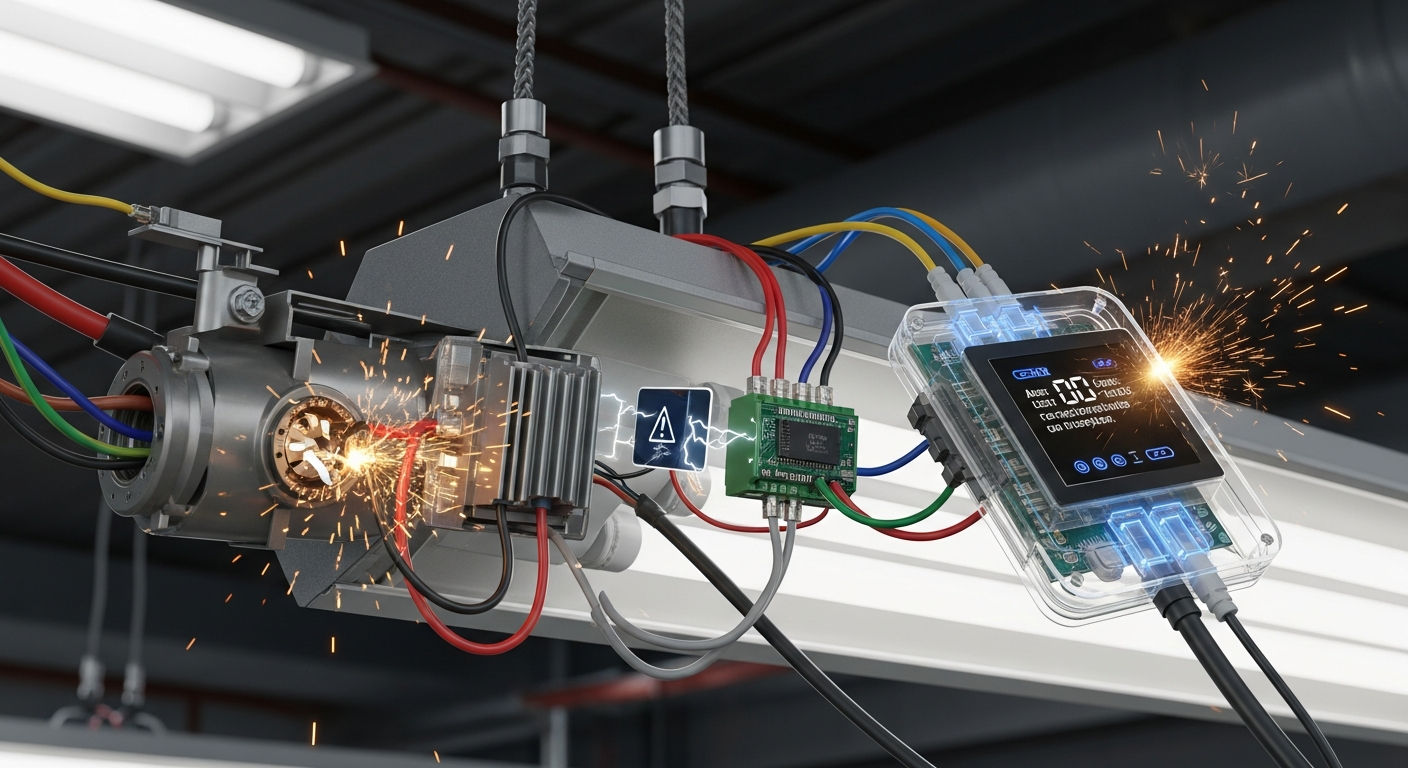
Incompatible Dimming Protocols
- Legacy Systems: Many older installations use rudimentary dimming methods such as 0-10V, TRIAC (phase-cut), or even proprietary magnetic ballasts. These systems typically rely on varying voltage or waveform truncation to reduce light output.
- Smart Controllers: Modern smart lighting systems often employ digital communication protocols like DALI (Digital Addressable Lighting Interface), DMX, or wireless standards such as Zigbee, Z-Wave, or Bluetooth Mesh. These protocols allow for precise control over individual fixtures or groups, enabling functionalities like color tuning and scene setting.
- The Challenge: Bridging these two worlds is not as simple as swapping out a switch. A 0-10V dimmer cannot directly control a DALI-enabled LED driver without an interface, and attempting to dim a traditional fluorescent ballast with a phase-cut dimmer designed for incandescent loads can lead to flickering, humming, or premature ballast failure. Often, retrofitting necessitates replacing not just the controller, but also the ballasts or even entire luminaires to achieve digital control capabilities.
Fixture-Controller Mismatch and Hardware Constraints
- Physical Design: Legacy fixtures were not designed to house sophisticated sensors, communication modules, or advanced drivers. Integrating smart components within existing fixture enclosures can be physically challenging, requiring custom brackets, external mounting, or significant modifications.
- Thermal Management: While often overlooked, the thermal environment inside a traditional fixture is crucial. Integrated LED drivers and smart control modules generate heat, and if not properly dissipated, can significantly shorten the lifespan of these electronic components. Older fixtures may lack adequate ventilation for such additions.
- Electrical Interfaces: The wiring harnesses and internal connections of legacy fixtures may not easily accommodate the additional wires or connectors required by smart controllers, particularly for networked systems that carry both power and data.
Software and Ecosystem Fragmentation
Beyond hardware, the software aspect presents its own challenges. The smart home and smart building market is characterized by a multitude of platforms, each with its own ecosystem, APIs, and proprietary standards. Integrating legacy systems often means navigating this fragmented landscape.
- Proprietary vs. Open Standards: Many smart lighting solutions are designed to work seamlessly within their own brand ecosystem. Integrating a third-party smart controller with an existing building management system (BMS) or another lighting control platform can be complex, requiring custom programming, middleware, or expensive gateways.
- Data Exchange: Even if two systems can communicate, ensuring they “understand” each other’s data (e.g., occupancy data, energy usage metrics) reliably and securely requires careful configuration and potentially custom software development.
Practical Tip: Before embarking on a retrofit, conduct a detailed lighting audit. Document every fixture type, ballast/driver, and existing control mechanism. Prioritize smart lighting systems that adhere to open standards (like DALI-2) or offer robust API documentation for easier integration with existing building management platforms.
Navigating Network Infrastructure and Connectivity
The “smart” in smart controllers inherently implies connectivity. This reliance on data networks introduces a new layer of technical considerations, especially when retrofitting older buildings.
Existing Wiring Limitations vs. Data Needs
- Power vs. Data: Legacy lighting systems typically only have electrical wiring for power delivery. Smart controllers, however, require a means of communication – whether it’s dedicated data cabling (like Cat5e/6 for Power over Ethernet or DALI bus wiring) or robust wireless signals.
- Cost of New Cabling: Running new data cables through existing walls, ceilings, and conduits can be incredibly expensive and disruptive. In some cases, especially in historic buildings, it might even be impractical or prohibited.
- Power over Ethernet (PoE): While PoE can simplify wiring by delivering both power and data over a single Ethernet cable, it requires PoE-enabled switches and luminaires, representing a significant upfront investment in network infrastructure that most legacy buildings lack.
Wireless Signal Integrity and Coverage
For many retrofits, wireless solutions (Zigbee, Z-Wave, Bluetooth Mesh, Wi-Fi) are attractive due to reduced cabling costs. However, wireless connectivity introduces its own set of challenges:
- Building Materials: Concrete, steel, and other common building materials can attenuate or block wireless signals, creating “dead zones” and necessitating more access points or signal repeaters.
- Interference: Existing Wi-Fi networks, microwave ovens, and other radio-frequency devices can interfere with wireless lighting controls, leading to unreliable performance or dropped connections.
- Scalability: Large installations with hundreds or thousands of smart lighting points require a carefully designed mesh network or a robust wireless infrastructure to ensure reliable communication across the entire facility.
Network Security Considerations
Connecting lighting systems to a network, especially one exposed to the internet, transforms them into potential entry points for cyber threats. Legacy buildings rarely have the sophisticated network segmentation or security protocols necessary for IoT devices.
- Vulnerability: Smart controllers, if not properly secured, can be vulnerable to hacking, leading to unauthorized access, denial-of-service attacks, or even a pathway to compromise the broader building network.
- Data Privacy: Occupancy sensors, energy usage monitors, and other data-gathering components of smart lighting systems collect sensitive information. Ensuring this data is encrypted, stored securely, and used ethically is paramount.
Practical Tip: Prioritize robust wireless mesh networks for large-scale retrofits where new cabling is prohibitive. Conduct thorough wireless site surveys to identify potential signal issues. Implement strong network segmentation and ensure all smart devices are configured with unique, complex passwords and receive regular security updates.
Powering Up Smart Controllers: Electrical Considerations
The transition from “dumb” power delivery to intelligent, low-voltage control has significant implications for a building’s electrical system.
Power Requirements and Availability
- Low Voltage DC: Many smart controllers and integrated LED drivers operate on low voltage DC power (e.g., 12V or 24V DC), whereas building circuits are typically 120V or 277V AC. This requires integrating transformers or dedicated power supplies, which need space and proper ventilation.
- Circuit Loading: While LEDs consume less power than traditional lights, the added components of smart controllers (processors, radios, sensors) still draw current. Care must be taken not to overload existing circuits, especially if multiple controllers are aggregated onto a single line.
- Emergency Power: Integrating smart lighting into emergency lighting circuits requires careful planning to ensure code compliance and reliable operation during power outages. Smart controllers must be able to fail-safe to “on” or integrate with emergency backup systems seamlessly.
Load Compatibility and Ghosting
One of the most frustrating electrical challenges is the unpredictable behavior of legacy lighting loads when controlled by modern smart dimmers or switches.
- Minimum Load Requirements: Some older dimmers or relay switches have a minimum load requirement to function correctly. When traditional fixtures are replaced with low-wattage LEDs, the total load might fall below this minimum, leading to flickering or non-operation.
- LED Driver Reaction: Not all LED drivers are created equal. Some may react poorly to traditional phase-cut dimming signals, resulting in erratic dimming curves, buzzing, or “ghosting” (where the light never fully turns off, remaining dimly lit).
- Harmonic Distortion: Switching mode power supplies in LED drivers and smart controllers can introduce harmonic distortion into the electrical grid, potentially affecting other sensitive equipment in the building.
Practical Tip: Engage a qualified electrical engineer to assess the existing electrical infrastructure. Specify LED drivers known for their wide dimming range and compatibility with various control methods. Consider power conditioning equipment if harmonic distortion becomes an issue.
Installation Complexity and Physical Constraints
The physical act of installing smart controllers into an existing building can be surprisingly complex, often more so than the initial design phase.
Access and Space Limitations
- Tight Spaces: Mounting smart controllers within existing junction boxes, ceiling plenums, or inside old fixture housings can be extremely challenging due to limited space and accessibility.
- Aesthetic Concerns: External controllers or sensors might detract from the building’s aesthetics, especially in architecturally significant or historic properties. Finding discreet mounting locations is crucial.
- Asbestos and Hazardous Materials: Older buildings may contain asbestos or other hazardous materials that require specialized handling and abatement during renovation, significantly increasing project complexity and cost.
Sensor Placement and Efficacy
Many smart lighting systems rely on integrated or external sensors (occupancy, daylight, temperature, air quality) to deliver their full benefits. Optimal placement is critical for accurate data collection and effective automation.
- Obstructions: Existing furniture, partitions, or structural elements can block sensor fields of view, leading to inaccurate occupancy detection or suboptimal daylight harvesting.
- Light Interference: Daylight sensors need to be placed where they accurately reflect ambient light levels, without being directly exposed to artificial light sources or glare.
- Wiring for Sensors: External sensors often require their own power and data wiring back to the controller, adding to the installation complexity.
Disruption to Operations and Phased Rollouts
Unlike new construction, retrofitting involves working in an occupied building. This means minimizing disruption to tenants, employees, or ongoing operations.
- Scheduling: Installations may need to occur during off-hours, weekends, or in phased sections, extending project timelines and increasing labor costs.
- Dust and Noise: Drilling, wiring, and general construction activities generate noise and dust, which can be unacceptable in certain environments (e.g., hospitals, data centers, busy offices).
Practical Tip: Conduct detailed site surveys to identify potential physical constraints and accessibility issues. Plan for phased installations and communicate clearly with building occupants about project timelines and potential disruptions. Consider external retrofit kits or wireless sensors that minimize invasive installation.
Conclusion
Retrofitting legacy lighting with smart controllers is undoubtedly a venture fraught with technical complexities, from navigating archaic dimming protocols and ensuring network integrity to managing electrical loads and overcoming physical installation hurdles. However, the benefits – profound energy savings, enhanced operational efficiency, superior occupant experience, and a future-proofed building infrastructure – are overwhelmingly compelling. The key to a successful retrofit lies in meticulous planning, comprehensive site assessments, engaging experienced system integrators and electrical engineers, and a willingness to embrace new technologies while respecting the constraints of existing structures. By carefully considering these challenges and adopting a strategic, phased approach, building owners and facility managers can confidently illuminate their path towards a smarter, more sustainable future.