
Light is the lifeblood of plants, a fundamental energy source that drives photosynthesis, the miraculous process converting light into sugars for growth. Yet, providing the right amount of light isn’t as simple as turning on a switch. Over-lighting can stress plants and waste energy, while under-lighting stunts growth and reduces yields. This delicate balance is precisely where the concept of Daily Light Integral (DLI) becomes paramount, offering a quantifiable measure of light exposure critical for horticultural success. But how can growers consistently achieve optimal DLI in an environment that is constantly changing, whether due to fluctuating natural sunlight or the demands of diverse indoor crops? The answer lies in the sophisticated capabilities of modern lighting controllers. These intelligent systems are transforming the way we deliver light, enabling precise DLI optimization, enhancing plant health, and revolutionizing efficiency in growing operations. This article delves into the indispensable role of lighting controllers in fine-tuning DLI for superior plant performance.
Understanding Daily Light Integral (DLI) and Its Importance
The Daily Light Integral (DLI) is a measurement of the total amount of photosynthetically active radiation (PAR) that a plant receives over the course of a 24-hour day. Expressed in moles of light per square meter per day (mol/m²/day), DLI essentially quantifies the cumulative light energy available for photosynthesis. Unlike Photosynthetic Photon Flux Density (PPFD), which measures the instantaneous light intensity (micromoles of photons per square meter per second, µmol/m²/s), DLI provides a holistic view of a plant’s daily light budget.
Why is DLI so crucial for plant growth? Plants have specific DLI requirements for optimal development, flowering, and fruiting. These requirements vary significantly between species. For instance, low-light plants like African violets might thrive with a DLI of 5-10 mol/m²/day, while sun-loving plants like tomatoes or cannabis can utilize a DLI of 20-40 mol/m²/day, or even higher for some high-intensity crops. Meeting these specific DLI targets directly impacts:
- Photosynthesis Efficiency: An adequate DLI ensures plants have sufficient light energy to convert carbon dioxide and water into glucose.
- Biomass Accumulation: Optimal DLI correlates with increased dry weight, leading to larger, more robust plants.
- Yield and Quality: For fruiting and flowering crops, reaching the target DLI is directly linked to higher yields and improved quality (e.g., flavor, appearance, nutritional content).
- Plant Morphology: DLI influences stem elongation, leaf development, and overall plant structure, preventing leggy growth or stress-induced issues.
- Crop Scheduling: Consistent DLI allows for more predictable growth cycles and harvest times.
The challenge, especially in environments combining natural and supplemental lighting (like greenhouses) or in fully enclosed indoor farms, is to consistently deliver the ideal DLI. Natural light fluctuates hourly and seasonally, while artificial lighting needs precise management to avoid waste or deficiency. This is where advanced control systems become not just beneficial, but essential.
The Mechanics of Lighting Controllers in DLI Management
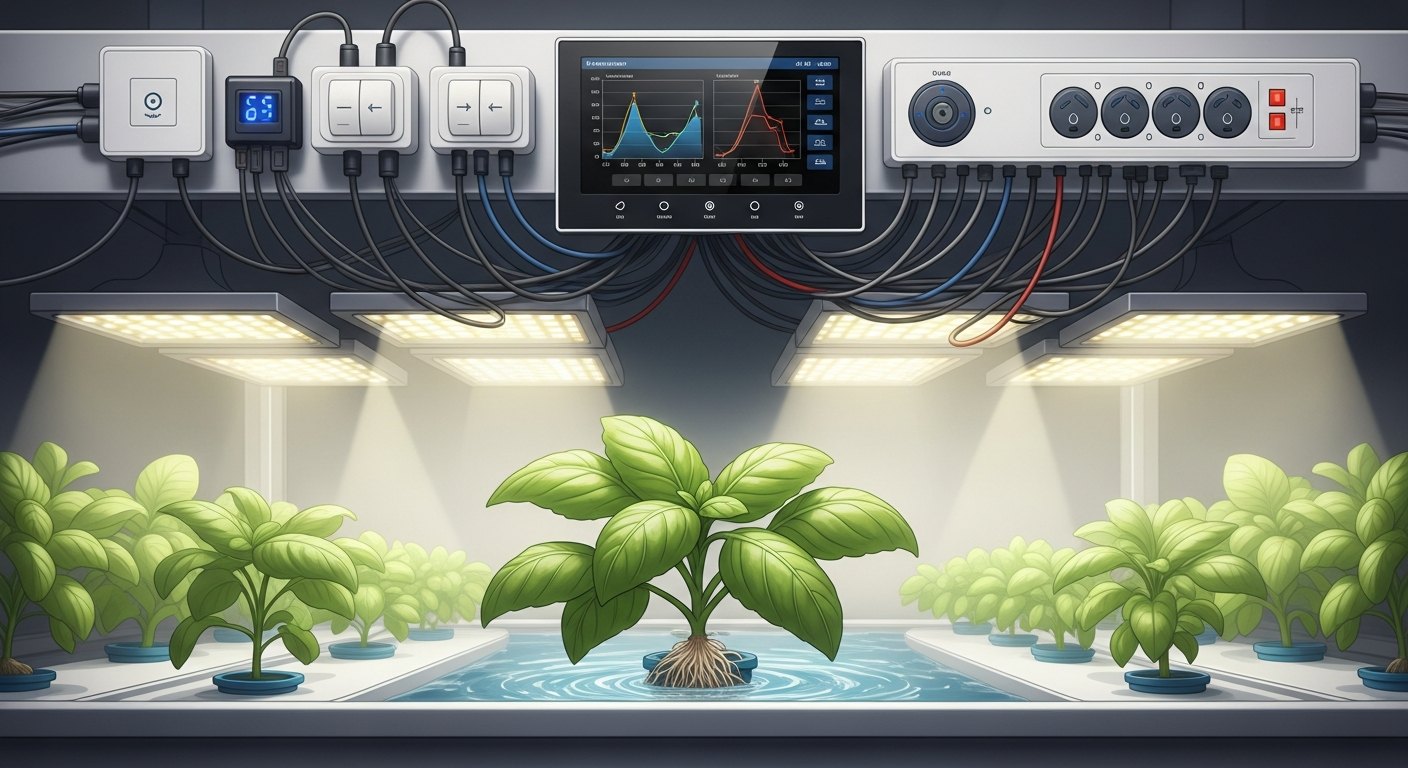
Lighting controllers are sophisticated devices or software systems designed to manage and optimize artificial lighting environments for plants. Far beyond simple timers, modern controllers integrate hardware and software to provide dynamic, data-driven light delivery. They are the central nervous system for your grow lights, enabling precise Daily Light Integral optimization.
Key functionalities that empower DLI management include:
- Dimming Capabilities: Perhaps the most critical feature, controllers allow for stepless or stepped dimming of LED grow lights and other lighting fixtures. This means light intensity (PPFD) can be adjusted precisely, rather than just being on or off. This is vital for adapting to varying natural light levels in a greenhouse or tailoring light output to different growth stages of a crop.
- Precise Photoperiod Control: Controllers accurately manage the duration lights are on, ensuring plants receive the exact light and dark cycles required for their specific photoperiodic responses, preventing premature flowering or vegetative stalling.
- Advanced Scheduling: Growers can program complex lighting schedules, accounting for peak energy rates, plant physiological needs throughout the day, and desired DLI targets. This moves beyond simple ON/OFF times to include gradual “sunrise” and “sunset” simulations, reducing plant stress.
- Sensor Integration: Modern controllers are designed to interface with various environmental sensors. Crucially for DLI, they connect with PAR sensors (measuring PPFD in real-time) and sometimes ambient light sensors. This integration allows the system to gather live data on the light available to plants.
- Automation and Feedback Loops: This is where the magic happens. With sensor data, controllers can automatically adjust light output. For example, if a PAR sensor detects sufficient natural light in a greenhouse, the controller will dim or turn off supplemental lights to maintain the target DLI and conserve energy. Conversely, on cloudy days, it will increase output to compensate.
- Data Logging and Analytics: High-end controllers record light delivery data, including actual PPFD values over time and the calculated DLI. This historical data is invaluable for evaluating lighting strategies, troubleshooting issues, and making informed decisions for future crop cycles.
- Spectral Control (Advanced Systems): While DLI focuses on quantity, some advanced controllers also offer spectral tuning, allowing adjustments to the light spectrum (e.g., adding more red or blue light) in addition to intensity, further optimizing plant response and quality.
From simple, programmable dimmers to sophisticated cloud-based systems managing hundreds of fixtures across multiple zones, lighting controllers provide the tools necessary to move from guesswork to precision in horticultural lighting.
Strategies for DLI Optimization with Lighting Controllers
Leveraging lighting controllers effectively requires a strategic approach to light delivery. By understanding and implementing the following strategies, growers can achieve significant improvements in crop performance and resource efficiency.
Balancing Natural and Supplemental Light
In greenhouse operations, controllers are invaluable for “light harvesting.” They continuously monitor natural light levels via PAR sensors and dynamically adjust supplemental grow lights to ensure the combined PPFD meets the crop’s DLI target without overshooting. This prevents energy waste by only activating artificial lighting when necessary and dimming it when natural light is abundant. For example, on a sunny day, supplemental LEDs might be off or at minimal intensity, while on a cloudy day, they would automatically ramp up to compensate for the reduced natural light, maintaining a consistent DLI.
Precise Photoperiod Management
Beyond DLI, photoperiod (the duration of light exposure) significantly impacts plant development, particularly for photoperiod-sensitive crops (e.g., short-day, long-day, or day-neutral plants). Controllers allow for exact ON/OFF scheduling, ensuring plants receive the precise light duration needed for vegetative growth, flowering initiation, or dormancy, irrespective of DLI. This granular control prevents photoperiodic stress, ensuring plants transition smoothly between growth stages.
Dynamic Dimming and Light Scheduling
One of the most powerful features of lighting controllers is the ability to implement dynamic light scheduling. This goes beyond static ON/OFF times:
- Staged Growth Programs: Light intensity can be programmed to increase gradually as plants mature, matching their rising DLI requirements from seedling to mature plant.
- Diurnal Light Patterns: Controllers can simulate natural sunrise and sunset, gradually increasing light intensity in the morning and decreasing it in the evening. This gentler transition reduces stress on plants compared to abrupt light changes.
- Energy Tariff Optimization: By integrating with energy pricing data, controllers can strategically dim or turn off lights during peak electricity rate hours, shifting DLI delivery to off-peak times without compromising overall light integral.
Utilizing Sensor Data for Real-time Adjustments
The integration of PAR sensors with lighting controllers creates a closed-loop system for DLI optimization. Sensors continuously measure the PPFD reaching the canopy, feeding this real-time data to the controller. The controller then compares this against the desired DLI target and adjusts the output of connected grow lights accordingly. This ensures the plants always receive the optimal amount of light, preventing both light deprivation and light saturation, which can lead to photoinhibition or bleaching.
Tailoring Light Recipes
While DLI focuses on the quantity of light, advanced controllers can contribute to “light recipes” by precisely delivering that quantity over time. For example, a controller might deliver a high DLI for rapid vegetative growth, and then a slightly different DLI with a modified spectrum (if spectral control is available) for enhanced flowering and fruiting. The controller ensures the DLI remains consistent even as other light parameters are adjusted.
Benefits of Employing Lighting Controllers for DLI Optimization
The strategic deployment of lighting controllers for DLI optimization yields a multitude of advantages that directly impact the bottom line and sustainability of growing operations.
- Increased Yield and Quality: By consistently delivering the ideal DLI tailored to each crop and growth stage, plants experience less stress and optimal photosynthetic activity. This directly translates to accelerated growth, higher biomass accumulation, and ultimately, greater yields of superior quality produce. Stronger flavors, better textures, and enhanced nutritional profiles are common outcomes.
- Enhanced Energy Efficiency: One of the most significant benefits is reduced electricity consumption. Controllers prevent over-lighting by dynamically dimming or switching off lights when natural light is sufficient or when DLI targets have been met. This proactive approach to energy management can lead to substantial savings on utility bills, making controlled environment agriculture more economically viable.
- Consistent and Predictable Growth: Mitigating the fluctuations of natural light and standardizing light delivery across all growing cycles results in more uniform plant growth. This predictability simplifies crop scheduling, improves inventory management, and ensures a consistent product for market.
- Reduced Plant Stress: Abrupt changes in light intensity or prolonged exposure to sub-optimal light levels can stress plants, making them more susceptible to pests and diseases. Controllers facilitate gradual light transitions (like sunrise/sunset simulations) and prevent both light starvation and phototoxicity, contributing to healthier, more resilient plants.
- Labor Savings and Automation: Automation enabled by lighting controllers significantly reduces the need for manual adjustments to light fixtures. This frees up labor for other critical tasks, streamlining operations and increasing overall operational efficiency.
- Data-Driven Decision Making: The data logging capabilities of advanced controllers provide invaluable insights into light delivery patterns, energy consumption, and plant responses. Growers can analyze this data to continuously refine their lighting strategies, optimize resource allocation, and troubleshoot performance issues more effectively.
- Scalability and Future-Proofing: Robust lighting control systems are often modular and scalable, allowing growers to expand their operations without needing a complete overhaul of their lighting infrastructure. They can adapt to different crop varieties, new lighting technologies, and evolving DLI requirements, protecting investments and ensuring long-term flexibility.
In essence, lighting controllers transform light from an uncontrollable variable into a precisely managed input, empowering growers to unlock the full genetic potential of their crops while simultaneously achieving greater efficiency and sustainability.
Practical Tips for Implementing DLI Optimization
To effectively leverage lighting controllers for DLI optimization, consider these practical tips:
- Know Your Crop’s DLI Needs: Research the specific DLI requirements for each plant species and growth stage you cultivate. This fundamental knowledge will guide all your programming decisions. Reputable horticultural guides and university extensions are excellent resources.
- Invest in Quality Sensors: Accurate PAR sensors are the cornerstone of effective DLI optimization. Cheap or uncalibrated sensors can lead to incorrect data and suboptimal light delivery. Periodically calibrate your sensors to ensure ongoing accuracy.
- Start Simple, Then Scale: If you’re new to lighting controllers, begin with basic scheduling and dimming based on observed plant responses. As you gain experience, gradually integrate more advanced features like sensor-driven automation and complex light recipes.
- Monitor and Adjust Continuously: DLI optimization is not a set-it-and-forget-it process. Regularly monitor plant health, growth rates, and energy consumption. Use the data from your controller to make iterative adjustments to your DLI targets and schedules, always striving for better outcomes.
- Integrate with Other Environmental Controls: Light is just one factor. For true optimization, consider integrating your lighting controller with systems managing temperature, humidity, and CO2 enrichment. These environmental factors interact closely with light intensity to influence photosynthesis and overall plant health.
- Understand the Limitations of Your Setup: Be aware of the maximum light output of your fixtures and the physical layout of your grow area. Ensure even light distribution to prevent “hot spots” or shaded areas that can lead to inconsistent DLI across your canopy.
- Plan for Redundancy and Safety: For critical operations, consider backup systems or fail-safe modes in case of controller malfunction. Ensure all electrical installations meet safety standards.
Conclusion
The journey from traditional, static lighting to dynamic, DLI-optimized light delivery marks a significant leap forward in horticultural science and practice. Lighting controllers are no longer a luxury but an essential tool for growers aiming to achieve peak performance, efficiency, and sustainability. By providing unparalleled precision in managing light intensity, photoperiod, and overall Daily Light Integral, these intelligent systems empower cultivators to precisely meet the physiological needs of their plants at every stage of development. The benefits are clear: healthier plants, increased yields, enhanced crop quality, and substantial energy savings. As the industry continues to push the boundaries of controlled environment agriculture, the role of lighting controllers in DLI optimization will only grow, cementing their place as indispensable instruments in the modern grower’s toolkit, guiding us towards a future of more productive, predictable, and profitable cultivation.