
Modern lighting systems are far more sophisticated than simple on-off switches. They are intricate networks designed for efficiency, ambience, and intelligent automation, often relying on wired communication to deliver precise control over dimming, color, scheduling, and sensor integration. However, the reliability of these advanced systems hinges critically on the integrity of their signal transmission. One of the most insidious challenges that can undermine this integrity is signal interference. Unseen but impactful, interference can transform a state-of-the-art lighting setup into a frustratingly erratic system, leading to flickering lights, unresponsive controls, and even complete network failures. Understanding the nature of signal interference, its common sources, and effective mitigation strategies is paramount for anyone involved in designing, installing, or maintaining wired lighting control networks, ensuring the seamless and reliable operation of these essential systems.
What is Signal Interference and Why Does it Matter in Lighting Control?
Signal interference, in the context of wired lighting control networks, refers to any unwanted electrical or electromagnetic energy that disrupts the clear transmission of control signals. These signals, whether they represent dimming levels, color commands, or sensor data, are essentially electrical pulses or voltage changes. When external or internal noise is introduced into the cabling, it can corrupt these signals, making them difficult or impossible for receiving devices to interpret correctly. The two primary types of interference are:
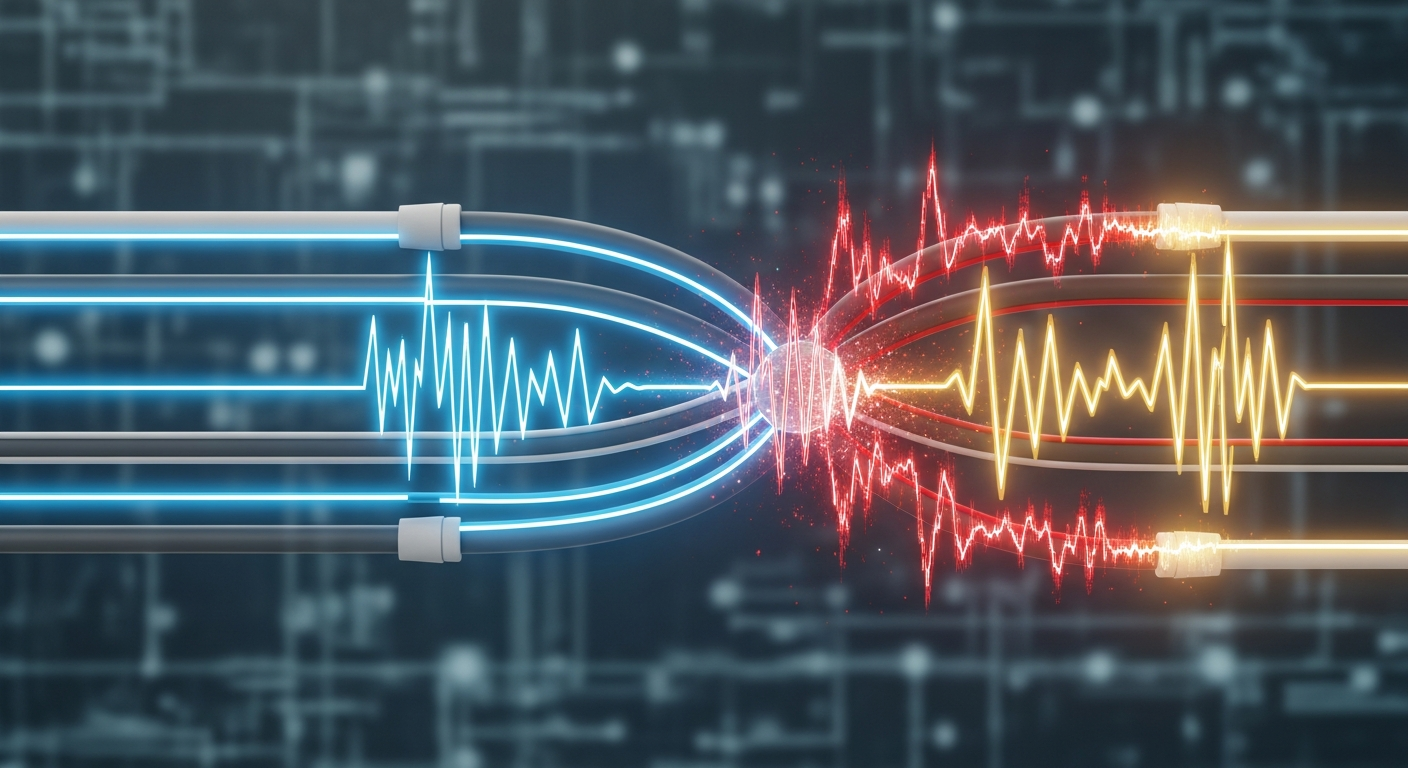
- Electromagnetic Interference (EMI): This is caused by electromagnetic radiation from external sources. It can be conducted (traveling along a conductor) or radiated (traveling through the air).
- Radio-Frequency Interference (RFI): A specific type of EMI that occurs at radio frequencies, often originating from wireless devices, broadcast towers, or high-frequency switching circuits.
Beyond EMI and RFI, other forms of noise include transient voltages (spikes), static discharge, and ground loops.
The Critical Role of Reliable Communication
For modern lighting control networks, reliable communication is the backbone of their functionality. These systems perform a multitude of tasks:
- Precise Dimming: Smooth transitions and accurate intensity levels depend on clear dimming signals. Interference can cause flickering, stepping, or incorrect brightness.
- Color Tuning: In systems with tunable white or RGBW capabilities, specific color commands must be delivered without corruption. Noise can lead to incorrect colors or color shifts.
- Scheduling and Scene Recall: Time-sensitive commands and stored scene parameters require uninterrupted data flow. Interference can delay or prevent these actions.
- Sensor Integration: Occupancy, daylight, and other environmental sensors send data that dictates lighting behavior. Jumbled sensor data leads to inefficient or erroneous responses.
- System Monitoring and Diagnostics: Networked systems often report their status. Interference can make monitoring tools unreliable or obscure actual faults.
Consequences of Interference in Wired Lighting Control
The impact of signal interference can range from minor annoyances to complete system failure, often leading to significant operational costs and user frustration:
- Erratic Lighting Behavior: Flickering, strobing, lights turning on/off randomly, or dimming to incorrect levels.
- Unresponsive Controls: Wall switches, touch panels, or software interfaces failing to control lights as intended.
- System Instability or Crashes: Communication breakdowns can cause controllers to reset or entire network segments to go offline.
- Reduced Equipment Lifespan: Constant power fluctuations or control signal inconsistencies can stress components, leading to premature failure of LED drivers, control modules, and luminaires.
- Increased Energy Consumption: If lights are stuck on or dimming is compromised, the energy-saving benefits of the control system are negated.
- Maintenance Headaches: Diagnosing intermittent interference issues can be incredibly time-consuming and costly, often requiring specialized equipment and expertise.
For these reasons, a thorough understanding of signal interference and proactive mitigation strategies are not just good practice but essential for the successful deployment and long-term reliability of any wired lighting control network.
Common Sources of Interference in Wired Networks
Understanding where signal interference originates is the first step toward effective mitigation. Interference can stem from a wide array of sources, both external to the lighting control system and internal to its components or installation practices.
External Sources of Interference
These are elements outside the direct control network that can radiate or conduct noise into its wiring:
- High-Voltage Power Lines and Cables: The alternating current (AC) flowing through mains power lines generates strong electromagnetic fields (EMFs) at 50/60 Hz and its harmonics. When control cables run parallel to or cross these power lines, these EMFs can induce unwanted currents and voltages, known as inductive coupling.
- Motors and Transformers: Large inductive loads like motors (HVAC units, elevators, machinery), solenoids, and power transformers create significant EMI during operation, especially when they switch on or off, causing voltage surges and drops.
- Fluorescent Ballasts: Older magnetic fluorescent ballasts are notorious for generating EMI, particularly at their strike frequency. Even modern electronic ballasts, while generally better, can still produce high-frequency noise if not properly designed or shielded.
- Switching Power Supplies: Many modern electronic devices, including LED drivers, computers, and other power adapters, use high-frequency switching to efficiently convert AC to DC. This switching can generate significant RFI if not properly filtered and shielded.
- Radio Transmitters and Wireless Devices: Nearby radio broadcast towers, two-way radios, mobile phones, Wi-Fi access points, and even microwave ovens emit radio waves that can be picked up by control cables, acting as unintentional antennas.
- Arcing and Switching Loads: Any device that creates an electrical arc (e.g., faulty switches, loose connections, welders) or rapidly switches heavy loads can generate broadband electrical noise.
- Natural Phenomena: Lightning strikes, though rare, can induce massive transient voltages and electromagnetic pulses that can damage or interfere with wired systems over a large area.
Internal Sources of Interference (within the network/building)
These sources are often related to the installation, components, or design of the lighting control network itself:
- Improper Grounding and Ground Loops: A robust grounding system is crucial. If different parts of a system are grounded at points with different earth potentials, current can flow through the signal cables, creating a “ground loop” that introduces noise. Poor or missing grounds can also make the system more susceptible to external interference.
- Poor Cable Quality or Damaged Cables: Inferior cables lack adequate shielding or proper twisted-pair construction. Damaged insulation, stretched conductors, or compromised shielding in any cable (due to installation stress or aging) can severely degrade signal integrity and increase susceptibility to noise.
- Long Cable Runs: The longer a cable run, the more susceptible it is to picking up interference and the more the signal itself attenuates (weakens). This combination makes long runs particularly vulnerable to noise.
- Incorrect Cable Termination: In data networks, proper termination is essential to prevent signal reflections that can cause data corruption. Incorrect or missing terminators can lead to “standing waves” of voltage and current that interfere with legitimate signals.
- Cross-Talk: This occurs when signals in one cable induce unwanted signals in an adjacent cable. It’s common when multiple control cables are bundled tightly together without sufficient insulation or shielding.
- Dimming Circuits: Phase-cut dimmers, especially leading-edge types, chop the AC waveform to control power. This chopping action can generate significant electrical noise and harmonics that can interfere with adjacent control wiring, particularly if the dimming circuits are not properly filtered or segregated.
- Electromagnetic Compatibility (EMC) Issues with Components: Some control devices, LED drivers, or power supplies may not be designed with adequate internal filtering or shielding, making them both emitters and receivers of interference.
Identifying the specific source of interference often requires a systematic approach, as multiple factors can contribute to the problem simultaneously. A thorough understanding of these potential culprits is vital for effective troubleshooting and prevention.
Identifying and Diagnosing Interference Issues
When a wired lighting control network behaves erratically, signal interference is a prime suspect. Diagnosing these issues requires a methodical approach, keen observation, and sometimes specialized tools. The goal is to isolate the source and nature of the unwanted noise.
Recognizing the Symptoms
The first step is to recognize the tell-tale signs of interference:
- Intermittent Control: Lights respond sometimes but not always, or commands are delayed.
- Erratic Behavior: Flickering, strobing, unintentional dimming/brightening, or lights turning on/off seemingly at random.
- Incorrect Output: Lights dim to the wrong level, display incorrect colors, or refuse to dim at all.
- Complete System Failure: A section of the network or the entire system becomes unresponsive.
- Audible Noise: Buzzing or humming from luminaires, drivers, or control modules, often indicative of electrical noise.
- Network Communication Errors: Diagnostic logs from control systems may show increased packet loss, communication timeouts, or checksum errors.
- Premature Equipment Failure: Components failing repeatedly without clear cause can sometimes be linked to electrical stress from sustained interference.
Note when the symptoms occur. Are they constant or intermittent? Do they coincide with the operation of other equipment (e.g., HVAC system starting, an elevator moving, specific lights dimming)? This contextual information is invaluable.
Diagnostic Tools and Techniques
A range of tools and techniques can help pinpoint interference sources:
- Visual Inspection:
- Examine all cabling for damage (nicks, kinks, crushed sections), loose connections, or improper termination.
- Check for correct separation between low-voltage control cables and high-voltage power lines.
- Verify proper grounding connections and look for signs of corrosion.
- Inspect components for signs of overheating or physical damage.
- Multimeter/Voltage Tester:
- Continuity Checks: Ensure all wires have proper continuity and no breaks.
- Voltage Measurements: Check for correct operating voltages. Look for unexpected AC voltages on DC control lines or unusual voltage fluctuations.
- Resistance Checks: Verify proper termination resistance in data networks where applicable (e.g., DMX512, RS-485).
- Oscilloscope:
- This is an invaluable tool for visualizing electrical signals. It allows you to see the actual waveform on the control lines.
- Look for spikes, dips, noise superimposed on the signal, or distortions that corrupt the intended data.
- Can help identify the frequency and amplitude of the interfering noise.
- Network Analyzer/Protocol Tester:
- For digital communication protocols (e.g., DALI, DMX, KNX, Ethernet), a protocol analyzer can capture and decode data packets.
- It can reveal communication errors, dropped packets, collisions, or timing issues, indicating that signals are not being correctly transmitted or received.
- EMI/RFI Sniffer or Spectrum Analyzer:
- These specialized devices can detect electromagnetic fields and radio frequencies in the environment.
- By moving an EMI/RFI sniffer along cable runs or near potential noise sources, you can often pinpoint the exact location where interference is strongest.
- Systematic Troubleshooting:
- Isolation: If possible, disconnect sections of the network or individual devices to see if the problem resolves. This helps narrow down the problematic area.
- Power Cycling: Resetting controllers or power cycling the system can sometimes clear temporary glitches, but if the problem returns, the underlying interference source still exists.
- Component Swapping: If a specific component is suspected, swap it with a known good one to see if the issue persists.
- Environmental Scan: Turn off non-essential electrical equipment in the vicinity to see if the interference disappears. This helps identify external noise sources.
Effective diagnosis often involves a combination of these methods, moving from general observations to precise measurements, systematically eliminating potential causes until the root of the signal interference is identified.
Mitigation Strategies and Best Practices
Preventing and eliminating signal interference in wired lighting control networks is a multi-faceted endeavor that combines robust design, careful installation, and the use of appropriate components. Implementing these best practices significantly enhances system reliability and longevity.
1. Effective Cable Management and Routing
- Segregation of Cables: This is perhaps the most critical principle. Always run low-voltage control cables (e.g., DALI, 0-10V, DMX, Ethernet) in separate conduits or at a significant distance (at least 12-18 inches / 30-45 cm) from high-voltage AC power cables. When they must cross, ensure they do so at a 90-degree angle to minimize inductive coupling.
- Use Appropriate Cable Types:
- Shielded Twisted Pair (STP): For data signals, STP cables are highly recommended. The twisted pairs help cancel out electromagnetically induced noise (common-mode rejection), and the shield (foil or braid) provides a barrier against external EMI and RFI. Ensure the shield is properly grounded at one end (typically the source or controller end) to avoid ground loops.
- Correct Gauge: Use cables with an appropriate wire gauge for the current and distance to minimize voltage drop and signal attenuation, which can make signals more susceptible to noise.
- Quality Insulation: High-quality insulation helps prevent signal leakage and provides better protection against interference.
- Minimize Cable Lengths: Keep cable runs as short as practically possible. Longer cables act as more efficient antennas for picking up noise and suffer from greater signal attenuation.
- Proper Termination: For data bus networks (like DMX512 or RS-485), ensure that termination resistors are correctly installed at the ends of the bus. This prevents signal reflections that can cause data corruption.
- Avoid Kinks and Sharp Bends: These can damage internal wiring, compromise shielding, and alter cable impedance, making it more prone to interference.
2. Robust Grounding Practices
- Single Point Grounding: Aim for a single, low-impedance ground point for the entire control system to prevent ground loops. Ground loops occur when multiple ground paths exist, leading to circulating currents that introduce noise.
- Dedicated Ground Wires: Ensure all control equipment and shielded cables have proper, dedicated grounding.
- Check Earth Potential: Verify that the earth potential across different ground points in the system is consistent.
- Surge Protection: Implement surge protection devices (SPDs) at critical points to safeguard against transient voltage spikes caused by lightning or switching large inductive loads.
3. Filtering and Shielding Components
- EMI/RFI Filters: Install line filters on the AC power supply to control devices and LED drivers. These filters suppress conducted noise coming from or going into the mains power.
- Ferrite Beads/Chokes: Clamping ferrite beads onto control cables can help absorb high-frequency noise. These are particularly effective at suppressing common-mode noise.
- Shielded Enclosures: House control equipment (controllers, power supplies, drivers) in properly shielded metallic enclosures to prevent them from emitting or receiving radiated EMI/RFI.
- Decoupling Capacitors: These small capacitors are often used near integrated circuits to filter out high-frequency noise on power supply lines at the component level.
4. Network Design Considerations
- Topology Choice:
- Star Topology: Often more robust against single-point failures and easier to troubleshoot, as each device connects directly to a central hub.
- Daisy Chain (Bus) Topology: Common for protocols like DALI or DMX. Requires careful planning for termination and adherence to maximum device counts and cable lengths.
- Signal Boosters/Repeaters: For very long cable runs or networks with many devices, use signal repeaters or amplifiers to maintain signal strength and integrity, making them less susceptible to noise.
- Protocol Adherence: Strictly follow the specifications and guidelines for the chosen communication protocol (e.g., DALI, 0-10V, DMX, KNX) regarding cable types, lengths, and termination.
- Industrial-Grade Components: In harsh electrical environments, consider using industrial-grade control components, LED drivers, and cables designed with superior EMI immunity and emission characteristics.
5. Environmental Management
- Distance from Noise Sources: Position lighting control equipment as far as possible from known high-EMI/RFI emitters (e.g., large motors, transformers, microwave ovens, radio transmitters).
- Proper Ventilation: Ensure control equipment has adequate ventilation. Overheating can degrade component performance and make them more susceptible to noise or more likely to generate their own noise.
By integrating these mitigation strategies throughout the design and installation phases, you can build wired lighting control networks that are resilient against signal interference, ensuring stable, reliable, and predictable operation for years to come.
Conclusion
Signal interference poses a persistent and often perplexing challenge to the reliable operation of wired lighting control networks. From the subtle flicker of a dimming LED to the complete failure of a sophisticated automation system, its symptoms can disrupt functionality, undermine efficiency, and lead to considerable frustration and cost. We’ve explored the nature of interference, identified its myriad sources both external and internal, and outlined effective diagnostic techniques to pinpoint its origins.
Crucially, understanding is only half the battle. Implementing robust mitigation strategies – including meticulous cable management, stringent grounding practices, the strategic use of shielding and filtering, and intelligent network design – is paramount. By prioritizing these best practices from the initial design phase through installation and ongoing maintenance, professionals can significantly enhance the electromagnetic compatibility and overall stability of their wired lighting control systems.
In an era where lighting is increasingly integral to building intelligence and user experience, a stable and interference-free control network is not merely a luxury but a fundamental requirement. Embracing these principles ensures that the promise of advanced lighting control, with its benefits of energy efficiency, comfort, and flexibility, is fully realized, providing seamless and uninterrupted illumination for any environment.