
In the intricate world of plant cultivation, there’s an unseen conductor orchestrating one of life’s most spectacular performances: flowering. This conductor is known as the photoperiod – the duration of light and darkness a plant experiences over a 24-hour cycle. While seemingly simple, mastering photoperiod management is a cornerstone for successful indoor gardening, directly influencing plant health, growth, and ultimately, yield. For cultivators aiming for consistent, abundant blooms, understanding the science behind light cycles and embracing automation isn’t just an advantage; it’s a necessity. Dive into the fascinating science of how plants perceive time and discover how automating these crucial light cycles can revolutionize your flowering phase.
The Unseen Conductor: Understanding Photoperiodism
At its core, photoperiodism is a plant’s physiological response to the relative lengths of day and night. It’s how plants “tell time” and decide when to transition from vegetative growth to reproductive growth, i.e., flowering. This isn’t just about the presence or absence of light; it’s about the duration of uninterrupted darkness.
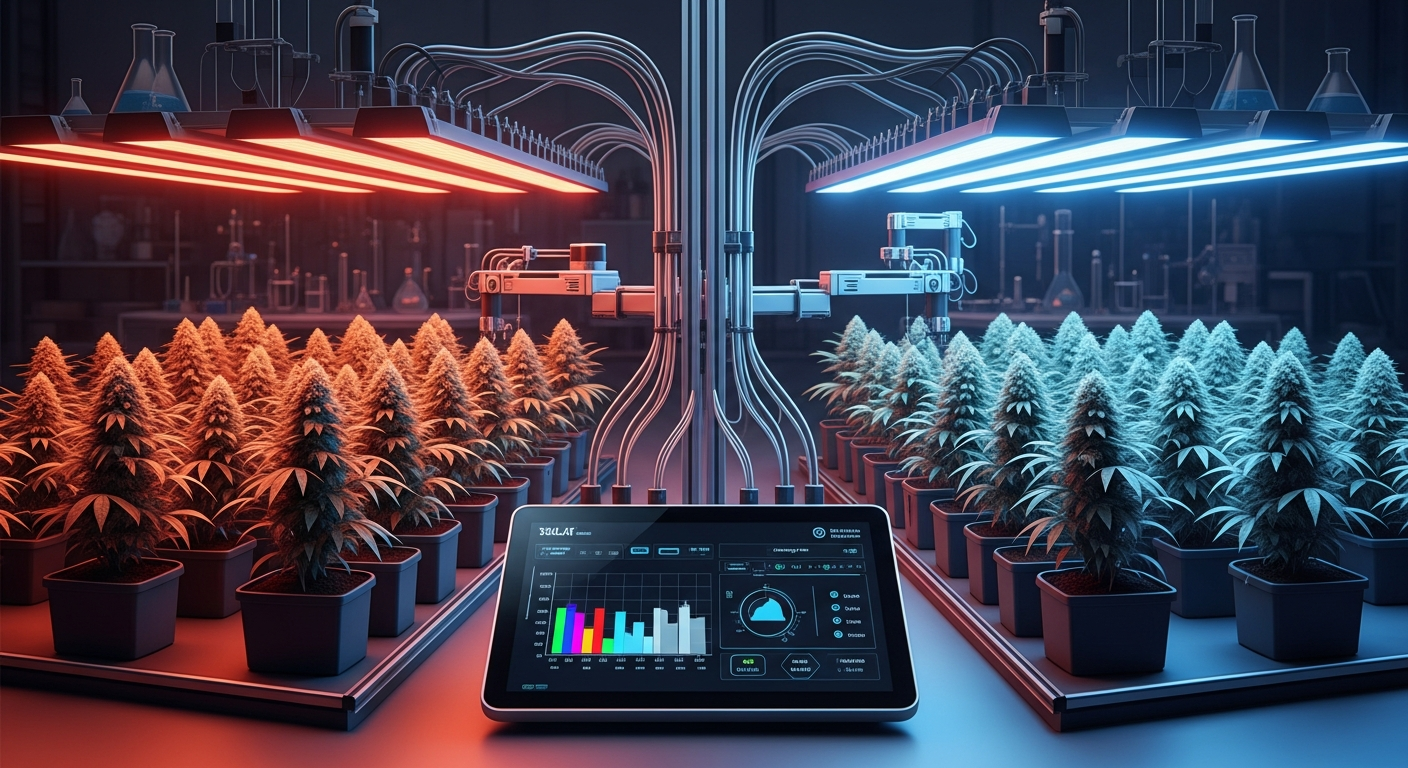
The Role of Phytochrome: A Plant’s Internal Clock
The magic behind photoperiodism lies in a group of photoreceptors called phytochromes. These light-sensitive proteins exist in two interconvertible forms:
- Pr (Phytochrome red): Absorbs red light (around 660 nm).
- Pfr (Phytochrome far-red): Absorbs far-red light (around 730 nm).
During daylight hours, red light is abundant, converting Pr into Pfr. Pfr is the biologically active form that initiates various plant responses, including flowering. When darkness falls, Pfr slowly converts back to Pr. The duration of this continuous dark period dictates how much Pfr degrades, sending crucial signals to the plant’s internal clock. If the dark period is interrupted, even by a brief flash of light, it can convert Pr back to Pfr, effectively resetting the clock and disrupting the flowering signal.
This intricate dance between Pr and Pfr, combined with the plant’s endogenous circadian rhythms, triggers the production of signaling molecules, most notably florigen. Florigen is a universal flowering hormone that travels from the leaves to the shoot apical meristem, initiating the development of flowers. Understanding this sophisticated system highlights why precision in light and dark cycles is paramount for optimal flowering.
Decoding Plant Responses: Short-Day, Long-Day, and Day-Neutral Plants
Not all plants perceive and react to photoperiod in the same way. Horticulturists categorize plants into three main groups based on their flowering response to light cycles:
Short-Day Plants (SDPs)
Despite their name, short-day plants (also known as long-night plants) actually require a continuous period of darkness that exceeds a certain critical dark period to initiate flowering. If this critical dark period is interrupted by even a brief flash of light, flowering will be inhibited or delayed. Examples of SDPs include chrysanthemums, poinsettias, and many common cannabis strains. For these plants, growers must ensure uninterrupted darkness to trigger their flowering phase.
Long-Day Plants (LDPs)
Conversely, long-day plants (or short-night plants) require a light period that exceeds a specific critical day length (or a dark period shorter than a critical duration) to flower. These plants typically bloom in late spring or early summer when day lengths are naturally increasing. Examples include spinach, lettuce, petunias, and many cereal crops. For indoor cultivation, providing a longer light cycle (e.g., 14-16 hours) will encourage flowering in LDPs.
Day-Neutral Plants (DNPs)
Day-neutral plants are fascinating because their flowering is not primarily influenced by the photoperiod. Instead, other factors like age, temperature, overall plant size, or specific hormone levels dictate when they will flower. Tomatoes, cucumbers, and corn are common examples of day-neutral plants. While photoperiod isn’t a primary trigger, optimal light intensity and spectrum are still crucial for their overall growth and fruit production.
Knowing which category your plants fall into is the first step toward successful photoperiod management. This knowledge directly informs the light schedule you’ll need to implement to encourage robust flowering.
The Precision Imperative: Why Photoperiod Management Matters for Flowering
For most flowering plants, especially those cultivated indoors for specific yields like fruits or buds, the precision of light cycle management isn’t merely a suggestion; it’s a critical determinant of success. Inconsistent or incorrect photoperiods can lead to a cascade of negative effects that directly impact your harvest.
Impact of Inaccurate Light Cycles
- Delayed or Absent Flowering: The most immediate consequence. If a short-day plant doesn’t receive its critical dark period, it simply won’t flower, or flowering will be significantly delayed, wasting time and resources.
- Stress and Hermaphroditism: In some sensitive species, particularly cannabis, light schedule disruptions during the dark period can stress the plant. This stress can lead to hermaphroditism (developing both male and female reproductive organs), which is undesirable as it can lead to seed production and reduced potency/quality in a crop intended for sinsemilla.
- Reduced Yield and Quality: Even if flowering occurs, inconsistent light cycles can lead to weaker, smaller, or less potent flowers. The plant’s energy is misdirected, impacting the development of floral structures and secondary metabolites.
- Inefficient Energy Use: Running lights unnecessarily or at the wrong times wastes electricity, increasing operational costs without providing any benefit to the plant.
Optimizing for Bloom Potential and Consistent Yields
When photoperiods are managed precisely, plants thrive. They receive the exact cues needed to transition into and maintain their flowering phase efficiently. This translates to:
- Maximized Bloom Potential: Plants dedicate their energy to flower production, resulting in larger, denser, and more numerous blooms.
- Consistent, Predictable Yields: By eliminating variables related to light timing, growers can achieve more reliable harvests, making planning and resource allocation more efficient.
- Enhanced Quality: Proper light cycles contribute to the optimal development of terpenes, cannabinoids, pigments, and other compounds that define the quality, aroma, flavor, and potency of your harvest.
Achieving this precision demands more than just flipping a switch; it calls for a systematic approach, often best accomplished through automation.
The Automation Revolution: Tools and Techniques for Seamless Light Cycles
Manually switching grow lights on and off every day is not only tedious but also prone to human error – a forgotten switch, a few minutes off schedule, or an accidental light leak can sabotage weeks of growth. This is where automation becomes indispensable, transforming erratic manual intervention into precise, consistent photoperiod management.
Benefits of Automating Light Cycles
- Unwavering Consistency: Automation ensures light cycles are precisely adhered to, day in and day out, providing plants with the stability they need.
- Reduced Human Error: Eliminates the risk of forgetting to switch lights, ensuring critical dark periods remain uninterrupted.
- Time and Labor Saving: Frees up growers from daily light cycle management, allowing focus on other critical aspects of plant care.
- Energy Efficiency: Ensures lights are only on when needed, preventing waste and lowering electricity bills.
- Scalability: Essential for larger operations, where managing multiple grow lights manually would be impossible.
Tools for Automating Your Grow Lights
The market offers a range of tools to automate light cycles, catering to different budgets and complexity needs:
- Mechanical Timers:
- Description: These are the simplest and most affordable timers. They typically feature a dial with pins or tabs that you push in or pull out to set ON/OFF intervals.
- Pros: Inexpensive, easy to use, reliable for basic timing.
- Cons: Limited precision (usually 15-30 minute intervals), can be noisy, susceptible to power outages (lose time).
- Practical Tip: Always opt for heavy-duty mechanical timers rated for high amperage, especially for multiple or powerful grow lights, to prevent overheating and failure.
- Digital Timers:
- Description: More advanced than mechanical timers, digital timers allow for precise programming down to the minute, often with multiple ON/OFF settings per day.
- Pros: Highly precise, silent operation, often include battery backup to maintain settings during power outages, more programming flexibility.
- Cons: Slightly more expensive than mechanical, can be a bit more complex to program initially.
- Practical Tip: Look for digital timers with a decent battery backup duration (e.g., 100+ hours) and multiple programmable events to handle complex schedules or mid-cycle adjustments.
- Environmental Controllers & Smart Grow Systems:
- Description: These are sophisticated systems that go beyond simple light timing. They can integrate and control multiple environmental parameters like temperature, humidity, CO2 levels, and even nutrient delivery, all linked to your light cycles. Many offer remote monitoring and control via smartphone apps.
- Pros: Ultimate precision and control, comprehensive environmental management, data logging, alerts, remote access, automation of complex grow scenarios.
- Cons: Significant upfront investment, requires a steeper learning curve.
- Practical Tip: For serious growers or those looking to fully optimize their environment, investing in a robust environmental controller can pay dividends in yield and efficiency. Ensure compatibility with your specific grow lights and other equipment.
Setting Up Your Automated System for Flowering
Regardless of the automation tool you choose, follow these crucial steps:
- Determine Your Plant’s Photoperiod Needs: Revisit whether your plant is a short-day or long-day plant and its specific critical dark/light period for flowering. For many common indoor flowering plants (like photoperiod cannabis), a 12 hours ON / 12 hours OFF schedule is standard for inducing and maintaining flowering.
- Program Your Timer/Controller: Set the exact ON and OFF times. Double-check your settings thoroughly before connecting your lights.
- Test Thoroughly: Before trusting your plants to the system, test your timer for a full 24-48 hours without plants present. Observe if the lights switch on and off at the programmed times.
- Prevent Light Leaks: Automation handles the timing, but it doesn’t prevent light from entering your grow space from external sources during the dark period. Inspect your grow tent or room for any cracks, gaps, or light from indicator LEDs that could interrupt your plants’ crucial dark cycle. Even a small amount of light can be enough to delay or halt flowering in sensitive plants.
- Have a Backup Plan: Consider a simple battery-powered light for emergencies or a manual override option for your timer in case of unexpected issues.
Embracing automation is a pivotal step towards consistent, high-quality yields. It removes the guesswork and human fallibility, allowing your plants to follow their natural biological clock precisely.
Conclusion
The science of photoperiodism reveals a sophisticated mechanism that dictates one of the most vital stages of a plant’s life cycle: flowering. Understanding how plants perceive light and darkness through phytochromes and respond as short-day, long-day, or day-neutral varieties is fundamental for any successful grower. The precision imperative in managing these light cycles cannot be overstated, as it directly impacts flowering initiation, yield quantity, and the overall quality of your harvest.
By moving beyond manual intervention and embracing the revolution of automated light cycle management, cultivators can achieve unparalleled consistency and optimize their grow environments. Whether through simple digital timers or advanced environmental controllers, automating your grow lights ensures that your plants receive the exact photoperiodic cues they need, day in and day out, minimizing stress and maximizing their genetic potential. As horticulture continues to evolve, the integration of scientific understanding with smart technology will undoubtedly pave the way for even more efficient, productive, and sustainable cultivation practices, bringing the art of growing ever closer to a perfected science.