
In the dynamic world of plant cultivation, the quest for optimal growth and yield often hinges on one critical factor: light. While the sun remains the ultimate powerhouse, its inconsistent availability, particularly in specific climates, seasons, or indoor environments, presents a formidable challenge for growers. Enter supplemental lighting – a sophisticated strategy that marries the unparalleled benefits of natural sunlight with the precision and control of artificial LED grow lights. This symbiotic relationship, when expertly balanced, unlocks the potential for accelerated growth, enhanced plant health, and consistent productivity, regardless of external conditions. But how does one master this delicate dance between the free-flowing energy of the sun and the targeted power of LEDs? This comprehensive guide delves into the science and strategy behind supplemental lighting, equipping you with the knowledge to harness both natural and artificial light sources for unparalleled success in your gardening endeavors.
Understanding the Light Landscape: Natural Sun vs. Artificial LED
Before diving into integration strategies, it’s crucial to understand the distinct characteristics and benefits of natural sunlight and artificial LED lighting. Each plays a unique role in plant photobiology and, when combined, can create a truly optimized growth environment.
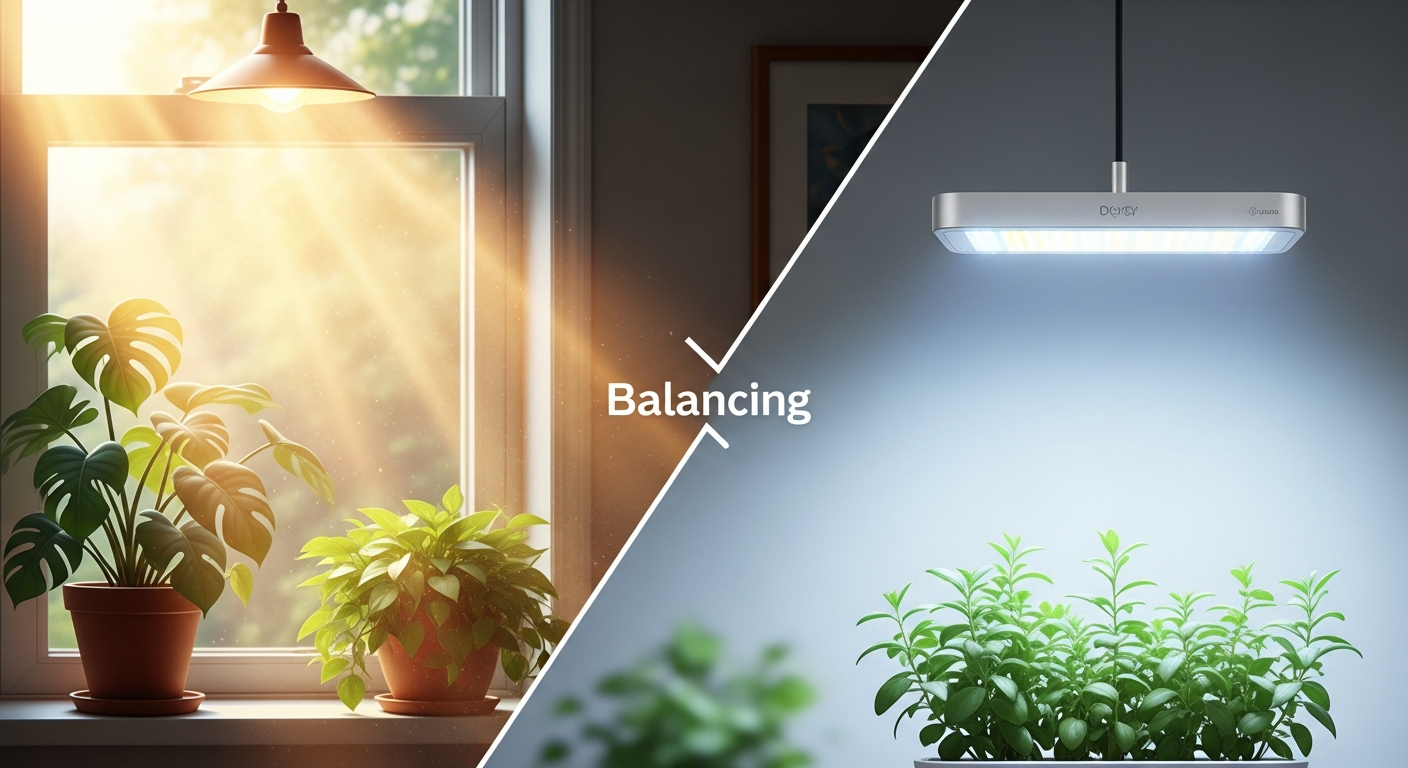
The Natural Light Advantage: Full Spectrum and Dynamic Intensity
Natural sunlight is the gold standard for plant growth, providing a full spectrum of electromagnetic radiation, from ultraviolet (UV) through visible light (PAR – Photosynthetically Active Radiation) to infrared (IR). This broad spectrum supports all phases of plant development, influencing photosynthesis, photomorphogenesis (plant shape and structure), and even pest resistance.
- Full Spectrum: Sunlight delivers every wavelength necessary for plant life, including UV-A and UV-B (which can enhance secondary metabolite production and pest resistance in some species) and far-red light (which influences stem elongation and flowering).
- Dynamic Intensity: The sun’s intensity changes throughout the day and year, providing varying levels of light and heat. Plants have evolved to respond to these diurnal and seasonal shifts, which can trigger different growth responses.
- Unmatched Power: On a clear day, peak natural sunlight can deliver PAR levels far exceeding what most artificial lights can provide over a large area, making it incredibly energy-efficient (it’s free!).
However, natural light comes with significant limitations: it’s inconsistent. Clouds, seasons, geographical location, and even structural obstructions (like greenhouse glazing or windows) can drastically reduce the amount and quality of light reaching your plants. This variability leads to what growers refer to as insufficient Daily Light Integral (DLI), which is the total amount of PAR light a plant receives in a day.
The LED Evolution: Precision, Efficiency, and Control
Artificial LED grow lights have revolutionized supplemental lighting, offering unparalleled control and efficiency compared to traditional HPS or fluorescent lamps. LEDs allow growers to tailor the light environment with incredible precision.
- Tunable Spectrum: Modern LED systems can emit specific wavelengths or combinations, allowing growers to provide a spectrum optimized for different plant species or growth stages (e.g., more blue light for vegetative growth, more red light for flowering).
- Intensity Control: Most quality LED lights are dimmable, allowing precise control over light intensity (PPFD – Photosynthetic Photon Flux Density) to match plant needs and natural light availability.
- Energy Efficiency: LEDs convert a high percentage of electrical energy into light usable by plants, generating less waste heat and significantly reducing operating costs.
- Long Lifespan: LEDs typically last much longer than other grow light technologies, reducing replacement frequency and maintenance.
- Low Heat Output: While they do produce some heat, it’s significantly less radiant heat than HPS lamps, allowing for closer placement to the canopy and less stress on environmental controls.
The synergy between these two light sources lies in using LEDs to compensate for the deficiencies of natural light, ensuring a consistent and optimal DLI for your plants, day in and day out.
The Art of Integration: When and How to Supplement Your Garden
Integrating supplemental LED lighting with natural sunlight requires a thoughtful approach, understanding both your plants’ needs and the environmental conditions. The goal is not to replace natural light but to enhance it, filling in gaps and extending optimal light exposure.
Assessing Your Natural Light Environment
The first step in any supplemental lighting strategy is to accurately assess the natural light your plants are receiving. This isn’t just about looking out the window; it requires measurement and observation.
- Measure PAR and DLI: A PAR meter is an invaluable tool. It measures the Photosynthetic Photon Flux Density (PPFD) in micromoles per square meter per second (µmol/m²/s). By taking readings throughout the day and multiplying by the duration of light exposure, you can calculate the Daily Light Integral (DLI) in mol/m²/day. Different plants have different DLI requirements (e.g., lettuce 12-17 mol/m²/day, cannabis 30-45 mol/m²/day).
- Observe Plant Behavior: Look for signs of light deficiency. Stretched stems (etiolation), pale leaves, slow growth, or lack of flowering can all indicate insufficient light. Conversely, scorched or bleached leaves can signal too much light.
- Consider Seasonal Changes: Sunlight intensity and duration vary dramatically with the seasons. In winter, even clear days provide less intense light and shorter photoperiods, making supplemental lighting almost essential for many plants.
Strategic Placement and Timing of Supplemental LED Lights
Once you understand your natural light conditions, you can strategize how to deploy your LEDs to maximize their impact.
1. Extending the Photoperiod
Many plants are photoperiodic, meaning their growth and flowering cycles are triggered by the length of light and darkness they receive. Supplemental LEDs can extend the effective “day length” during shorter winter days or when growing indoors with limited natural light exposure.
- Morning Boost: Turn on LEDs a few hours before sunrise to kickstart photosynthesis.
- Evening Extension: Keep LEDs running a few hours after sunset to prolong the photoperiod and accumulate a higher DLI.
- Maintain Vegetative Growth: For long-day plants (like most vegetables), ensuring 16-18 hours of light prevents premature flowering or dormancy.
2. Boosting Intensity on Overcast Days
Natural light intensity can fluctuate wildly due to cloud cover. LEDs can act as a crucial fill-in during these periods.
- Light Sensors: Advanced systems use photosensors to monitor natural light levels and automatically dim or brighten supplemental LEDs to maintain a target PPFD or DLI.
- Manual Adjustment: For simpler setups, monitor weather forecasts and manually turn on or increase LED intensity on cloudy or rainy days.
3. Filling Gaps in Indoor or Greenhouse Setups
Even in a greenhouse, natural light penetration can be uneven, with shading from structural elements or taller plants. Indoors, windows often provide directional light, leaving other areas dim.
- Targeted Placement: Position LEDs to illuminate areas consistently shaded or receiving less direct sunlight. For instance, place lights to shine onto the lower canopy where natural light struggles to penetrate.
- Uniform Coverage: Ensure an even distribution of light across the entire plant canopy. This might mean using multiple smaller LED fixtures rather than one large one.
Practical Tips for Placement:
- Keep Distance in Mind: The optimal distance between your LED lights and the plant canopy is crucial. Too close, and you risk light burn; too far, and intensity drops off rapidly. This distance depends on the LED’s power and lens angle. Consult your light manufacturer’s recommendations.
- Consider Reflectivity: White walls or reflective materials (e.g., Mylar) can significantly increase the efficiency of your supplemental lighting by bouncing stray light back onto the plants.
Optimizing Your Setup: Practical Strategies and Considerations
Achieving a perfectly balanced light environment goes beyond simply placing lights. It involves understanding light metrics, managing the plant canopy, and considering environmental factors.
Demystifying Light Metrics: PAR, PPFD, and DLI
These terms are fundamental to any serious supplemental lighting strategy:
- PAR (Photosynthetically Active Radiation): This refers to the spectral range of light (400-700 nanometers) that plants use for photosynthesis. It’s the most critical metric for plant growth.
- PPFD (Photosynthetic Photon Flux Density): Measured in μmol/m²/s, PPFD tells you how many photons in the PAR range are hitting a square meter of your plant canopy per second. It indicates the intensity of light at a specific point. Your goal is to achieve an appropriate PPFD for your plant type and growth stage.
- DLI (Daily Light Integral): Measured in mol/m²/day, DLI is the total amount of PAR light received over a 24-hour period. It’s a cumulative measure and often a better indicator of overall plant growth potential than instantaneous PPFD. To calculate, multiply your average PPFD (adjusted for light cycles) by the number of seconds in your light period, then divide by 1,000,000 to convert μmol to mol.
Actionable Advice: Research the specific DLI requirements for the plants you are growing. Use your PAR meter to measure ambient natural light DLI, then determine how much additional DLI your supplemental LEDs need to provide to reach the optimal target. Many LED manufacturers provide PPFD maps for their fixtures, indicating light intensity at various distances and coverage areas.
Canopy Management for Enhanced Light Penetration
Even with optimal supplemental lighting, a dense, untamed canopy can block light from reaching lower leaves and developing fruits or flowers. Effective canopy management is crucial.
- Pruning: Remove non-essential leaves and branches that shade important parts of the plant, especially the lower canopy. This improves airflow and allows light to penetrate deeper.
- Training Techniques: Techniques like LST (Low Stress Training), topping, and SCROG (Screen of Green) encourage lateral growth and a more even canopy, maximizing the surface area exposed to light.
- Spacing: Ensure adequate spacing between plants to prevent mutual shading.
Environmental Harmony: Temperature, Humidity, and CO2
Light intensity is inextricably linked to other environmental factors. Increasing light without adjusting these elements can lead to stress or inefficient growth.
- Temperature: Higher light intensity means more photosynthesis, which ideally requires warmer temperatures. However, too much heat can stress plants. LEDs produce less radiant heat than HPS, allowing for closer placement, but overall room temperature still needs to be monitored.
- Humidity: Increased light often leads to increased transpiration. Maintaining appropriate humidity levels (e.g., 60-70% RH for vegetative, 40-50% RH for flowering) is crucial for nutrient uptake and preventing issues like powdery mildew or nutrient lockout.
- CO2 Supplementation: When light, temperature, and nutrients are optimized, CO2 becomes a limiting factor for photosynthesis. Supplemental CO2 can significantly boost growth rates under high light conditions, especially in sealed environments.
Practical Tip: Treat your grow environment as a holistic system. Adjusting one variable (like light) often necessitates adjustments in others (like temperature, humidity, or CO2) to maintain optimal conditions.
Choosing the Right Supplemental LED Type
Not all LEDs are created equal. Consider these factors:
- Spectrum:
- Full-spectrum White LEDs: Mimic natural sunlight and are excellent all-around lights. Often preferred for supplemental use as they blend seamlessly with natural light.
- Broad-spectrum LEDs: White light with added red or blue diodes to enhance specific wavelengths.
- Targeted Spectrum LEDs (Red/Blue): Very efficient for photosynthesis but can look purple and might not be ideal if natural light visibility is desired. More commonly used in full artificial setups.
- Power and Efficiency (PPE/Efficacy): Look for lights with high PPE (Photosynthetic Photon Efficacy), measured in μmol/Joule. This indicates how efficiently the light converts electrical energy into PAR photons. Higher PPE means more light per watt, saving energy costs.
- Dimming Capabilities: Essential for supplemental lighting, allowing you to fine-tune intensity based on natural light fluctuations and plant stage.
- Coverage Area: Ensure the light’s footprint matches your plant area for even illumination.
Advanced Techniques and Common Pitfalls in Supplemental Lighting
Moving beyond the basics, advanced growers can leverage supplemental lighting for even greater control and efficiency, while also being mindful of common mistakes.
Manipulating Photoperiod and Spectrum for Specific Plant Responses
One of the most powerful aspects of supplemental LED lighting is the ability to precisely control the light environment to elicit specific plant responses.
1. Photoperiod Control
As mentioned, plants are sensitive to day length. Supplemental lighting allows you to:
- Prevent Flowering (Long-Day Plants): For plants like spinach, lettuce, or many vegetables, extending the day length (e.g., 16-18 hours of light) with supplemental LEDs can keep them in a vegetative state, preventing bolting and premature flowering.
- Induce Flowering (Short-Day Plants): For plants like cannabis or chrysanthemums, precisely controlling the dark period (e.g., 12 hours of uninterrupted darkness) is critical for inducing flowering. Supplemental LEDs can shorten the effective day length by being turned off at the appropriate time, even if natural light would otherwise persist.
2. Spectrum Tuning
Different wavelengths affect plant development in unique ways:
- Blue Light (400-500 nm): Promotes compact, bushy vegetative growth, thicker stems, and darker green leaves. Essential early in a plant’s life.
- Red Light (600-700 nm): Crucial for photosynthesis, stem elongation, and flowering/fruiting. High red-to-blue ratios can encourage stretching if not balanced.
- Far-Red Light (700-800 nm): Not directly photosynthetic but influences plant morphology. Can promote stem elongation, leaf expansion, and accelerate flowering in some species. Often used in combination with red light to fine-tune flowering responses.
- UV Light (280-400 nm): While generally low in grow lights, some UV-A can increase secondary metabolite production (e.g., cannabinoids, terpenes, antioxidants) and enhance pest resistance in certain plants.
Actionable Advice: If your LED system offers spectrum control, consider shifting towards a bluer spectrum during early vegetative growth for sturdy plants, then increasing red and far-red light during flowering to promote bud development and yield. Many modern LEDs offer “bloom” or “veg” spectrum presets.
Avoiding Common Pitfalls in Supplemental Lighting
Even with the best intentions, growers can make mistakes that hinder plant growth.
- Overlighting: Too much light can lead to light stress, bleaching, nutrient deficiencies (as plants can’t keep up with uptake), and reduced efficiency. Signs include yellowing of upper leaves, crisping edges, or a “washed out” appearance. Always monitor PPFD and DLI.
- Underlighting: The most common issue. Results in stretched, weak plants (etiolation), slow growth, and poor yields. Correct by increasing light intensity or duration.
- Wrong Spectrum: Using a spectrum unsuitable for the growth stage (e.g., too much blue during flowering or too little red during vegetative) can lead to suboptimal development.
- Inconsistent Photoperiod: Interrupting a plant’s dark cycle for even a few minutes can disrupt flowering in short-day plants. Ensure your supplemental lights are on a reliable timer.
- Neglecting Environmental Controls: As light intensity increases, so does the demand for water, nutrients, and CO2. Ignoring temperature and humidity can lead to heat stress or moisture issues.
- Poor Light Distribution: Uneven light across the canopy leads to inconsistent growth. Regularly adjust light height and position to ensure all plants, or parts of a plant, receive adequate light.
Monitoring Your Plants: Your plants are your best indicators. Regularly inspect them for signs of stress or vigor. Healthy plants under optimal light will exhibit robust growth, vibrant color, and strong stems.
Conclusion: The Synergy of Sun and LED for Superior Growth
The strategic integration of natural sunlight and artificial LED supplemental lighting represents the pinnacle of modern cultivation. By understanding the unique strengths of each light source and meticulously balancing them, growers can overcome environmental limitations, achieve optimal DLI, and unlock the full genetic potential of their plants.
From extending photoperiods during dreary winter months to precisely tuning the light spectrum for specific growth phases, LEDs empower you to create a stable, high-performance growing environment. The key lies in accurate measurement of natural light, thoughtful placement of supplemental fixtures, and continuous monitoring of plant health and environmental parameters. While the upfront investment in quality LED technology and monitoring tools can be significant, the long-term benefits of increased yields, enhanced quality, and reduced energy costs (by intelligently utilizing free natural light) make it an incredibly worthwhile endeavor.
Embrace these supplemental lighting strategies, educate yourself on your plants’ specific needs, and observe their responses. With a balanced approach, you’ll cultivate not just plants, but a thriving, efficient, and highly productive garden, year-round.