
In the rapidly evolving world of controlled environment agriculture (CEA), maximizing every square inch and every watt of light is paramount. As growers increasingly adopt multi-tier and high-density cultivation systems – from sophisticated vertical farms to compact indoor gardens – the complexities of light management escalate. The traditional approach of simply blasting plants with intense light often leads to inefficiencies, uneven growth, and wasted resources. This is where the nuanced science of light diffusion emerges as a critical, yet often overlooked, strategy. Far from being a mere aesthetic choice, strategic light diffusion transforms how plants perceive and utilize light, fundamentally impacting yield, quality, and overall operational efficiency in demanding high-density setups.
The Challenge of Light Distribution in Advanced Growing Systems
Modern horticulture, particularly in multi-tier and high-density environments, presents unique lighting challenges that conventional wisdom struggles to address. In these setups, plants are packed closely together, often stacked vertically, in an effort to maximize space utilization and production throughput.
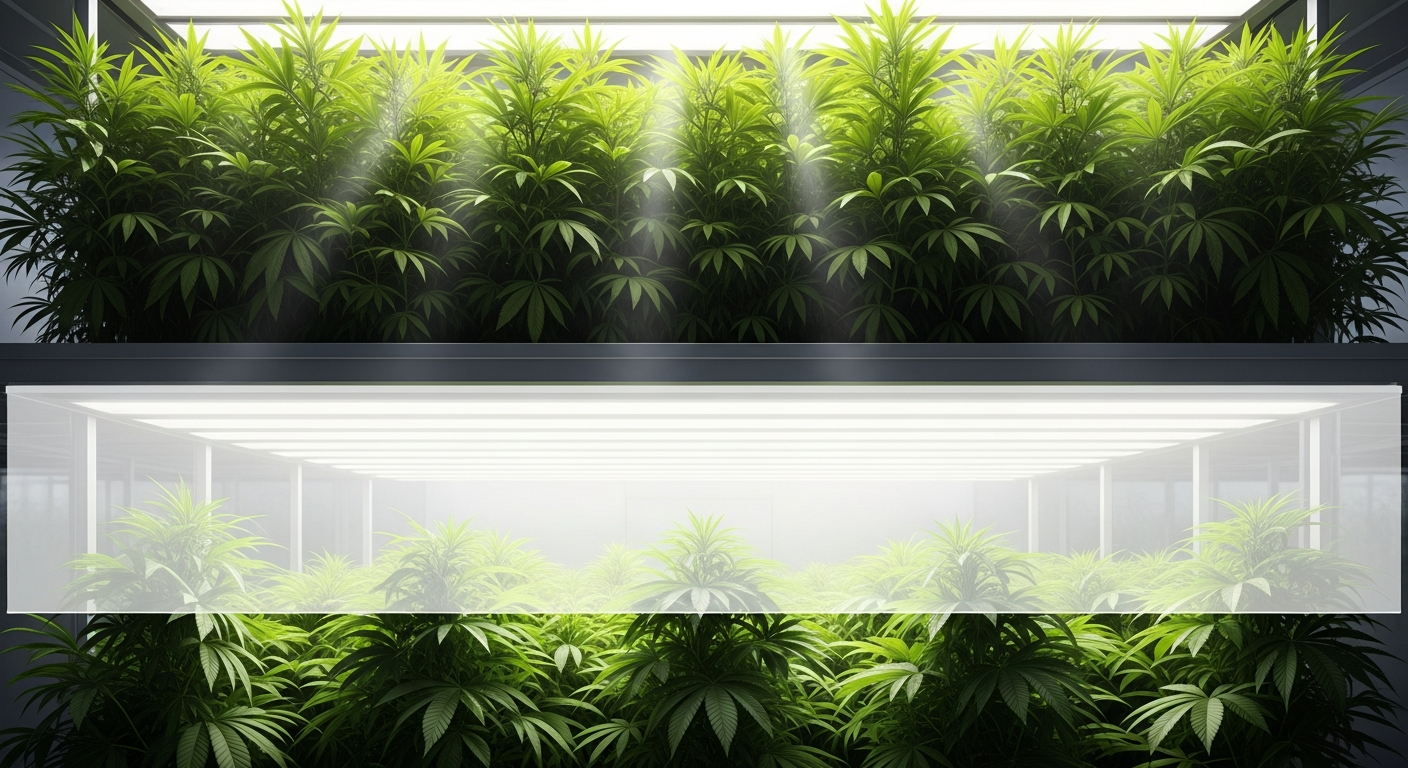
Understanding Multi-Tier and High-Density Canopies
Multi-tier cultivation involves stacking multiple layers of crops vertically, commonly seen in vertical farms and some greenhouses. This strategy dramatically increases the cultivation area within a given footprint, leading to higher output. However, it also means that each tier often operates under its own artificial lighting system, and the plants within each tier are in close proximity.
High-density canopies refer to situations where a large number of plants are grown very close to each other horizontally, forming a dense, continuous layer of foliage. This is typical in Sea of Green (SOG) methods or in certain hydroponic and aeroponic systems designed for rapid cycling and high yields.
The Inherent Problems: Shading, Hotspots, and Uneven Growth
Without proper light management, these advanced systems encounter several critical issues:
- Self-Shading: As plants grow and develop a robust canopy, the upper leaves inevitably cast shadows on the lower leaves and internal parts of the plant. In high-density systems, adjacent plants also shade each other. This significantly reduces the Photosynthetically Active Radiation (PAR) reaching the crucial lower and inner canopy, where flowers and fruits often develop.
- Light Hotspots: Direct, undiffused light sources, especially powerful LEDs, can create areas of extremely high Photosynthetic Photon Flux Density (PPFD) directly beneath the fixture. These “hotspots” can lead to photoinhibition, light stress, and even bleaching of the upper leaves, impairing photosynthesis and diverting energy from productive growth.
- Uneven Growth and Development: The combination of shading and hotspots results in inconsistent light exposure across the entire canopy, and even within individual plants. This leads to variability in plant growth, size, and maturity. Some plants or parts of plants thrive, while others struggle, leading to an uneven harvest and reduced overall crop quality and yield uniformity.
- Inefficient Resource Utilization: When only a fraction of the plant’s leaves are optimally engaged in photosynthesis, the energy input from lighting is not being fully utilized. This translates to wasted electricity and a lower return on investment for the lighting infrastructure.
Addressing these fundamental challenges is crucial for unlocking the full potential of multi-tier and high-density cultivation. Simple high-intensity lighting is not enough; the solution lies in optimizing how that light is delivered and distributed throughout the entire plant canopy.
Understanding Light Diffusion: What It Is and How It Works
Light diffusion is a fundamental concept in optics and horticulture that, when properly applied, can revolutionize the efficiency and productivity of controlled environment agriculture. It’s about more than just reducing light intensity; it’s about fundamentally altering the quality and distribution of light.
Defining Light Diffusion vs. Direct Light
Imagine a clear, sunny day versus an overcast day. On a sunny day, sunlight is direct and creates sharp shadows. This is analogous to direct light from an unshielded grow light – intense, highly directional, and prone to creating strong shadows and hot spots. While powerful, its focused nature means light often struggles to penetrate deeply into dense plant canopies.
Now, consider an overcast day. The sun’s rays pass through a layer of clouds, scattering the light in all directions. The result is a soft, even light that illuminates everything without harsh shadows. This is a perfect analogy for diffused light. In horticulture, diffused light is light that has been scattered or spread out, losing its original directionality. Instead of sharp beams, it provides a broader, more uniform illumination.
The Mechanisms of Diffusion: Scattering and Refraction
Light diffusion occurs primarily through two optical phenomena:
- Scattering: This is the most common mechanism. When light waves encounter particles or an uneven surface that are comparable in size to the light’s wavelength (or larger), they are deflected in multiple random directions. Think of fog or frosted glass; the tiny water droplets or surface imperfections scatter incoming light, making it appear hazy or diffused. Diffuser materials for grow lights often have microscopic irregularities or embedded particles designed to maximize scattering.
- Refraction: While scattering is dominant, refraction also plays a role. When light passes from one medium to another (e.g., from air into a diffuser material), it bends. If the diffuser material has a complex internal structure or a textured surface, light can be bent and redirected multiple times as it passes through, contributing to the overall diffusion effect. Lenses and prisms work primarily through refraction, and some advanced diffusers incorporate refractive elements.
The goal of a good light diffuser is to take highly directional light from sources like LEDs and transform it into a broad, even glow that minimizes sharp shadows and distributes light more uniformly over a given area.
Benefits at a Fundamental Level
From a plant’s perspective, diffused light offers several key advantages:
- Improved Light Penetration: Because diffused light comes from multiple angles, it has a “softer” quality that allows it to penetrate deeper into the plant canopy. It bounces and scatters around leaves, reaching shaded areas that direct light would miss. This ensures more leaves, including those lower down, are actively photosynthesizing.
- Reduced Shadowing: By eliminating harsh, directional light, diffused light significantly reduces the problem of self-shading within and between plants. Every part of the plant receives some light, albeit at varying intensities.
- Uniformity of Light and Temperature: Diffused light spreads energy more evenly, preventing the formation of hotspots where light intensity is too high and localized temperatures can spike. This creates a more consistent microclimate throughout the canopy.
- Mimicking Natural Conditions: While direct sunlight is powerful, plants in natural outdoor environments also benefit from significant amounts of diffused light from the sky (sky radiance). Diffusers help replicate this more natural light environment indoors, potentially leading to healthier, more robust growth.
In essence, light diffusion isn’t about making light weaker; it’s about making it smarter. It’s a strategic manipulation of light quality to optimize its utilization by the entire plant architecture, rather than just the uppermost leaves.
The Tangible Benefits of Optimal Light Diffusion for Crop Performance
Implementing effective light diffusion strategies in multi-tier and high-density cultivation is not merely an optical refinement; it translates directly into quantifiable improvements in crop health, yield, and overall resource efficiency. These benefits are critical for the economic viability and sustainability of modern indoor farming operations.
Enhanced Canopy Penetration and Uniformity
Perhaps the most immediate and impactful benefit of light diffusion is its ability to overcome the challenges of canopy self-shading. In dense cultivation environments, the upper leaves of plants, and indeed the upper layers of a multi-tier system, intercept most of the direct light. This leaves the lower and inner parts of the canopy in perpetual shadow, significantly limiting their photosynthetic activity.
- Reduced Self-Shading: Diffused light, by nature, comes from multiple angles. When this scattered light interacts with the leaves, it can bounce and refract around the upper foliage, penetrating deeper into the canopy. This ensures that a greater proportion of the plant’s total leaf surface area receives sufficient Photosynthetically Active Radiation (PAR) to engage in photosynthesis.
- Lower Canopy Development: With improved light penetration, the leaves and fruiting sites located deeper within the plant structure or on lower tiers receive more light. This promotes the development of strong, healthy growth throughout the entire plant, rather than just the top layer. For fruiting crops, this means more developed flowers and fruits on lower branches, leading to a more consistent and robust harvest.
- Even PPFD Distribution: Diffusers actively spread the light, smoothing out intense peaks and filling in deep valleys in PPFD distribution across the cultivation area. This leads to a much more uniform Daily Light Integral (DLI) for all plants, minimizing variability in growth rates and stages. Uniform light exposure contributes to uniform plant morphology, making harvesting more predictable and efficient.
Improved Photosynthetic Efficiency and Yield
The improved light penetration and uniformity directly translate into enhanced photosynthetic efficiency and, ultimately, higher yields and better crop quality.
- More Active Leaf Surface Area: By illuminating previously shaded leaves, diffusers increase the total photosynthetically active leaf area within the canopy. More engaged “solar panels” mean the plant can convert more light energy into chemical energy for growth.
- Reduced Photoinhibition/Stress: Direct, intense light can lead to photoinhibition, a state where light intensity is so high that it damages the photosynthetic machinery, reducing efficiency. Diffused light mitigates hotspots, preventing this stress on upper leaves while simultaneously delivering adequate light to lower leaves that would otherwise be under-illuminated. This balances light exposure across the entire plant.
- Better DLI Utilization Across the Canopy: Rather than having parts of the plant receive excessive DLI and others insufficient, diffused light helps distribute the available DLI more evenly. This allows the plant to make optimal use of the light energy provided, converting a higher percentage into biomass.
- Increased Biomass and Harvestable Yield: The cumulative effect of these factors is a significant increase in overall plant biomass and, crucially, harvestable yield. Plants are healthier, more vigorous, and produce more consistent, higher-quality flowers, fruits, or leaves because more of their structure is photosynthetically active and less stressed. Studies have shown that crops grown under diffused light can exhibit higher fresh weight, dry weight, and sometimes even a higher concentration of secondary metabolites due to reduced stress and enhanced metabolic activity.
Mitigating Hotspots and Stress
Beyond light distribution, diffusers play a vital role in managing the microclimate within a dense canopy.
- Prevents Localized Overheating: Direct light sources, especially powerful LEDs operating close to the canopy in multi-tier systems, can create pockets of high radiant heat. This localized overheating can stress plants, leading to transpiration issues, nutrient uptake problems, and even physical damage like leaf burn. Diffused light spreads this radiant energy over a wider area, reducing intense heat loads on specific plant parts.
- Reduces Water Stress: Plants respond to localized overheating by increasing transpiration (evaporating water from leaves). If only certain parts of the plant are overheating, it can lead to uneven water demand and localized water stress, particularly in multi-tier systems where air circulation might be limited. Diffused light helps maintain more uniform leaf temperatures, leading to more predictable and manageable water usage.
- Contributes to Consistent Microclimates: A uniform distribution of light and heat helps create a more homogenous microclimate throughout the entire cultivation space. This consistency is critical for finely tuned environmental control systems, ensuring that all plants within the system experience similar conditions, which further promotes uniform growth and simplifies environmental management.
Optimized Resource Utilization
From an operational standpoint, light diffusion contributes to the overall efficiency of the growing system.
- Better Use of Energy for Lighting: By ensuring that more of the light energy emitted by the fixtures is effectively captured and converted by the plant canopy, diffusers increase the photosynthetic photon efficacy (PPE) of the entire system, not just the fixture itself. This means more grams of yield per watt of electricity consumed, directly impacting operational costs.
- More Efficient Nutrient and Water Uptake: Healthier, less-stressed plants with a larger photosynthetically active leaf area are better at absorbing and utilizing nutrients and water. When the entire plant is thriving due to optimal light, its root system and vascular tissues function more efficiently, leading to better nutrient cycling and reduced waste.
In conclusion, the strategic implementation of light diffusion is a powerful tool for growers in multi-tier and high-density environments. It transforms challenging lighting conditions into an optimized growth environment, driving significant improvements in yield, quality, and resource efficiency, which are all critical for profitability in modern agriculture.
Practical Strategies for Implementing Light Diffusion
Successfully integrating light diffusion into multi-tier and high-density canopies requires careful consideration of materials, placement, and synergy with other cultivation practices. It’s not a one-size-fits-all solution, but rather an optimization process tailored to specific crops and growing environments.
Choosing the Right Diffusers/Optics
The market offers various light diffusion solutions, primarily categorized by material and design. The choice depends on the specific grow light, crop requirements, and environmental conditions.
-
Material Considerations (Transmission, Durability, Spectrum):
- Acrylic (PMMA) or Polycarbonate (PC) Diffusers: These are common materials due to their excellent light transmission properties, durability, and resistance to yellowing over time. They can be engineered with various surface textures (e.g., frosted, prismatic, lenticular) to achieve different levels and patterns of diffusion. Acrylic generally offers higher light transmission, while polycarbonate provides superior impact resistance.
- Silicone Optics: Often integrated directly into LED fixtures, silicone lenses and diffusers offer high temperature resistance and can be molded into complex shapes for precise light distribution and diffusion.
- Diffuser Films: These are flexible sheets that can be applied to light fixtures or used as secondary barriers. They are cost-effective and come in various diffusion levels. However, they may require more frequent replacement due to wear and tear or accumulation of dust/residue.
When selecting a material, consider its light transmission percentage (how much light gets through), its diffusion angle (how wide it spreads the light), its resistance to UV degradation, heat, and common horticultural chemicals, and its impact on the spectral quality of the light (minimal color shift is usually desired).
-
Beam Angles and Light Distribution Patterns:
- Diffusers are designed to modify the beam angle of the light source. Grow lights typically come with various native beam angles (e.g., 60°, 90°, 120°). Adding a diffuser can further widen this angle, spreading light more broadly.
- The ideal diffusion pattern depends on the canopy density and the distance between the light and the plants. For very dense canopies or multi-tier setups with limited vertical space, a wider diffusion angle that maximizes horizontal light spread is often beneficial.
- Some diffusers create highly uniform light across a rectangular or square footprint, which is ideal for matching cultivation trays or benches.
- Integration with LED Fixtures: Many modern LED grow lights are designed with modular optics, allowing growers to swap out lenses or add diffusers. When purchasing new lights, inquire about available diffusion options. For existing fixtures, aftermarket diffuser panels or films can be adapted. Ensure the chosen diffuser is compatible with the fixture’s heat management and mounting system.
Strategic Placement and Maintenance
Effective light diffusion isn’t just about the diffuser itself; it’s also about how it’s integrated into the growing environment.
- Distance from Canopy: The distance between the diffuser and the top of the canopy impacts the diffusion effect. A greater distance generally allows for more light spread and uniformity, but it also means less intensity reaches the plants. In multi-tier systems, where space is often limited, finding the optimal balance between diffusion and intensity is crucial. Typically, diffusers are placed as close to the light source as possible while still allowing for air circulation and access.
- Cleaning Schedules: Over time, dust, nutrient solution overspray, and plant residues can accumulate on diffuser surfaces, reducing their effectiveness and light transmission. Regular cleaning with appropriate, non-abrasive cleaners is essential to maintain optimal light output and diffusion efficiency. Establish a cleaning schedule based on the cleanliness of your growing environment.
- Airflow and Heat Management: While diffusers help spread radiant heat, they can also slightly reduce airflow around the LED diodes, potentially leading to higher operating temperatures for the fixture itself. Ensure adequate ventilation in the grow space to dissipate heat and prevent component degradation.
Combining with Other Growing Practices
Light diffusion works best when synergized with other proven cultivation techniques.
- Pruning and Training (SCROG, LST): Techniques like Screen of Green (SCROG) or Low-Stress Training (LST) aim to create an even canopy layer. When combined with diffused light, these methods become even more effective, as the diffused light can better penetrate the deliberately flattened or spread-out canopy, maximizing light exposure to all potential flowering sites.
- Reflective Surfaces (Walls, Floors): Highly reflective materials on walls, floors, and even between plant rows (e.g., Mylar, white paint, specialized reflective foils) capture stray light and redirect it back into the canopy. This enhances the overall light intensity and further contributes to uniformity, especially when working with diffused light that naturally scatters more broadly.
- Air Circulation: Proper air circulation is vital for a consistent microclimate. Fans ensure that the benefits of diffused light – even heat distribution and reduced hotspots – are fully realized by preventing stagnant air pockets and maintaining uniform leaf surface temperatures and CO2 distribution throughout the multi-tier or high-density setup.
- Monitoring and Adjustment: Utilize PAR meters (light meters that measure PPFD) to map the light distribution across your canopy before and after implementing diffusers. This empirical data allows for fine-tuning the diffuser choice, placement, and light intensity settings to achieve optimal DLI uniformity and intensity for your specific crop.
By thoughtfully applying these strategies, growers can harness the full power of light diffusion to elevate the performance and profitability of their multi-tier and high-density cultivation operations.
In the competitive landscape of multi-tier and high-density cultivation, every advantage counts. Light diffusion, far from being a secondary consideration, is a powerful tool for unlocking unprecedented levels of efficiency, uniformity, and yield. By transforming harsh, directional light into a soft, penetrating glow, growers can mitigate the critical challenges of self-shading and hotspots, ensuring every leaf and every plant receives optimal light exposure. This leads to healthier plants, higher photosynthetic efficiency, increased biomass, and ultimately, a more consistent and abundant harvest. As controlled environment agriculture continues to push the boundaries of productivity, mastering the art and science of light diffusion will undoubtedly be a hallmark of successful and sustainable growing operations, paving the way for the next generation of indoor farming excellence.