
In the controlled environment of a modern greenhouse, every variable plays a pivotal role in dictating plant health, growth rate, and ultimately, yield. Among these variables, light stands as the undisputed king, and within the complex spectrum of light, one specific range holds supreme importance: Photosynthetically Active Radiation, or PAR. Understanding the science behind PAR is not merely an academic exercise; it is the cornerstone of successful, high-efficiency greenhouse operations. From maximizing crop output to optimizing energy consumption, a deep dive into PAR empowers growers to precisely tailor their lighting strategies, transforming sunlight and artificial light into bountiful harvests. This comprehensive guide will unravel the intricacies of PAR, offering both the scientific foundation and practical insights crucial for any greenhouse professional aiming for peak performance.
The Fundamental Science of Photosynthetically Active Radiation (PAR)
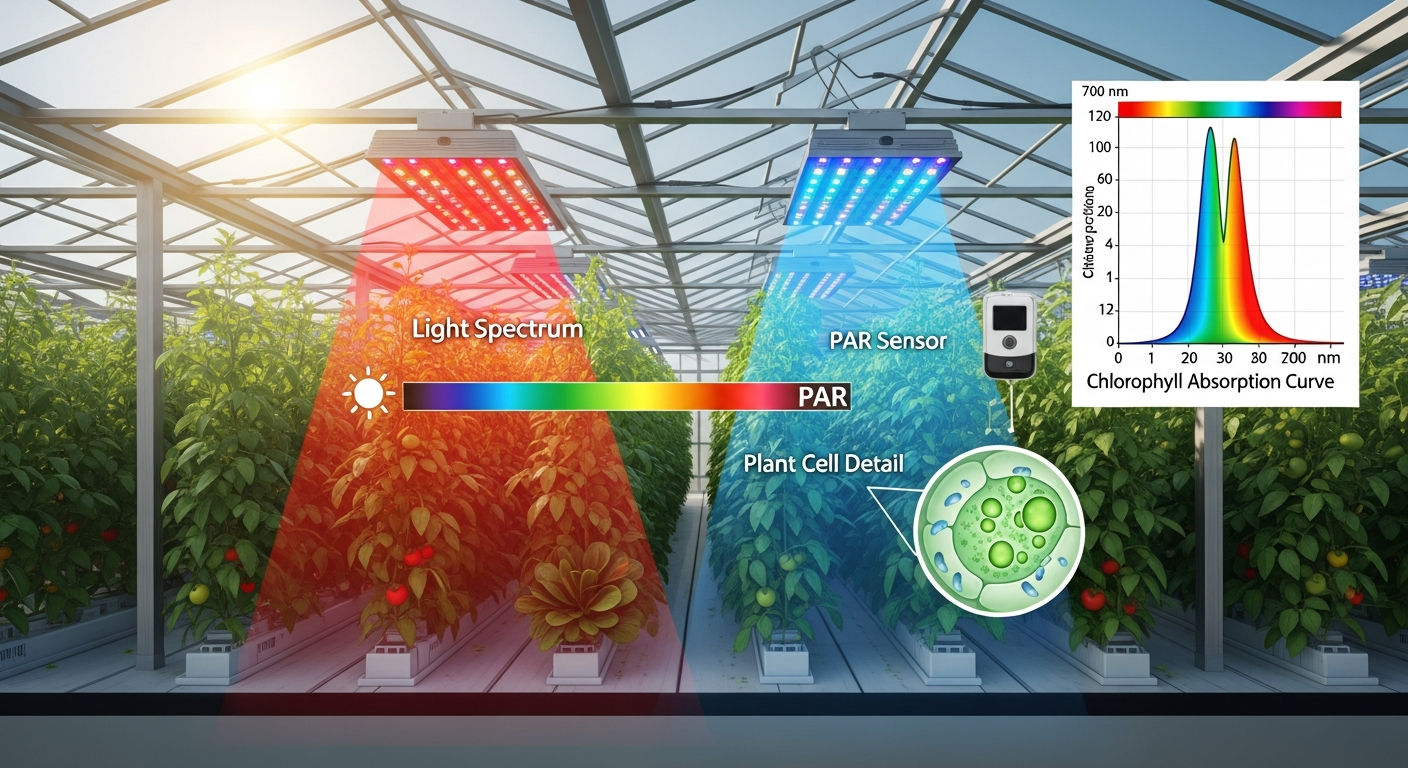
At its core, photosynthesis is the miraculous process by which plants convert light energy into chemical energy, fueling their growth and development. However, not all light is created equal in the eyes of a plant. Photosynthetically Active Radiation (PAR) specifically refers to the spectral range of light that photosynthetic organisms are able to use in the process of photosynthesis. This range typically spans from 400 to 700 nanometers (nm), encompassing the visible light spectrum that humans perceive as violet, blue, green, yellow, orange, and red.
Why the 400-700 nm Range?
The reason plants primarily utilize light within this specific bandwidth lies in the properties of photosynthetic pigments, principally chlorophyll a and chlorophyll b, as well as accessory pigments like carotenoids and anthocyanins. These pigments are most efficient at absorbing photons (light particles) within the blue (around 430-470 nm) and red (around 640-670 nm) regions of the spectrum. While green light (around 500-580 nm) is largely reflected, giving plants their characteristic color, a significant portion is still absorbed and utilized, particularly as light penetrates deeper into the canopy. Understanding this selective absorption is critical because it directly influences how efficiently a plant can convert light into biomass.
Key Metrics for Quantifying PAR
When discussing PAR in a greenhouse context, we move beyond simple qualitative descriptions to precise quantitative measurements. There are three primary metrics essential for understanding and managing PAR:
- Photosynthetic Photon Flux (PPF): Measured in micromoles per second (μmol/s), PPF represents the total number of photons emitted by a light source per second within the PAR spectrum. It tells you the total light output of a fixture, irrespective of how that light is distributed. Think of it as the engine size of your light source.
- Photosynthetic Photon Flux Density (PPFD): Measured in micromoles per square meter per second (μmol/m²/s), PPFD quantifies the number of PAR photons falling on a specific surface area per second. This is the crucial measurement for growers because it indicates the intensity of PAR reaching the plants at different points within the canopy. A high PPFD signifies intense light exposure.
- Daily Light Integral (DLI): Measured in moles per square meter per day (mol/m²/day), DLI represents the cumulative amount of PAR photons delivered to a specific area over a 24-hour period. DLI is arguably the most important metric for overall plant growth and yield. It accounts for both light intensity (PPFD) and duration, providing a comprehensive picture of a plant’s total daily light exposure. Different crops have specific DLI requirements for optimal growth, flowering, and fruiting.
It’s important to distinguish these from older metrics like lux or foot-candles, which measure light intensity as perceived by the human eye. Since human vision and plant photosynthesis respond differently to various wavelengths, lux/foot-candle measurements are largely irrelevant for optimizing plant growth and can even be misleading in a horticultural context.
Measuring and Interpreting PAR in Greenhouse Environments
Accurate measurement and interpretation of PAR data are fundamental to effective greenhouse management. Without precise data, growers are essentially operating blind, risking suboptimal plant growth, wasted energy, or both.
The Role of PAR Meters and Sensors
PAR meters (also known as quantum sensors) are specialized devices designed to measure PPFD. These meters are calibrated to specifically detect photons within the 400-700 nm range, providing a direct measurement of light useful for photosynthesis. High-quality PAR meters are indispensable tools for any serious greenhouse operation. They typically consist of a sensor head connected to a display unit.
Types of PAR Measurement Tools:
- Handheld PAR Meters: These are portable and ideal for spot-checking PPFD levels across different areas of the greenhouse or at various canopy heights. They are crucial for identifying hot spots, shaded areas, and ensuring uniform light distribution.
- Fixed PAR Sensors: Permanently installed sensors provide continuous, real-time data on PAR levels, often integrated with environmental control systems. This allows for automated adjustments to supplemental lighting or shading systems based on natural light conditions.
Practical Tip:
When using a handheld PAR meter, take multiple readings at various locations and heights within the plant canopy to get an accurate representation of the light environment. Consider the specific crop being grown and measure at the leaves that are actively photosynthesizing, not just the top of the canopy. For fixed sensors, strategically place them to capture representative light levels, accounting for potential shading from structural elements or seasonal changes in sun angle.
Understanding PPFD and DLI Variations
PAR levels in a greenhouse are rarely static. They fluctuate significantly due to several factors:
- Natural Light:
- Time of Day: PPFD is highest around solar noon and decreases towards sunrise and sunset.
- Season: Sunlight intensity and duration vary dramatically with the seasons. Winter months often have significantly lower DLI than summer months.
- Latitude: Greenhouses closer to the equator generally receive higher DLI.
- Weather Conditions: Cloud cover, fog, and rain can drastically reduce incoming PAR.
- Greenhouse Structure and Glazing: The type of glazing material (glass, polycarbonate, film), its cleanliness, and the structural components (trusses, gutters) all impact light transmission and uniformity. Older or dirty glazing can reduce PAR transmission by 10-30% or more.
- Supplemental Lighting: When artificial lights are used, their intensity, height, spacing, and spectral output contribute to the overall PPFD and DLI.
Calculating DLI: While continuous PAR sensors can automatically calculate DLI, it can also be estimated from PPFD readings. If you have an average PPFD value (μmol/m²/s) over a specific lighting period (e.g., 16 hours), you can convert it to DLI (mol/m²/day) using the following formula:
DLI = (Average PPFD × Lighting Hours × 3600) / 1,000,000
Where 3600 converts seconds to hours, and 1,000,000 converts micromoles to moles.
Understanding these variations is crucial for making informed decisions about supplemental lighting schedules, shading, and crop placement to ensure plants receive their optimal DLI.
Optimizing PAR for Enhanced Plant Growth and Yield
The ultimate goal of understanding PAR is to manipulate it to achieve superior plant growth and maximize yield. This involves a combination of strategic lighting choices, environmental control, and continuous monitoring.
Establishing Target PPFD and DLI for Specific Crops
Different plant species, and even different growth stages within the same species, have varying light requirements. For instance, leafy greens like lettuce might thrive with a DLI of 12-17 mol/m²/day, while fruiting plants like tomatoes or cannabis often require a DLI of 20-30+ mol/m²/day, or even higher for maximizing yield. Understanding these specific requirements for your target crops is the first step in optimization.
- Vegetative Growth: Generally requires moderate DLI, often with a higher proportion of blue light to encourage compact growth and strong stems.
- Flowering/Fruiting: Typically demands higher DLI, often with an increased red light component to promote flower initiation, fruit development, and biomass accumulation.
Supplemental Lighting Strategies
When natural PAR is insufficient to meet a crop’s DLI requirements, supplemental lighting becomes indispensable. The choice of lighting technology impacts not only the PAR spectrum but also energy consumption, heat output, and longevity.
- High-Pressure Sodium (HPS) Lamps: Traditionally a popular choice due to their high PAR output and relatively low initial cost. They emit a broad spectrum, strong in the red and yellow, which is excellent for flowering and fruiting. However, they generate considerable heat and are less energy-efficient than modern alternatives.
- LED Grow Lights (Light Emitting Diodes): LEDs have revolutionized horticultural lighting.
- Energy Efficiency: Significantly more energy-efficient, converting a larger percentage of electricity into PAR photons.
- Customizable Spectrum: LEDs can be tailored to emit specific wavelengths (e.g., strong blue, red, far-red) allowing for precise spectral manipulation to influence plant morphology and physiology.
- Lower Heat Output: Reduces cooling costs and allows lights to be placed closer to plants, increasing PPFD without heat stress.
- Long Lifespan: Offers lower maintenance costs over time.
Practical Tip:
When selecting supplemental lights, don’t just look at total wattage. Focus on the PPF per watt (efficacy) and the spectral output. Modern LEDs often offer higher efficacy, meaning more PAR per unit of electricity, which directly translates to energy savings and better ROI in the long run.
Light Spectrum Optimization
Beyond intensity, the quality of light (its spectral composition) profoundly influences plant growth.
- Blue Light (400-500 nm): Essential for vegetative growth, chlorophyll production, stomatal opening, and compact plant structure. Too little blue can lead to stretching.
- Green Light (500-600 nm): While largely reflected, green light penetrates deeper into the canopy than blue or red light, contributing to photosynthesis in lower leaves and potentially influencing plant morphology.
- Red Light (600-700 nm): Crucial for photosynthesis, stem elongation, flowering, and fruiting. Often combined with blue light for balanced growth.
- Far-Red Light (700-800 nm): Although outside the traditional PAR range, far-red light influences plant morphology, promoting stem elongation, leaf expansion, and flowering in some species (phytochrome response). It can also enhance photosynthetic efficiency when used in conjunction with red light (Emerson enhancement effect).
Adjusting the spectrum, especially with tunable LED systems, allows growers to fine-tune plant responses, for example, promoting compact growth for seedling stages with more blue light, or enhancing flowering and yield with a higher red-to-blue ratio and a touch of far-red.
Light Distribution and Uniformity
Even if your greenhouse has sufficient overall DLI, uneven distribution can lead to inconsistent crop quality. Hot spots (areas with excessive light) can cause stress, while shaded areas result in stunted growth. Factors affecting uniformity include:
- Fixture Spacing and Height: Proper placement of supplemental lights is crucial to ensure overlapping light patterns and even coverage.
- Reflectivity: White walls or reflective materials can help bounce light back onto plants, improving overall light use efficiency.
- Canopy Management: Pruning and training plants can help expose lower leaves to light, improving overall canopy penetration and reducing self-shading.
Practical Tip:
Use a PAR meter to map the PPFD across your growing area at plant canopy height. Create a grid and take readings. This will reveal areas of insufficient or excessive light, allowing you to adjust fixture placement, height, or introduce supplemental fill lighting.
Integrating PAR with Other Environmental Controls
PAR does not exist in a vacuum. Its effectiveness is intrinsically linked to other environmental factors:
- CO2 Enrichment: Increased PAR provides the energy for photosynthesis, but plants also need sufficient CO2 as a raw material. In high-light conditions, CO2 enrichment can significantly boost photosynthetic rates and yield.
- Temperature and Humidity: These factors influence stomatal opening (which affects CO2 uptake and water loss) and enzymatic activity involved in photosynthesis. Optimal temperature and humidity ranges are crucial for efficient light utilization.
- Water and Nutrients: Well-hydrated plants with adequate nutrients are better equipped to handle high PAR levels and convert light energy efficiently.
A holistic approach, integrating PAR management with climate control, irrigation, and fertilization, leads to the most robust and productive greenhouse systems.
Advanced PAR Management Strategies and Future Trends
As technology advances and our understanding of plant photobiology deepens, PAR management in greenhouses is becoming increasingly sophisticated, moving towards more dynamic and intelligent systems.
Dynamic PAR Control Systems
Modern greenhouse control systems, especially those incorporating advanced LED technology, offer dynamic control over PAR.
- Dimming Capabilities: Lights can be dimmed or brightened based on real-time natural light levels, ensuring plants receive a consistent DLI without wasting energy when sunlight is abundant.
- Spectral Tuning: Advanced LED systems allow growers to adjust the spectral composition throughout the day or across different growth stages. For example, providing more blue light during vegetative phases and shifting to higher red ratios during flowering. Some research explores pulsing light or altering spectrum based on a plant’s circadian rhythm.
- Light Interception and Duration: These systems can precisely control the duration of supplemental lighting, working in concert with natural light to achieve target DLI values. This helps avoid “light pollution” or unnecessary energy consumption during peak natural light hours.
These dynamic systems enable unprecedented precision in light delivery, allowing growers to optimize plant responses for specific traits like flavor, color, nutrient content, or plant architecture, not just biomass.
Predictive Modeling and Automation
The future of PAR management lies in predictive modeling. By combining historical weather data, real-time sensor inputs, and crop-specific light requirements, intelligent systems can forecast upcoming DLI needs and automatically adjust supplemental lighting, shading, and even CO2 injection. Integration with AI and machine learning will further enhance this, allowing systems to learn and adapt to changing conditions and plant responses over time, leading to fully autonomous environmental control.
Energy Efficiency and Return on Investment (ROI)
While the initial investment in advanced PAR measurement and lighting systems can be substantial, the long-term benefits in energy savings and increased yield often provide a compelling ROI.
- Reduced Electricity Consumption: High-efficiency LEDs and dynamic dimming significantly cut energy bills.
- Optimized Resource Use: Precision lighting allows for better use of water, nutrients, and CO2, as plants are more efficient under ideal light conditions.
- Increased Yield and Quality: Consistent, optimal DLI and spectral control lead to higher quality crops, faster growth cycles, and increased overall yield, directly impacting profitability.
- Reduced Heat Load: Lower heat output from LEDs translates to reduced cooling costs, especially in warmer climates.
When evaluating new lighting solutions, consider not just the upfront cost but the total cost of ownership over the lifespan of the fixture, including energy consumption, maintenance, and the potential for increased revenue.
Practical Tip:
Regularly audit your greenhouse’s energy consumption related to lighting. Compare it against your crop yield and quality metrics. Look for opportunities to upgrade to more efficient lighting, implement dimming strategies, or optimize lighting schedules based on seasonal DLI data. Keep detailed records to quantify your ROI.
Research and Development in Plant Photobiology
Ongoing research continues to uncover new nuances of how plants respond to light. Scientists are exploring:
- The role of specific narrow-band wavelengths (e.g., UV-A for pest deterrence or secondary metabolite production).
- The impact of dynamic light cycles on plant circadian rhythms and stress responses.
- Genomic responses to different light spectra, paving the way for genetically tailored lighting recipes.
Staying informed about these advancements will be key for greenhouse operations looking to maintain a competitive edge and continuously push the boundaries of productivity and crop quality.
Conclusion
The science of Photosynthetically Active Radiation is the bedrock upon which successful greenhouse cultivation is built. Moving beyond anecdotal observations, a deep understanding of PAR, its measurement, and its strategic manipulation empowers growers to precisely control one of the most fundamental drivers of plant life. By quantifying PAR with metrics like PPFD and DLI, selecting appropriate supplemental lighting, optimizing spectral quality, and integrating light management with other environmental controls, greenhouse operators can unlock unprecedented levels of efficiency, productivity, and crop quality.
As technology continues to evolve, from tunable LEDs to AI-driven environmental control systems, the ability to fine-tune the plant’s light environment will only become more sophisticated. Embracing these advancements and consistently applying the scientific principles of PAR will not only lead to healthier plants and higher yields but also contribute to more sustainable and profitable greenhouse operations for years to come. In the intricate dance between light and life, understanding PAR is truly the key to cultivating excellence.