
In the rapidly evolving world of agriculture, greenhouses stand at the forefront of innovation, continuously seeking ways to optimize output, minimize waste, and enhance profitability. While advanced climate control systems, hydroponics, and automation often grab headlines, a less glamorous but equally crucial component underpins long-term success: strategic data management. Specifically, the practice of long-term data archiving is transforming how modern greenhouses operate, moving beyond simple record-keeping to become a powerful engine for boosting return on investment (ROI) and supercharging overall productivity. This article delves into the profound impact of meticulously collected and archived data, revealing how it empowers growers to make smarter, more profitable decisions.
The Data Deluge in Modern Greenhouses: Why Archiving Matters
Modern controlled environment agriculture (CEA) environments are veritable data factories. From sophisticated sensors measuring temperature, humidity, CO2 levels, and light intensity to precise irrigation and nutrient delivery systems, every aspect of a greenhouse operation generates a continuous stream of information. Add to this data on plant health, growth rates, pest and disease incidences, energy consumption, labor allocation, and yield outputs, and the sheer volume quickly becomes overwhelming without a robust strategy.
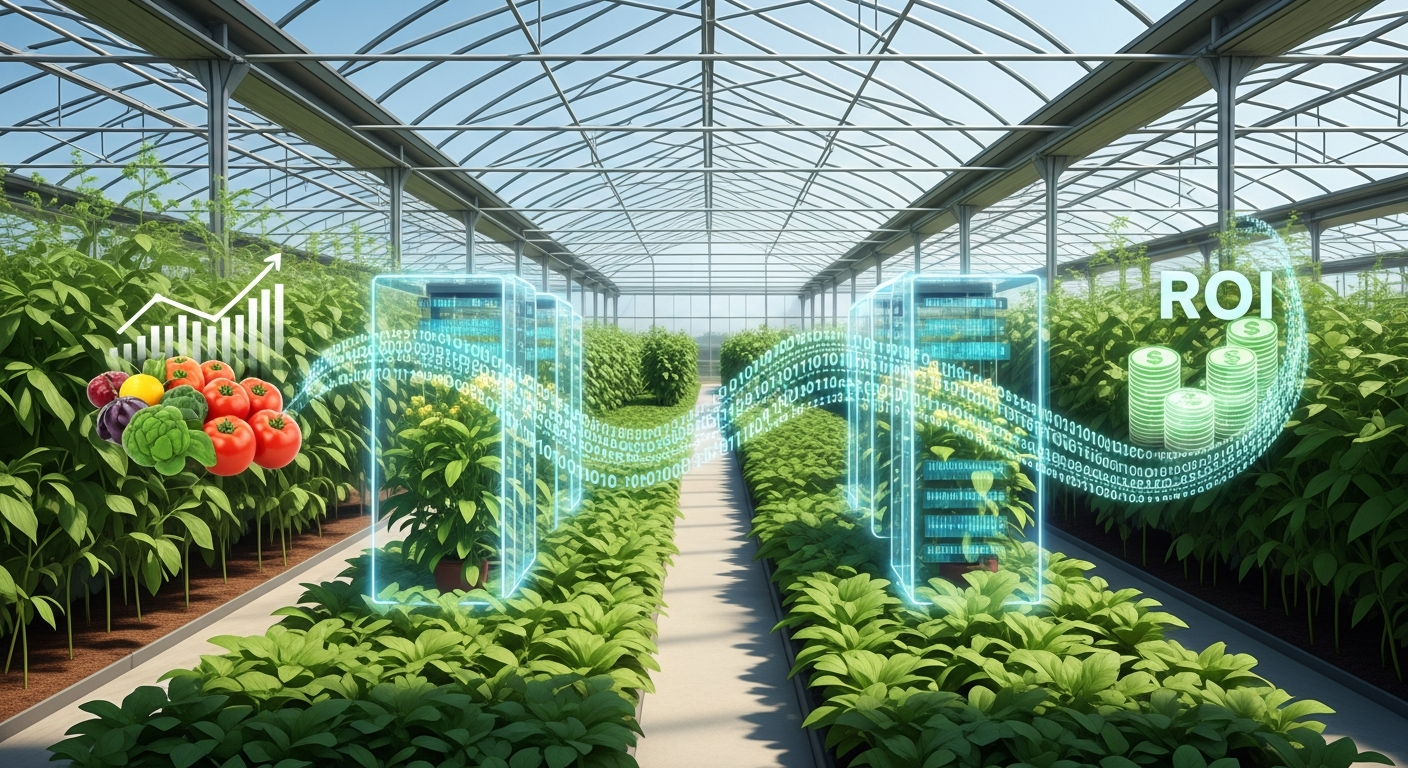
Many operations collect data, but often it’s stored in disparate systems, spreadsheets, or simply overwritten after a short period. This is where the critical distinction between active data, backup data, and archival data comes into play. Active data is what’s used for daily operational decisions. Backup data is for disaster recovery. Archival data, however, is specifically retained for its long-term analytical value, allowing for historical comparisons, trend identification, and predictive modeling over multiple growing cycles, seasons, and even years. It’s not just about having the data; it’s about having accessible, organized, and meaningful historical data.
The Hidden Costs of Unmanaged Data
Ignoring the importance of long-term data archiving carries significant hidden costs that directly erode a greenhouse’s bottom line and hinder its growth potential:
- Missed Optimization Opportunities: Without historical context, growers rely on gut feelings or short-term observations, missing the opportunity to identify subtle trends or correlations that could lead to significant improvements in resource use or crop performance.
- Inefficient Resource Use: Suboptimal climate settings, over- or under-watering, and inefficient nutrient delivery can lead to wasted water, energy, and expensive fertilizers. Long-term data provides the evidence needed to fine-tune these parameters.
- Suboptimal Crop Performance: Each crop cycle is an experiment. Without archiving the detailed environmental and input data alongside yield and quality metrics, lessons learned from successful (or unsuccessful) cycles are easily lost, leading to inconsistent outputs.
- Difficulty in Troubleshooting: When issues arise – a sudden drop in yield, an unexpected pest outbreak, or an equipment malfunction – a lack of historical data makes root cause analysis incredibly challenging, often leading to prolonged downtime or costly trial-and-error solutions.
Embracing long-term data archiving is not merely about storage; it’s about building a living repository of knowledge that can be leveraged to continuously refine operations, mitigate risks, and unlock new levels of efficiency and profitability in greenhouse agriculture.
Boosting Greenhouse ROI Through Strategic Data Archiving
The direct impact of long-term data archiving on a greenhouse’s financial return is substantial and multifaceted. By systematically collecting, storing, and analyzing historical data, operators can identify patterns and correlations that lead to significant cost savings and revenue generation.
Optimizing Resource Consumption
One of the most immediate and tangible benefits of data archiving is the ability to drastically reduce operational expenses through smarter resource management. Greenhouses are inherently resource-intensive, making even marginal efficiencies translate into significant savings.
- Energy Efficiency: Analyzing historical climate control data – temperature, humidity, CO2, and light cycles alongside energy consumption – allows for the identification of peak energy usage times and conditions. For example, archived data can reveal if heating or cooling setpoints could be slightly adjusted during certain periods without negatively impacting plant health, or if supplemental lighting schedules can be optimized based on historical natural light availability and plant growth response. Over multiple seasons, this data supports predictive modeling, enabling growers to anticipate energy demand and fine-tune HVAC and lighting systems for maximum efficiency. Savings in energy costs can be one of the largest contributors to improved ROI.
- Water & Nutrient Management: Precision irrigation and fertigation are critical. Archived data on water usage, nutrient solution pH and EC levels, substrate moisture content, and plant uptake rates, correlated with plant growth and yield, empowers growers to create highly precise feeding schedules. Historical data can show, for instance, that a specific cultivar requires less water during certain growth stages or that nutrient runoff was higher than necessary under particular environmental conditions. This granular insight reduces waste of water and expensive fertilizers, while also minimizing environmental impact, further enhancing the greenhouse’s sustainability profile and reducing input costs.
- Labor Allocation: Labor is often the largest operational expense. By archiving data on task completion times, yield per labor hour, and correlation with specific environmental conditions or operational procedures, managers can optimize staffing levels and work schedules. For example, historical data might indicate that pruning during a specific growth phase under certain light conditions leads to faster completion and better plant health, allowing for more efficient deployment of staff. This leads to more productive labor, reducing overall labor costs relative to output.
Enhancing Crop Yield & Quality
Beyond cost savings, long-term data archiving directly contributes to increased revenue by improving the quantity and quality of crops produced.
- Identifying Optimal Growing Conditions: Through the analysis of multi-year data, growers can pinpoint the exact environmental parameters (temperature, humidity, CO2, light intensity, photoperiod) that consistently result in the highest yields and best quality for specific cultivars. This isn’t a one-time discovery; it’s a continuous refinement process. For instance, archived data might show that slightly increasing CO2 levels during a specific flowering stage for a particular tomato variety consistently boosts fruit size and Brix levels, leading to premium prices.
- Proactive Pest and Disease Management: Historical environmental data, coupled with records of pest and disease outbreaks, can reveal subtle correlations. Was a specific fungal outbreak preceded by an unusual spike in humidity? Did a particular insect population flourish after a specific temperature range was maintained for too long? By identifying these patterns, growers can implement proactive preventative measures, reducing reliance on costly chemical treatments and minimizing crop losses, thus safeguarding yield and quality.
- Consistent Product Quality: Market demands often favor consistent, high-quality produce. Archived data helps growers replicate successful growing conditions cycle after cycle, ensuring that products meet desired specifications (size, color, firmness, shelf-life, taste) reliably. This consistency builds customer loyalty and often commands better prices.
Strategic Decision Making & Risk Mitigation
Archived data provides an invaluable foundation for long-term strategic planning and mitigating unforeseen challenges.
- Informing Capital Investments: Before investing in new equipment (e.g., advanced lighting systems, CO2 enrichment, new heating units) or expanding facilities, historical data can provide empirical evidence for projected ROI. For example, archived yield data from a trial section with new LED lights can justify a full-scale upgrade.
- Benchmarking Performance: Growers can benchmark their performance against previous cycles, comparing current yields, resource consumption, and growth rates to historical averages and best-performing cycles. This helps identify areas needing improvement and sets realistic, data-driven targets.
- Predicting Market Supply and Demand: Over time, archived yield patterns, combined with external market data, can inform better sales and marketing strategies, allowing growers to anticipate supply volumes and time their harvests to capitalize on favorable market conditions or avoid periods of oversupply.
- Insurance and Compliance: In the event of crop loss due to unforeseen circumstances (e.g., severe weather, equipment failure), meticulously archived data provides critical evidence for insurance claims and helps demonstrate compliance with various agricultural standards and certifications.
Supercharging Greenhouse Productivity with Archived Insights
Productivity, in the context of a greenhouse, refers to the efficiency with which inputs (resources, labor, time) are converted into outputs (yield, quality produce). Long-term data archiving dramatically enhances this efficiency, allowing greenhouses to produce more with less, consistently and reliably.
Predictive Analytics and Proactive Management
One of the most exciting applications of long-term data archiving is its role in enabling predictive analytics. Instead of reacting to problems, growers can anticipate and prevent them.
- Anticipating Nutrient Deficiencies: By analyzing historical data correlating specific nutrient solution parameters with plant health indicators and eventual deficiencies, growers can develop models to predict when a plant might become deficient before visible symptoms appear. This allows for proactive adjustments to fertigation.
- Forecasting Disease Outbreaks: As mentioned, historical climate data paired with disease incidents can highlight environmental triggers. With enough archived data, sophisticated models can predict the likelihood of specific disease outbreaks, allowing for preventative treatments or environmental adjustments, rather than curative, often more expensive, measures.
- Predicting Equipment Failure: For highly automated greenhouses, archiving data on equipment performance (e.g., motor run times, sensor readings, maintenance logs) can help predict potential failures, allowing for scheduled preventative maintenance rather than costly, disruptive emergency repairs. This minimizes downtime and ensures continuous operation.
The shift from reactive problem-solving to proactive management is a cornerstone of enhanced greenhouse productivity, minimizing losses and maximizing output.
Continuous Improvement and Best Practices
A data-rich history fosters a culture of continuous improvement within the greenhouse operation.
- Systematic Review of Past Cycles: After each crop cycle, archived data allows for a comprehensive post-mortem analysis. What worked well? What could have been better? Were the yields consistent with historical averages under similar conditions? This systematic review identifies specific areas for refinement in future cycles.
- Developing Standardized Operating Procedures (SOPs): Based on empirical evidence from years of operation, greenhouses can develop highly optimized SOPs for everything from seeding and transplanting to pruning, harvesting, and pest scouting. These SOPs, rooted in historical success, ensure consistency across shifts and seasons, reducing variability and improving overall productivity.
- Training New Staff: Archived data provides an invaluable training resource. New employees can be shown exactly how specific environmental settings impacted past yields, or how adhering to a particular irrigation schedule led to optimal plant health. This accelerates the learning curve and ensures new staff quickly adopt proven best practices.
Long-term data isn’t just about what happened; it’s about learning from the past to refine the present and optimize the future.
Supply Chain Optimization
Productivity extends beyond the greenhouse walls to the entire supply chain. Archived data significantly enhances a greenhouse’s ability to manage its output effectively.
- Accurate Harvest Forecasting: By analyzing historical growth curves, yield data, and environmental conditions, growers can forecast harvest volumes and timing with much greater accuracy. This precision allows for better planning with buyers, reducing spoilage, and ensuring fresh produce reaches the market efficiently.
- Improved Logistics and Market Timing: Knowing precise harvest dates and volumes well in advance enables more efficient logistics planning – arranging transportation, packaging, and distribution. It also empowers growers to time their market entry strategically, potentially capitalizing on demand fluctuations and securing better prices.
- Meeting Buyer Specifications Consistently: Many buyers have specific requirements for produce size, ripeness, or quality. Archived data helps growers consistently meet these specifications, improving relationships with distributors and retailers, and reducing rejections.
Implementing an Effective Long-Term Data Archiving Strategy
Transitioning to a data-driven greenhouse operation requires a thoughtful and systematic approach. It’s not just about buying sensors; it’s about creating a holistic data ecosystem.
Key Considerations for Data Archiving
- Data Collection: Invest in reliable, calibrated sensors for all critical environmental parameters, water usage, nutrient levels, and energy consumption. Establish consistent protocols for manual data entry (e.g., pest scouting, yield measurements, labor hours). Ensure data points are time-stamped and geo-referenced if applicable.
- Data Storage: Decide between cloud-based storage solutions (scalable, accessible, often with built-in redundancy) and on-premise servers (more control, potentially higher upfront cost). Prioritize security to protect proprietary growing data and ensure data integrity.
- Data Management System (DMS): A robust DMS is crucial. This could be integrated into an existing greenhouse management software platform or a dedicated data warehousing solution. The DMS should be able to ingest data from various sources, normalize it, and make it searchable and retrievable for analysis.
- Data Governance: Establish clear policies on who owns the data, who has access, and what data retention periods are necessary for different types of information. Define data quality standards and ensure regular audits for accuracy.
- Data Analysis Tools: Investing in business intelligence (BI) dashboards, statistical analysis software, or even AI/Machine Learning platforms is essential to extract insights from archived data. The data itself is only as valuable as the insights it generates.
Practical Steps for Greenhouses
- Define Your Goals: Before collecting data, articulate what questions you want to answer. Are you focused on reducing energy costs, increasing yield of a specific crop, or improving product consistency? Clear goals guide your data collection strategy.
- Audit Existing Data Sources: What data are you already collecting (even manually)? Identify gaps and redundancies.
- Choose the Right Technology: Research and select reliable sensors, controllers, and software platforms that integrate well and are scalable. Prioritize user-friendly interfaces for your team.
- Implement Data Cleaning & Normalization: Data quality is paramount. Establish processes for cleaning erroneous data, standardizing units, and normalizing data from different sources to ensure consistency.
- Establish Regular Archiving Protocols: Automate data transfer and archiving as much as possible. Define how often data is moved from active to archival storage and in what format.
- Invest in Training: Empower your staff. Train growers and managers on how to interpret dashboards, run basic reports, and understand the implications of data-driven insights. Consider hiring data analysts or collaborating with agricultural data specialists.
- Start Small, Scale Up: Begin with a pilot project in a specific section of the greenhouse or for a single crop. Demonstrate the value of data archiving on a smaller scale before rolling it out across the entire operation.
Overcoming Challenges
While the benefits are clear, implementing a comprehensive data archiving strategy can present challenges:
- Initial Investment Cost: The upfront cost of sensors, software, and infrastructure can be significant. However, view this as an investment with a clear ROI rather than a pure expense.
- Technical Complexity: Integrating various systems and managing large datasets requires technical expertise. This can be addressed by hiring skilled personnel, partnering with tech providers, or leveraging cloud-based solutions that handle much of the backend complexity.
- Data Overload: Without proper analysis tools and defined goals, the sheer volume of data can be overwhelming. Focusing on actionable metrics and using intuitive dashboards helps prevent paralysis by analysis.
The future of greenhouse agriculture is inextricably linked to data. Those who embrace long-term data archiving will not merely survive but thrive, building resilient, highly efficient, and exceptionally profitable operations.
In the competitive landscape of modern agriculture, the ability to make data-driven decisions is no longer a luxury but a necessity. Long-term data archiving, far from being a mundane chore, stands as a strategic cornerstone for any greenhouse aspiring to optimize its operations, maximize profitability, and ensure sustained growth. By providing the deep historical context needed for precise resource management, enhanced crop performance, and proactive problem-solving, archived data directly translates into significant improvements in ROI and overall productivity. Embracing this data revolution means transforming your greenhouse into a highly intelligent, adaptive, and prosperous agricultural enterprise, ready to meet the demands of tomorrow’s market with confidence and efficiency.