
In the intricate world of hydroponics, where plants thrive without soil, every environmental factor in the root zone is magnified in its importance. While nutrients, pH, and light often take center stage in discussions about optimal plant growth, there’s an unsung hero silently working beneath the surface: dissolved oxygen (DO). This invisible element is as critical to a plant’s subterranean health as carbon dioxide is to its aerial leaves. Neglecting the oxygen levels in your hydroponic nutrient solution can lead to a cascade of problems, from stunted growth and nutrient deficiencies to dreaded root rot. Understanding, monitoring, and maintaining adequate dissolved oxygen is not just a best practice; it’s a fundamental pillar for cultivating robust, healthy, and high-yielding hydroponic plants. This comprehensive guide will delve into the science of dissolved oxygen, explore its profound impact on root health, and equip you with the knowledge and tools to effectively monitor and optimize DO levels in your hydroponic system, ensuring your roots breathe easy and your plants flourish.
The Vital Role of Dissolved Oxygen in Hydroponics
In a soil-based environment, plant roots access oxygen from air pockets within the soil structure. However, in hydroponic systems, where roots are constantly submerged in or exposed to a nutrient solution, this direct access is significantly altered. This is where dissolved oxygen in hydroponics becomes paramount. It’s not just a beneficial addition; it’s a fundamental requirement for plant survival and optimal growth.
What is Dissolved Oxygen (DO)?
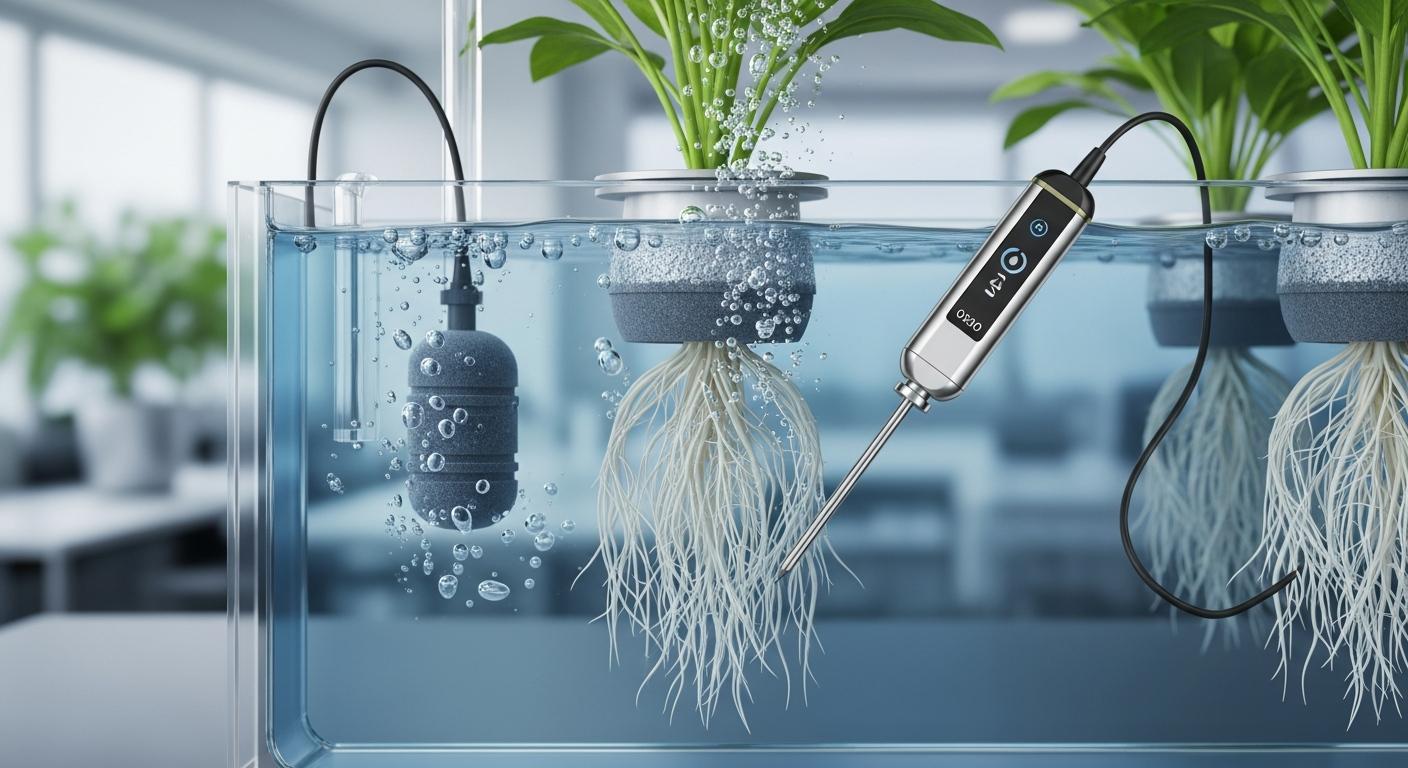
Dissolved oxygen refers to the microscopic bubbles of oxygen gas (O2) that are suspended in water. These tiny molecules are vital for nearly all aquatic life, and in hydroponics, they are the lifeblood of your plant’s root system. Without adequate DO, roots cannot perform their essential functions effectively.
Why is DO Crucial for Root Respiration?
Just like humans, plant roots “breathe.” They undergo a process called aerobic respiration, where they take in oxygen and convert sugars (produced during photosynthesis) into energy. This energy is then used to fuel all root activities, including:
- Nutrient Uptake: Active transport of essential minerals from the nutrient solution into the plant. Without sufficient oxygen, this process grinds to a halt, leading to nutrient deficiencies despite abundant nutrients in the solution.
- Water Absorption: Roots actively absorb water, which is crucial for photosynthesis, turgor pressure, and transporting nutrients throughout the plant.
- Cell Growth and Division: Oxygen is essential for the metabolic processes that drive the growth of new root cells, allowing the root system to expand and anchor the plant.
- Hormone Production: Roots are responsible for producing various plant hormones, which regulate growth and development in other parts of the plant.
Consequences of Oxygen Deficiency (Anoxia/Hypoxia)
When dissolved oxygen levels drop too low (a condition known as hypoxia, or severe oxygen deficiency leading to anoxia), your plants suffer dramatically. The adverse effects can be swift and devastating:
- Stunted Growth: With insufficient energy, roots cannot properly absorb nutrients and water, leading to visibly slowed growth above ground.
- Nutrient Lockout/Deficiencies: Even if your nutrient solution is perfectly balanced, roots cannot actively transport nutrients without oxygen. This mimics nutrient deficiencies, showing symptoms like chlorosis (yellowing leaves) or necrotic spots.
- Root Rot: This is perhaps the most dreaded consequence. Low oxygen environments favor the proliferation of anaerobic bacteria and pathogenic fungi (like Pythium and Phytophthora). These harmful microorganisms thrive in stagnant, oxygen-depleted conditions, attacking and decaying root tissues, turning them slimy, brown, and foul-smelling.
- Reduced Yields: Ultimately, unhealthy roots cannot support a healthy plant, leading to significantly reduced fruit, flower, or leaf yields.
- Increased Susceptibility to Stress: Oxygen-stressed plants are weaker and more vulnerable to other environmental stresses, pests, and diseases.
Maintaining optimal dissolved oxygen levels for root health is therefore not merely about preventing problems; it’s about actively promoting vigorous growth, efficient nutrient uptake, and robust disease resistance, ensuring your hydroponic venture thrives.
Understanding Optimal Dissolved Oxygen Levels and Influencing Factors
Just knowing that oxygen is important isn’t enough; successful hydroponic growers need to understand what constitutes an “optimal” level and what factors can cause these levels to fluctuate. Achieving and maintaining the right balance is key to preventing stress and maximizing plant potential.
What are Ideal DO Ranges for Hydroponic Plants?
Generally, hydroponic plants thrive when dissolved oxygen levels are between 5 to 8 milligrams per liter (mg/L), or parts per million (ppm), as these units are essentially interchangeable for practical purposes in water. Some experts even recommend aiming for 6 to 9 mg/L for peak performance. While plants can survive at lower levels (e.g., 3-4 mg/L), their growth will be significantly inhibited, and they will be more susceptible to disease.
- Seedlings and Young Plants: May benefit from slightly higher DO levels (e.g., 7-8 mg/L) to establish strong root systems quickly.
- Fruiting and Flowering Plants: Continue to require robust DO levels to support high metabolic demands during these energy-intensive phases.
- Warm vs. Cold Water: As discussed below, the achievable DO levels are inherently linked to water temperature.
It’s important to note that very high DO levels (e.g., supersaturation above 10-12 mg/L) are generally not harmful but are often unnecessary and can be harder to maintain consistently without specialized equipment like oxygen generators.
Key Factors Affecting Dissolved Oxygen Levels
Several environmental and systemic factors constantly influence the amount of oxygen dissolved in your nutrient solution. Understanding these allows you to predict and counteract potential drops.
1. Temperature
This is arguably the most significant factor. There is an inverse relationship between water temperature and dissolved oxygen solubility. Simply put:
- Colder water holds more dissolved oxygen.
- Warmer water holds less dissolved oxygen.
For example, water at 20°C (68°F) can hold approximately 9 mg/L of oxygen, while water at 30°C (86°F) can only hold about 7.5 mg/L. This means that if your nutrient solution gets too warm, even with good aeration, you might struggle to reach optimal DO levels. Maintaining a solution temperature between 18-24°C (65-75°F) is generally recommended for optimal DO and nutrient uptake.
2. Water Movement and Agitation
Stagnant water quickly depletes its DO content as roots and microbes consume available oxygen without replenishment. Agitation and movement facilitate gas exchange between the water and the air, allowing more oxygen to dissolve. This is why aeration devices are so crucial.
3. Biological Oxygen Demand (BOD)
The presence of organic matter, algae, and harmful microorganisms in your nutrient solution increases the Biological Oxygen Demand (BOD). These organisms consume dissolved oxygen as they decompose organic materials. A dirty system with biofilm buildup or decaying plant matter will deplete DO levels faster, leaving less for your plant roots. This highlights the importance of regular cleaning and maintenance.
4. Plant Respiration
While aeration adds oxygen, your plant roots are actively consuming it. In systems with a dense root mass, especially during periods of rapid growth, the rate of oxygen consumption can be substantial, leading to potential localized depletion if not adequately replenished.
5. Nutrient Concentration
Highly concentrated nutrient solutions can sometimes slightly reduce the water’s capacity to hold dissolved gases, including oxygen. While this effect is usually minor compared to temperature, it’s a factor to consider in very dense solutions.
By understanding these influencing factors, particularly temperature, you can implement proactive strategies to keep your hydroponic nutrient solution oxygenated and maintain a thriving root environment.
Methods for Monitoring Dissolved Oxygen in Your Hydroponic System
Guessing your DO levels is a recipe for disaster. Effective monitoring of dissolved oxygen is crucial for making informed decisions about your aeration strategies and ensuring the continuous health of your plant roots. While visual cues can offer some basic indication, accurate measurement is the only reliable way to know your exact DO situation.
Why is Regular Monitoring Essential?
DO levels are dynamic and can fluctuate due to factors like temperature changes, pump failures, increased biological activity, or even the growth cycle of your plants. Regular monitoring allows you to:
- Catch problems early: Detect a drop in DO before roots show visible signs of stress or disease.
- Optimize aeration: Fine-tune your aeration equipment to maintain consistent optimal levels.
- Prevent root disease: Proactively avoid conditions that favor pathogens.
- Ensure peak performance: Confirm that roots have everything they need for efficient nutrient uptake and vigorous growth.
Different Measurement Tools for Dissolved Oxygen
1. Dissolved Oxygen Meters (DO Meters)
DO meters are the most accurate and reliable way to measure dissolved oxygen in hydroponic solutions. They come in various types and price points, catering to different levels of precision and budget.
- Electrochemical (Galvanic/Polarographic) Probes:
- How they work: These probes use an electrode and electrolyte solution, separated from the sample water by an oxygen-permeable membrane. Oxygen diffuses across the membrane and generates an electrical current proportional to the DO concentration.
- Pros: Generally affordable, relatively straightforward to use.
- Cons: Require regular calibration (often daily or weekly), membrane replacement, and electrolyte refills. The membrane can be prone to fouling, and temperature compensation is crucial.
- Cost: Basic handheld models can range from $100-$300, while more advanced laboratory-grade meters can be $500+.
- Optical (Luminescent) Probes:
- How they work: These meters use a luminescent chemical sensor. When exposed to blue light, the chemical emits red light. Oxygen molecules quench (absorb) this red light, and the amount of quenching is inversely proportional to the DO concentration.
- Pros: Highly accurate, very stable (less frequent calibration needed, often quarterly or annually), no membranes or electrolyte solutions, less affected by fouling, faster response time.
- Cons: More expensive than electrochemical probes.
- Cost: Typically $400-$1000+, depending on features and brand.
Tips for Using DO Meters:
- Calibration is key: Always calibrate your meter according to the manufacturer’s instructions. Electrochemical probes often require calibration in air-saturated water or specific calibration solutions.
- Clean probes regularly: Algae and nutrient residue can foul the probe membrane or sensor, leading to inaccurate readings.
- Temperature compensation: Ensure your meter has automatic temperature compensation or manually input the solution’s temperature for accurate readings, as DO solubility is highly temperature-dependent.
- Consistent sampling: Take samples from the same location in your reservoir each time for comparable data.
2. Chemical Test Kits
These kits typically use a titration method (like the Winkler method) or colorimetric reagents to estimate DO levels. A series of chemical reactions produce a color change or require a specific amount of titrant, which is then correlated to DO concentration.
- Pros: Inexpensive, good for hobbyists on a tight budget.
- Cons: Less accurate than meters, more labor-intensive, results can be subjective due to color interpretation, chemicals have a shelf life.
- Cost: $20-$50 per kit.
3. Visual Cues (Least Reliable)
While not a monitoring method, visible signs can indicate severe oxygen deficiency. However, by the time these signs appear, significant damage may have already occurred.
- Slime and Odor: Anaerobic conditions lead to the growth of harmful bacteria, causing roots to become slimy and the solution to develop a foul, often sulfuric, smell.
- Discolored Roots: Healthy roots are typically white or cream-colored. Oxygen-starved roots often turn brown, mushy, or stringy.
- Stunted Plant Growth: As mentioned, lack of oxygen impairs nutrient uptake, leading to visible growth problems.
Relying solely on visual cues is a reactive approach. Investing in a reliable DO meter is a proactive step that will save you headaches and ensure your hydroponic root health remains uncompromised. For most serious hydroponic growers, an accurate DO meter is an indispensable tool in their arsenal.
Strategies for Maintaining and Increasing Dissolved Oxygen
Once you understand the importance of dissolved oxygen and how to monitor it, the next critical step is implementing effective strategies to maintain and increase its levels in your hydroponic nutrient solution. Proactive aeration and management are key to preventing oxygen deficiencies and promoting robust root development.
Aeration Techniques: Actively Adding Oxygen
1. Air Pumps and Air Stones
This is the most common and often most effective method for increasing dissolved oxygen. An air pump draws in ambient air and pushes it through an airline to an air stone, which is submerged in the nutrient solution. The air stone breaks the air into fine bubbles, maximizing the surface area for oxygen to dissolve into the water.
- Sizing: Choose an air pump appropriate for the volume of your reservoir. Larger reservoirs require more powerful pumps.
- Placement: Place air stones at the bottom of the reservoir for maximum water circulation and bubble travel time.
- Maintenance: Regularly clean or replace air stones, as they can become clogged with nutrient residue or algae, reducing efficiency.
Practical Tip: For large reservoirs, consider using multiple air stones or a linear piston pump for increased air volume and pressure.
2. Water Pumps for Circulation and Surface Agitation
While air pumps directly inject air, water pumps can indirectly increase DO by creating turbulence and surface agitation. This enhances gas exchange between the nutrient solution and the air above it.
- In-reservoir circulation: A small submersible pump can create currents within the reservoir, breaking up stagnant zones.
- Return flow agitation: In systems where nutrient solution is pumped from a reservoir to growing trays and then returns, ensure the return flow creates splashing or ripples at the reservoir surface.
3. Venturi Injectors
A venturi injector is a device that uses the flow of water to create a vacuum, which then draws air into the water stream. It’s often integrated into recirculating systems where a powerful water pump is already in use.
- How it works: As water flows rapidly through a constricted section, pressure drops, creating suction that pulls in atmospheric air.
- Pros: Very efficient for aeration, no separate air pump needed.
- Cons: Requires a strong water pump, can be more complex to set up initially.
4. Drip and Nutrient Film Technique (NFT) Systems
These systems inherently offer good aeration because the roots are not fully submerged. In drip systems, the solution is delivered intermittently, allowing roots to access atmospheric oxygen between watering cycles. In NFT, a thin film of nutrient solution flows over the roots, leaving the majority of the root mass exposed to air, naturally promoting high DO levels in the root zone.
- Consideration: While these systems naturally provide aeration, ensuring the reservoir itself is adequately aerated for the solution being pumped is still important.
5. Deep Water Culture (DWC) Specifics
DWC systems, where roots are constantly submerged, demand the most vigorous aeration. Heavy-duty air pumps and multiple air stones are essential to prevent root rot and ensure the roots receive adequate oxygen in this water-intensive environment. Many DWC growers use multiple large air stones per plant site or in the main reservoir to achieve superior dissolved oxygen levels for root health.
Other Methods for Optimizing Oxygen Levels
1. Chilling the Nutrient Solution
As discussed, colder water holds more oxygen. Using a water chiller to maintain your nutrient solution temperature between 18-24°C (65-75°F) can significantly improve DO solubility and availability. This is often the single most effective way to ensure high DO, especially in warm climates or indoor grow spaces.
- Benefits: Not only increases DO but also inhibits the growth of root pathogens and algae, which prefer warmer temperatures.
- Consideration: Chillers can be a significant upfront investment and consume power.
2. Hydrogen Peroxide (H2O2)
Adding food-grade hydrogen peroxide (H2O2) to your nutrient solution can temporarily boost oxygen levels. H2O2 breaks down into water and oxygen molecules, releasing oxygen directly into the solution.
- Cautions: Use sparingly and at recommended dilutions (e.g., 3-5ml of 3% H2O2 per gallon). High concentrations can be harmful to beneficial microbes and plant roots. It’s a temporary fix, not a substitute for proper aeration.
- Usage: Best used as a short-term treatment for mild oxygen deficiency or as a preventative measure for pathogens, rather than a primary aeration strategy.
3. Beneficial Microbes
Introducing beneficial bacteria and fungi (e.g., Bacillus species, mycorrhizae) can contribute to a healthy root environment. While they don’t directly add oxygen, they can outcompete pathogenic organisms that consume oxygen and create anaerobic conditions. They also help keep the root zone clean and promote nutrient availability, indirectly supporting conditions for better DO.
4. Regular System Cleaning and Maintenance
Preventing the buildup of organic matter, algae, and biofilm is crucial. These materials harbor oxygen-consuming microbes. Regular cleaning of reservoirs, pumps, tubing, and air stones reduces the biological oxygen demand (BOD) and ensures that the available oxygen is used by your plants, not by undesirable organisms.
- Flushing: Periodically flushing your system with clean water and mild cleaning solutions can prevent nutrient salt buildup and microbial growth.
By integrating these various strategies, from robust aeration to temperature control and diligent maintenance, you can create an optimal, oxygen-rich environment that supports unparalleled hydroponic root health and maximizes the potential of your plants.
Conclusion
In the finely tuned ecosystem of a hydroponic garden, dissolved oxygen (DO) often operates out of sight, yet its presence, or absence, dictates the very foundation of plant health and productivity. We’ve explored how vital this invisible gas is for root respiration, efficient nutrient and water uptake, and the overall vigor of your plants. From preventing the dreaded onset of root rot and nutrient deficiencies to unlocking superior growth rates and yields, maintaining optimal DO levels, typically between 5 to 8 mg/L, is non-negotiable for serious growers.
Understanding the critical factors that influence DO, such as temperature, water movement, and biological oxygen demand, empowers you to proactively manage your system. Furthermore, the ability to accurately monitor DO using reliable meters is your first line of defense against unseen problems, allowing for precise adjustments rather than reactive damage control. Finally, by implementing a combination of effective aeration techniques—from robust air pumps and air stones to sophisticated water chillers and venturi injectors—you can actively create and sustain an oxygen-rich environment tailored for thriving roots.
Embracing the principles of monitoring oxygen levels in hydroponic solutions for root health is more than just a technique; it’s a commitment to providing your plants with the fundamental building blocks they need to flourish. By prioritizing dissolved oxygen, you are not just growing plants; you are cultivating an environment where their full genetic potential can be realized, leading to healthier, happier, and ultimately, more productive hydroponic harvests.