
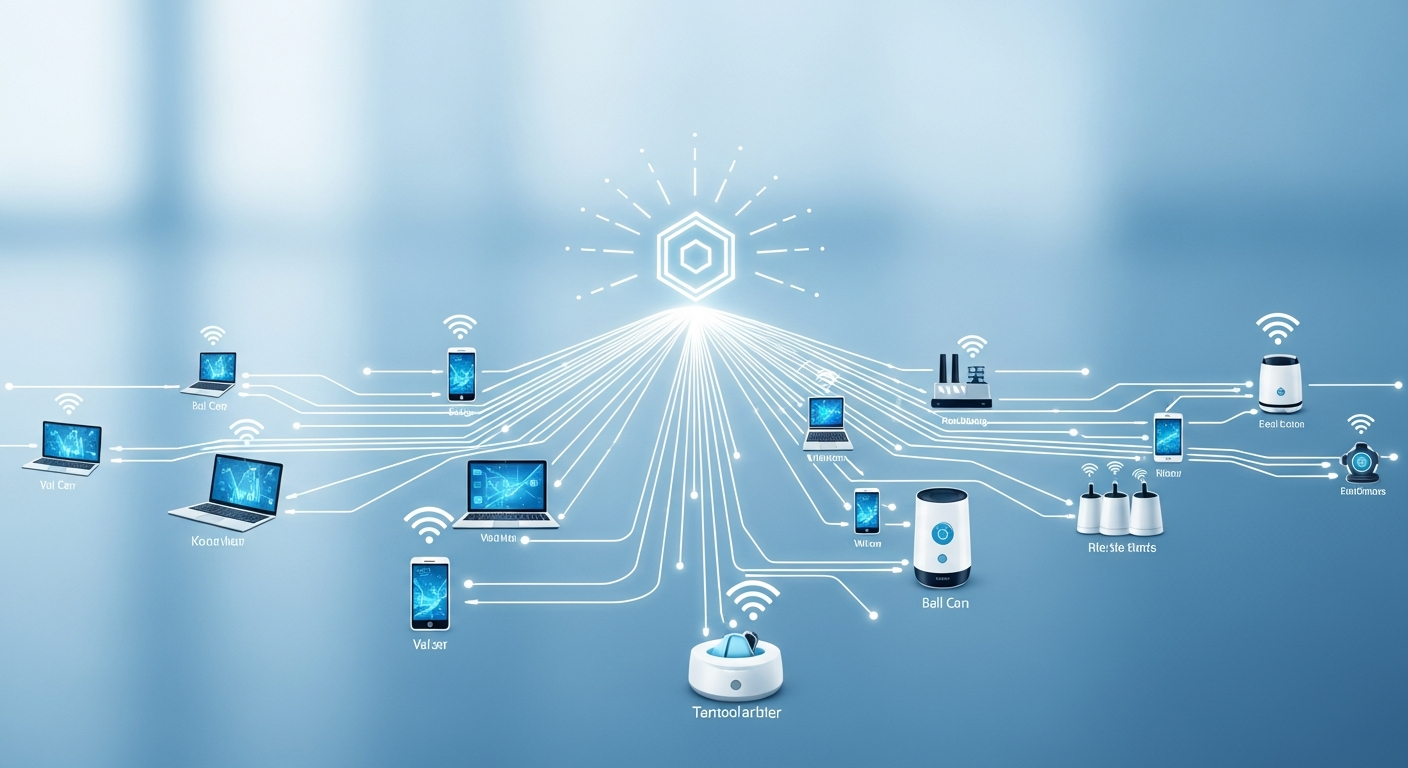
In an increasingly interconnected world, where everything from smart homes to advanced manufacturing plants relies on a dense network of devices, the ability for these diverse components to communicate seamlessly is no longer a luxury—it’s a fundamental necessity. Imagine a symphony where each instrument plays a different tune, or a conversation where everyone speaks a different language. The result is chaos, not harmony. This is precisely the challenge faced by industries grappling with an explosion of connected devices, each potentially speaking its own digital dialect. The solution lies in the adoption and rigorous adherence to industry protocols: standardized sets of rules that govern how devices exchange data, ensuring clarity, efficiency, and coherence across the entire digital ecosystem. Without these critical standards, the promise of the Internet of Things (IoT), Industry 4.0, and pervasive digital transformation would remain an unattainable dream, mired in complexity and incompatibility.
The Genesis of Chaos: Why Standardization Became Imperative
For decades, the landscape of industrial and consumer electronics was characterized by a fragmented approach to device communication. Manufacturers, driven by proprietary interests and a desire for competitive advantage, often developed their own unique methods for devices to interact. This led to a plethora of bespoke communication systems, each with its own hardware interfaces, data formats, and logical rules. While these proprietary solutions sometimes offered optimized performance within a closed ecosystem, they created significant barriers to broader integration and interoperability. This era, often dubbed the “Wild West” of connectivity, presented numerous challenges:
- Vendor Lock-in: Once a company adopted a particular manufacturer’s system, they were often tied to that vendor for all future expansions and upgrades, limiting their choices and bargaining power.
- Integration Nightmares: Connecting devices from different manufacturers, or even different product lines from the same manufacturer, often required custom hardware, complex software bridges, and extensive development effort, leading to significant costs and delays.
- Increased Complexity: Managing multiple, disparate communication systems required specialized knowledge, complex troubleshooting, and a higher risk of errors.
- Limited Scalability: Expanding systems built on proprietary protocols often meant replicating the same integration challenges on a larger scale, hindering growth and agility.
- Security Vulnerabilities: Unique, undocumented protocols were harder to secure comprehensively, as standard security practices might not apply, and vulnerabilities could remain hidden.
The advent of the Internet of Things (IoT) and the Industrial Internet of Things (IIoT) dramatically amplified these problems. With billions of devices ranging from tiny sensors to powerful industrial robots now needing to share data, the existing siloed approach became unsustainable. The sheer volume and diversity of connected endpoints demanded a universal language—or at least a set of widely understood dialects—to enable seamless data exchange, automated processes, and truly intelligent systems. This necessity paved the way for the development and widespread adoption of industry protocols, transforming a chaotic landscape into one with the potential for order and immense value.
Practical Tip: Organizations grappling with legacy systems and proprietary interfaces should conduct an audit of their existing communication infrastructure. Identify key integration points that are bottlenecks or sources of high maintenance costs. Prioritize migrating these to systems that support open, standardized protocols to unlock future flexibility and reduce technical debt.
Core Benefits of Standardized Device Communication
The move towards standardized device communication is not merely about convenience; it underpins the very foundation of modern digital ecosystems. The advantages are far-reaching, impacting everything from operational efficiency to long-term strategic growth.
Unlocking Seamless Interoperability and Integration
Perhaps the most fundamental benefit of industry protocols is the assurance of interoperability. When devices and systems adhere to the same communication standards, they can “talk” to each other effortlessly, regardless of their manufacturer, design, or specific function. This means:
- Plug-and-Play Functionality: New devices can be integrated into existing networks with minimal configuration, significantly reducing deployment time and costs.
- Reduced Development Burden: Developers can focus on application logic rather than wrestling with complex, device-specific communication drivers.
- Ecosystem Expansion: It becomes easier to connect diverse components, from edge sensors to cloud platforms, creating a cohesive and powerful operational environment. This fosters innovation as components can be mixed and matched to create new solutions.
Driving Enhanced Efficiency and Performance
Standardization translates directly into operational efficiencies and improved performance metrics. Protocols are often designed with efficiency in mind, optimizing data transmission and resource utilization:
- Streamlined Data Flow: Predictable data formats and exchange mechanisms reduce processing overheads and latency, leading to faster decision-making and real-time control.
- Optimized Resource Use: Many protocols, especially those for IoT, are designed to be lightweight, conserving power, bandwidth, and processing cycles on constrained devices.
- Automated Processes: Reliable and consistent communication is critical for automation. Standardized protocols enable machines to communicate directly and autonomously, orchestrating complex workflows without human intervention.
Ensuring Scalability and Future-Proofing
In a rapidly evolving technological landscape, the ability to scale and adapt is paramount. Industry protocols provide a robust framework for growth and resilience:
- Easier System Expansion: As businesses grow, adding more devices or expanding into new areas becomes straightforward. The existing standardized infrastructure can accommodate new additions without requiring a complete overhaul.
- Adaptability to Emerging Technologies: Open standards are often designed to be extensible, allowing for the integration of new features or technologies without breaking compatibility with existing systems. This future-proofs investments.
- Reduced Obsolescence Risk: Systems built on widely adopted, open standards are less likely to become obsolete quickly, protecting long-term capital investments.
Bolstering Robust Security and Reliability
Security is a non-negotiable aspect of modern device communication. Industry protocols play a crucial role in establishing a secure and reliable foundation:
- Standardized Security Mechanisms: Many protocols incorporate built-in security features like encryption, authentication, and authorization, which are rigorously tested and refined by a broad community.
- Easier Vulnerability Management: When security mechanisms are standardized, vulnerabilities can be identified, patched, and disseminated across the ecosystem more efficiently.
- Predictable System Behavior: Standardized communication ensures predictable responses and error handling, making systems more reliable and easier to troubleshoot. This predictability is vital for critical infrastructure.
Reducing Costs and Total Cost of Ownership (TCO)
While the initial investment in compliant hardware or software might sometimes seem higher, the long-term cost benefits of standardization are substantial:
- Lower Integration and Development Costs: Less custom coding and fewer specialized connectors mean significant savings in engineering time and resources.
- Wider Vendor Choice: Open standards foster competition among manufacturers, leading to more competitive pricing and a wider selection of products and services.
- Reduced Training and Maintenance: A unified communication approach simplifies training for technical staff and streamlines ongoing maintenance and support.
Fostering Innovation and Market Growth
By lowering barriers to entry and promoting interoperability, industry protocols create a fertile ground for innovation:
- Democratization of Technology: Smaller companies and startups can develop innovative products and services without needing to create entirely new communication stacks.
- Cross-Industry Collaboration: Standardized data exchange facilitates collaboration between different industries and sectors, leading to novel solutions that leverage diverse datasets.
- Accelerated Market Adoption: When products are easily integrated into existing ecosystems, their adoption rate increases, driving overall market growth for connected technologies.
Key Industry Protocols Driving Device Communication
The world of device communication protocols is vast and specialized, with different standards emerging to address specific needs within various industries and use cases. Understanding the prominent ones is crucial for anyone involved in designing or implementing connected systems.
Industrial Automation Protocols
These protocols are the backbone of manufacturing, process control, and critical infrastructure, prioritizing real-time performance, determinism, and robustness.
- Modbus (RTU/TCP): One of the oldest and most widely used industrial protocols, Modbus allows communication between devices such as PLCs, RTUs, and sensors. Modbus RTU uses serial communication, while Modbus TCP uses standard Ethernet, making it adaptable for modern networks. Its simplicity and open nature have ensured its enduring popularity, though it lacks modern security features inherent in newer protocols.
- PROFINET / PROFIBUS: Developed primarily by Siemens, these are dominant in European industrial automation. PROFIBUS is a fieldbus standard for real-time data exchange, while PROFINET is its Ethernet-based successor, offering higher speeds and greater flexibility for complex industrial networks.
- EtherNet/IP: Spearheaded by Rockwell Automation and ODVA, EtherNet/IP (Ethernet Industrial Protocol) adapts standard Ethernet to industrial applications, supporting real-time control and data exchange. It leverages standard Ethernet components, easing integration into IT networks.
- OPC UA (Open Platform Communications Unified Architecture): This is a powerful, platform-independent, and highly secure standard for industrial data exchange. Unlike many older protocols, OPC UA provides not just data transport but also rich information modeling, enabling semantic interoperability (devices understand the *meaning* of the data, not just its value). It is becoming increasingly central to IIoT and Industry 4.0 initiatives due to its scalability, security, and ability to handle complex data structures.
IoT / M2M Protocols
Designed for resource-constrained devices, intermittent connectivity, and large-scale deployments, these protocols prioritize lightweightness and efficiency.
- MQTT (Message Queuing Telemetry Transport): A lightweight publish/subscribe messaging protocol, MQTT is ideal for connecting remote devices with limited network bandwidth. It’s widely used in IoT for sensor data collection, smart home applications, and remote monitoring. Its broker-based architecture makes it highly scalable and efficient.
- CoAP (Constrained Application Protocol): A specialized web transfer protocol for constrained nodes and networks in the IoT. It is similar to HTTP but optimized for resource-constrained devices, allowing them to communicate over UDP with RESTful principles.
- AMQP (Advanced Message Queuing Protocol): A more robust messaging protocol than MQTT, AMQP is often used for enterprise messaging and financial services where reliable, guaranteed message delivery is critical. It’s suitable for more powerful IoT gateways or backend systems rather than edge devices.
Wireless Protocols for Device Communication
While not strictly application-layer protocols, these wireless standards define the physical and data link layers crucial for device communication.
- Wi-Fi (IEEE 802.11): Ubiquitous for local area networking, Wi-Fi enables high-bandwidth communication for devices within a short to medium range.
- Bluetooth / Bluetooth Low Energy (BLE): Short-range wireless technology, with BLE being particularly popular for small, battery-powered IoT devices due to its ultra-low power consumption.
- Zigbee: A low-power, low-data-rate wireless mesh network standard ideal for smart homes, industrial monitoring, and healthcare applications where many devices need to communicate over a broader area than Bluetooth.
- LoRaWAN: (Long Range Wide Area Network): A low-power, wide-area networking (LPWAN) protocol designed for long-range communication with minimal power consumption, perfect for remote sensor data collection over vast areas.
- NB-IoT (Narrowband IoT) / LTE-M: Cellular-based LPWAN technologies that leverage existing cellular infrastructure to provide secure, wide-area coverage for IoT devices, suitable for applications requiring greater reliability and security than non-cellular options.
Practical Tip: When selecting a protocol for a new project, consider several factors: the environment (industrial vs. consumer), power constraints of devices, required data rate and latency, security needs, network topology (star, mesh), and the existing infrastructure. For instance, an industrial setting with real-time control needs might lean towards PROFINET or EtherNet/IP, while a smart home sensor network might favor Zigbee or MQTT over Wi-Fi. For enterprise-level data integration across diverse systems, OPC UA often stands out.
Implementing and Adhering to Protocols: Best Practices for Success
Adopting industry protocols is a strategic decision that requires careful planning and execution. Simply choosing a protocol is not enough; successful implementation demands adherence to best practices to maximize benefits and mitigate risks.
Strategic Planning and Assessment
Before diving into implementation, a thorough strategic assessment is critical:
- Define Clear Requirements: Understand the specific communication needs of your system: data rates, latency, security levels, reliability, and scalability.
- Assess Existing Infrastructure: Evaluate current devices, networks, and software. Identify legacy systems that might require gateways or protocol translation to integrate with new standardized architectures.
- Future-Proofing Considerations: Choose protocols that are actively maintained, have a strong community or standards body, and are extensible to accommodate future technological advancements.
Prudent Vendor Selection
The choice of hardware and software vendors significantly impacts the success of protocol adoption:
- Prioritize Open Standards: Favor vendors who embrace and actively contribute to open, widely adopted protocols. This reduces the risk of vendor lock-in and fosters a more competitive market.
- Verify Protocol Compliance: Ensure that vendor products genuinely comply with the chosen protocol’s specifications through certification programs (if available) and rigorous testing.
- Check Interoperability Claims: Ask for evidence of successful interoperability with other manufacturers’ devices that use the same protocol.
Emphasizing Security by Design
Security should be an inherent part of the design process, not an afterthought:
- Leverage Protocol Security Features: Utilize the authentication, encryption, and authorization mechanisms built into modern protocols (e.g., TLS/SSL in MQTT, security policies in OPC UA).
- Implement Network Segmentation: Isolate critical industrial control networks or sensitive IoT device networks from general IT networks using firewalls and VLANs.
- Regular Updates and Patching: Maintain a vigilant patching schedule for all devices, gateways, and software to address known vulnerabilities in protocols and implementations.
- Strong Authentication and Access Control: Enforce strong passwords, multi-factor authentication, and role-based access control for all connected devices and systems.
Rigorous Testing and Validation
Thorough testing is paramount to ensure reliable and secure communication:
- Interoperability Testing: Before full deployment, test devices from different vendors together to confirm they communicate as expected under various conditions.
- Performance Benchmarking: Measure latency, throughput, and error rates to ensure the system meets performance requirements, especially for real-time applications.
- Security Testing: Conduct penetration testing and vulnerability assessments to identify and rectify potential security weaknesses in the protocol implementation.
Investing in Training and Expertise
Human expertise is as important as the technology itself:
- Personnel Training: Invest in training staff on the specifics of the chosen protocols, including configuration, troubleshooting, and security best practices.
- Comprehensive Documentation: Maintain detailed documentation of your protocol implementations, network architecture, device configurations, and security policies.
Embracing Open Standards and Community Engagement
Participating in the broader community can yield significant benefits:
- Contribute to Standards Bodies: If feasible, participate in the working groups of standards organizations (e.g., OPC Foundation, OASIS, IEEE) to influence future protocol developments.
- Leverage Open-Source Implementations: Utilize open-source libraries and tools for protocol implementation where appropriate, benefiting from community-driven development and peer review.
Practical Tip: When evaluating new device communication solutions, use a checklist. Does it support open standards? What are its security features? Is it scalable for future needs? What is the vendor’s track record for interoperability and support? Is there a clear migration path for legacy systems? Answering these questions rigorously will guide you towards robust and sustainable solutions.
Conclusion
The journey towards a truly interconnected world is fundamentally paved by the diligent adoption and implementation of industry protocols. Far from being a mere technical detail, the standardization of device communication is a strategic imperative that underpins interoperability, fuels efficiency, fortifies security, and accelerates innovation across every sector. From the intricate web of sensors in a smart city to the high-stakes automation in a factory, the ability for devices to “speak the same language” transforms isolated gadgets into intelligent, collaborative ecosystems.
While the initial complexities of choosing and implementing the right protocols might seem daunting, the long-term benefits—reduced costs, enhanced scalability, improved reliability, and a significant competitive advantage—far outweigh the challenges. Organizations that embrace and champion open industry standards are not just future-proofing their investments; they are actively shaping a more cohesive, secure, and technologically advanced world. As the number of connected devices continues its exponential growth, the importance of these digital languages will only intensify, solidifying their role as the unspoken heroes of our digital transformation journey.