
In countless industrial, commercial, and HVAC applications, fans are the unsung heroes, tirelessly moving air to maintain optimal environments, ensure product quality, and protect equipment. From climate control in towering skyscrapers to critical ventilation in manufacturing plants, the ability to precisely control airflow is paramount. Historically, managing fan output involved blunt instruments like dampers or mechanical pitch adjustments, leading to inefficiencies, increased wear and tear, and often, an inability to match fluctuating demand with precision. This is where the game-changing technology of Variable Frequency Drives (VFDs) steps in, transforming how we manage fan speed transitions, offering unparalleled control, efficiency, and operational benefits. This article delves into the intricate world of VFDs, exploring their mechanisms, profound advantages, and practical considerations for achieving seamless and optimized fan speed management.
The Imperative of Dynamic Fan Control: Beyond On/Off
Before diving into the marvels of VFDs, it’s essential to understand the inherent challenges and inefficiencies of traditional fan control methods. Fans, whether centrifugal or axial, are designed to move a specific volume of air against a certain static pressure. However, the demand for airflow is rarely constant in real-world applications. A building’s ventilation needs change with occupancy and outdoor temperature, a process’s cooling requirements fluctuate with production load, and even the static pressure in a duct system can vary as filters load up.
Understanding Fan Laws and Their Implications
The relationship between fan speed, airflow, pressure, and power consumption is governed by fundamental fan laws. One of the most critical aspects for understanding energy efficiency is the cubic relationship between fan speed and power consumption:
- Airflow (CFM) is directly proportional to fan speed (RPM).
- Static Pressure (in. W.C.) is proportional to the square of fan speed (RPM²).
- Brake Horsepower (BHP), and thus energy consumption, is proportional to the cube of fan speed (RPM³).
This cubic relationship is astounding. It means that a relatively small reduction in fan speed can lead to a dramatic reduction in power consumption. For instance, reducing fan speed by just 20% (e.g., from 100% to 80%) can reduce power consumption by nearly 50% (0.8³ = 0.512). This principle underscores the immense potential for energy savings through precise speed control.
Limitations of Traditional Control Methods
Historically, when precise airflow wasn’t strictly necessary or energy costs weren’t a primary concern, fans were often run at full speed, and airflow was throttled using mechanical devices:
- Dampers: These are adjustable plates within the ductwork that restrict airflow. While simple, they create artificial static pressure, causing the fan to work harder against the restriction and wasting significant energy. It’s akin to driving a car with one foot on the accelerator and the other on the brake. They also generate noise and can lead to uneven airflow distribution.
- Inlet Guide Vanes (IGVs): Used primarily on centrifugal fans, IGVs pre-spin the air entering the fan, reducing the load. While more efficient than simple dampers, they still introduce mechanical complexity and don’t offer the same level of precise control or energy savings as speed variation.
- Belt and Sheave Adjustments: Manually changing belt pulley sizes to alter fan speed is cumbersome, impractical for dynamic adjustments, and often involves system downtime.
These methods not only consume excess energy but also subject the fan motor and mechanical components to constant high loads, leading to premature wear, increased maintenance, and higher operational noise. Furthermore, abrupt starting and stopping of large motors, common without advanced control, creates significant electrical and mechanical stress, impacting the entire system and potentially causing power quality issues on the electrical grid. The need for a more sophisticated, dynamic, and efficient solution became increasingly apparent, paving the way for Variable Frequency Drives.
Variable Frequency Drives (VFDs): The Heart of Precision Fan Control
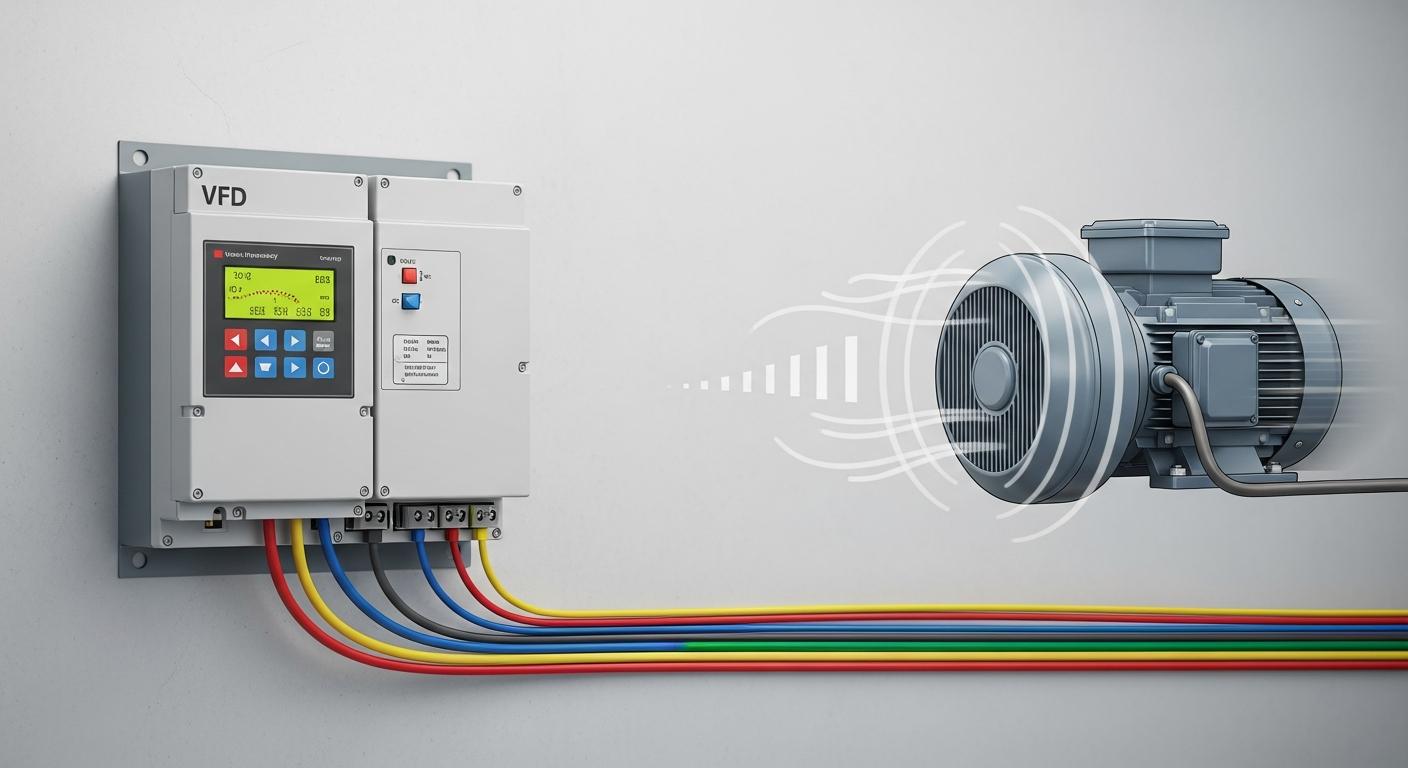
A Variable Frequency Drive, also known as an Adjustable Frequency Drive (AFD) or Inverter Drive, is an electronic device that controls the speed of an AC electric motor by varying the frequency and voltage of its power supply. For fan applications, VFDs are nothing short of revolutionary, enabling operators to precisely match fan output to demand, rather than operating at a fixed, often excessive, speed.
How VFDs Operate
The fundamental principle behind a VFD’s operation involves three main stages:
- Rectifier Stage: Incoming AC power (e.g., 480V, 60Hz) is converted into DC power.
- DC Bus: The rectified DC power is smoothed by capacitors, creating a stable DC voltage link.
- Inverter Stage: This DC power is then converted back into AC power, but at a variable frequency and voltage. This is achieved using Insulated Gate Bipolar Transistors (IGBTs) or similar power semiconductor devices that rapidly switch on and off to create a pulse-width modulated (PWM) output waveform. By varying the switching speed and pulse width, the VFD precisely controls the effective frequency and voltage supplied to the motor, thereby controlling its speed.
This intricate dance of power conversion allows the VFD to dictate the motor’s RPM, which in turn directly controls the fan’s speed and, consequently, the airflow and pressure it generates.
Mastering Fan Speed Transitions with VFDs
The core strength of a VFD in fan applications lies in its ability to manage speed transitions seamlessly and intelligently:
- Soft Start and Soft Stop: Instead of slamming a motor with full voltage and frequency, a VFD ramps up the voltage and frequency gradually. This “soft start” eliminates the high inrush current (often 6-8 times the motor’s full load current) that occurs during direct-on-line (DOL) starting. This significantly reduces mechanical shock on belts, bearings, fan blades, and ductwork, extending equipment lifespan and preventing nuisance tripping of circuit breakers. Similarly, a “soft stop” gradually decelerates the fan, preventing abrupt air pressure changes and mechanical stress.
- Configurable Ramp Profiles: VFDs offer customizable acceleration and deceleration ramps. Operators can program linear ramps (constant rate of change), S-curve ramps (smoother initial and final acceleration/deceleration), or even multi-segment ramps to suit specific application requirements. For instance, in a sensitive cleanroom environment, an S-curve ramp might be preferred to prevent sudden air disturbances during startup or shutdown, ensuring contamination control.
- Closed-Loop Control (PID): This is where VFDs truly shine for dynamic fan speed management. In a closed-loop system, the VFD receives feedback from sensors monitoring critical process variables like duct static pressure, space temperature, or airflow velocity. A Proportional-Integral-Derivative (PID) controller within the VFD (or an external PLC/BMS) continuously compares the measured value to a desired setpoint. If the pressure drops below the setpoint, the VFD increases fan speed; if it rises too high, the speed is reduced. This real-time, automatic adjustment ensures precise maintenance of environmental conditions, optimizing comfort and process stability without constant manual intervention.
- Open-Loop Control: For simpler applications, VFDs can operate in open-loop mode, where fan speed is set manually or by a pre-programmed schedule without direct feedback. While less precise than closed-loop, it still offers the benefits of soft start/stop and energy savings over fixed-speed operation.
- Multi-Speed Operation: VFDs can be programmed with multiple discrete speed setpoints, allowing for quick transitions between predefined operating conditions based on time schedules, external inputs, or demand signals.
By providing such granular control over speed, VFDs enable fans to operate precisely at the necessary output, no more, no less. This translates directly into substantial energy savings and a multitude of other operational advantages.
The Multifaceted Benefits of VFDs in Fan Speed Management
The integration of VFDs into fan systems offers a compelling array of benefits that extend far beyond mere energy conservation, impacting operational efficiency, equipment longevity, and overall system performance.
1. Unprecedented Energy Efficiency
As highlighted by the cubic fan law, reducing fan speed significantly curtails power consumption. VFDs unlock this potential by allowing fans to operate only at the speed required to meet the actual demand. For instance, in a typical HVAC system, running a supply fan at 80% speed instead of 100% can cut its energy use by nearly 50%. This can translate into tens of thousands of dollars in annual savings for large commercial or industrial facilities, offering a rapid return on investment (ROI) for VFD installation. The ability to eliminate wasteful throttling with dampers means the fan motor expends energy only on moving air, not on overcoming artificial resistance.
2. Enhanced Process Control and Environmental Comfort
Precision is key in many applications. In HVAC, VFDs ensure stable indoor temperatures, humidity levels, and air quality by precisely matching airflow to heating, cooling, or ventilation loads. In industrial processes, VFDs maintain consistent pressure in critical areas like cleanrooms, exhaust systems for fume removal, or precise airflow for drying ovens. This level of dynamic control prevents over-pressurization or under-pressurization, ensuring product integrity, worker safety, and consistent process outcomes.
3. Reduced Mechanical Stress and Extended Equipment Life
The harsh mechanical shocks associated with direct-on-line starting of large fan motors contribute significantly to wear and tear on mechanical components. VFDs eliminate this stress through their soft start and soft stop capabilities. This gradual acceleration and deceleration reduces strain on:
- Motors: Less thermal and mechanical stress on windings and bearings.
- Bearings: Reduced impact loading, leading to longer life.
- Belts and Pulleys: No sudden jerks, minimizing slippage and wear.
- Fan Blades and Impellers: Reduced fatigue from repeated high-stress starts.
- Ductwork: Less vibration and strain on seams and supports.
The net result is fewer breakdowns, less frequent maintenance, and a significantly extended operational lifespan for the entire fan system.
4. Noise Reduction
Fans, especially large industrial units, can be significant sources of noise. By allowing fans to operate at lower speeds when full capacity is not required, VFDs directly contribute to a quieter operating environment. Aerodynamic noise, which increases exponentially with fan speed, is significantly reduced, improving comfort in occupied spaces and complying with noise regulations in industrial settings.
5. Improved Power Quality (with advanced VFDs)
While basic VFDs can introduce harmonics into the electrical grid (distortions in the sinusoidal waveform), modern VFDs are increasingly designed with features like active front ends or built-in filters to mitigate these harmonics. By providing a smooth, controlled startup, VFDs prevent the large inrush currents that can cause voltage sags and disturbances on the electrical system, contributing to overall grid stability and reducing potential issues for other sensitive equipment connected to the same power supply.
6. Seamless Integration with Building Management Systems (BMS)
VFDs are designed for easy integration with modern Building Management Systems (BMS) or Programmable Logic Controllers (PLCs). This allows for centralized monitoring, control, and optimization of fan systems alongside other building services like lighting, heating, and cooling. Through network protocols like Modbus, BACnet, or Ethernet/IP, the BMS can send speed commands to VFDs and receive operational data (speed, current, fault codes), enabling sophisticated energy management strategies and predictive maintenance.
Practical Considerations for Implementing VFDs in Fan Systems
While the benefits of VFDs are clear, successful implementation requires careful planning and attention to several practical considerations to ensure optimal performance, reliability, and safety.
1. Proper Sizing and Selection
The VFD must be correctly sized to match the fan motor’s horsepower and full-load current. Oversizing can lead to higher initial costs and potentially reduced performance at lower loads, while undersizing can cause nuisance tripping and premature VFD failure. Consider the application’s unique characteristics, such as the fan’s inertia, acceleration time requirements, and expected duty cycle.
2. Motor Compatibility
Most standard NEMA design B induction motors manufactured after the 1980s are suitable for VFD operation. However, for continuous low-speed operation or very demanding applications, it’s often recommended to use “inverter-duty” or “VFD-rated” motors. These motors feature enhanced insulation (e.g., Class F or H) to withstand the voltage spikes and harmonics generated by VFDs, along with improved cooling characteristics at low speeds.
3. Installation Environment and Cooling
VFDs generate heat and require adequate ventilation to dissipate it. Ensure the VFD is installed in a clean, dry, well-ventilated area within its specified ambient temperature range. Consider enclosure types (NEMA 1, 12, 3R, 4X) based on the environmental conditions (dust, moisture, corrosive elements).
4. Harmonic Mitigation and EMI/RFI Filtering
While VFDs offer many benefits, their switching action can introduce harmonic distortions onto the power line and generate electromagnetic interference (EMI) or radio frequency interference (RFI). Depending on the application and local electrical codes, measures like line reactors, passive filters, or active harmonic filters might be necessary to mitigate harmonics. Proper grounding, shielded motor cables, and ferrite chokes can help suppress EMI/RFI, preventing interference with sensitive electronic equipment.
Practical Tip: Always use shielded cable between the VFD and the motor for runs exceeding 50 feet to minimize EMI/RFI. Ensure proper grounding practices are followed according to manufacturer guidelines and electrical codes.
5. Bypass Options and Redundancy
For critical applications where fan operation cannot be interrupted, consider a VFD bypass panel. This allows the motor to be temporarily run directly from the utility power (at full speed) if the VFD requires maintenance or fails, ensuring continuous operation. This provides a layer of redundancy and system availability.
6. Parameter Tuning and Optimization
The performance of a VFD-controlled fan system heavily relies on proper parameter tuning. This includes setting acceleration/deceleration ramp times, minimum and maximum speeds, tuning PID loop parameters (proportional gain, integral time, derivative time) for closed-loop control, and configuring protective features like overcurrent, overvoltage, and thermal overload settings. Many modern VFDs offer auto-tuning functions that simplify the setup process for basic motor parameters.
Practical Tip: During commissioning, carefully tune the PID loop by making small adjustments to the P, I, and D values while observing the system’s response (e.g., pressure stability). Start with proportional gain, then add integral, and finally derivative if needed, aiming for a stable response without excessive oscillation.
7. Monitoring and Diagnostics
Modern VFDs offer extensive monitoring capabilities, providing data on motor speed, current, voltage, power consumption, and various fault conditions. Utilize these diagnostic features for predictive maintenance. Monitoring trends in motor current or VFD temperature can indicate impending issues before they lead to catastrophic failures. Integrate VFD data into your BMS for comprehensive system oversight.
8. Safety Considerations
Always adhere to strict lockout/tagout procedures before working on any VFD or motor. VFDs contain large capacitors that can store dangerous residual voltage even after power is disconnected. Always verify the DC bus voltage has discharged to a safe level before commencing work. Ensure emergency stop circuits are properly wired and tested.
By meticulously addressing these practical aspects, facility managers and engineers can maximize the benefits of VFD technology, achieving optimal fan performance, reliability, and energy efficiency.
Conclusion
The era of blunt, inefficient fan control methods is rapidly giving way to the precision and sophistication offered by Variable Frequency Drives. VFDs have emerged as an indispensable technology for managing fan speed transitions across diverse applications, from commercial HVAC systems striving for occupant comfort and energy savings, to industrial processes demanding stringent airflow and pressure control. By enabling soft starts, gradual deceleration, and precise, dynamic speed adjustments based on real-time demand, VFDs not only drastically reduce energy consumption but also significantly extend the lifespan of mechanical components, reduce operational noise, and enhance overall system reliability.
The journey from fixed-speed, damper-controlled fans to intelligent, VFD-driven systems represents a monumental leap in operational efficiency and sustainability. As industries continue to seek ways to optimize energy use and reduce their carbon footprint, the role of VFDs in fan speed management will only grow in importance. Embracing this technology is not just an upgrade; it’s a strategic investment in a more efficient, reliable, and environmentally responsible future for any facility relying on fan systems.